OCI’s Proactive Security Stance: The Urgency of Monthly Patching
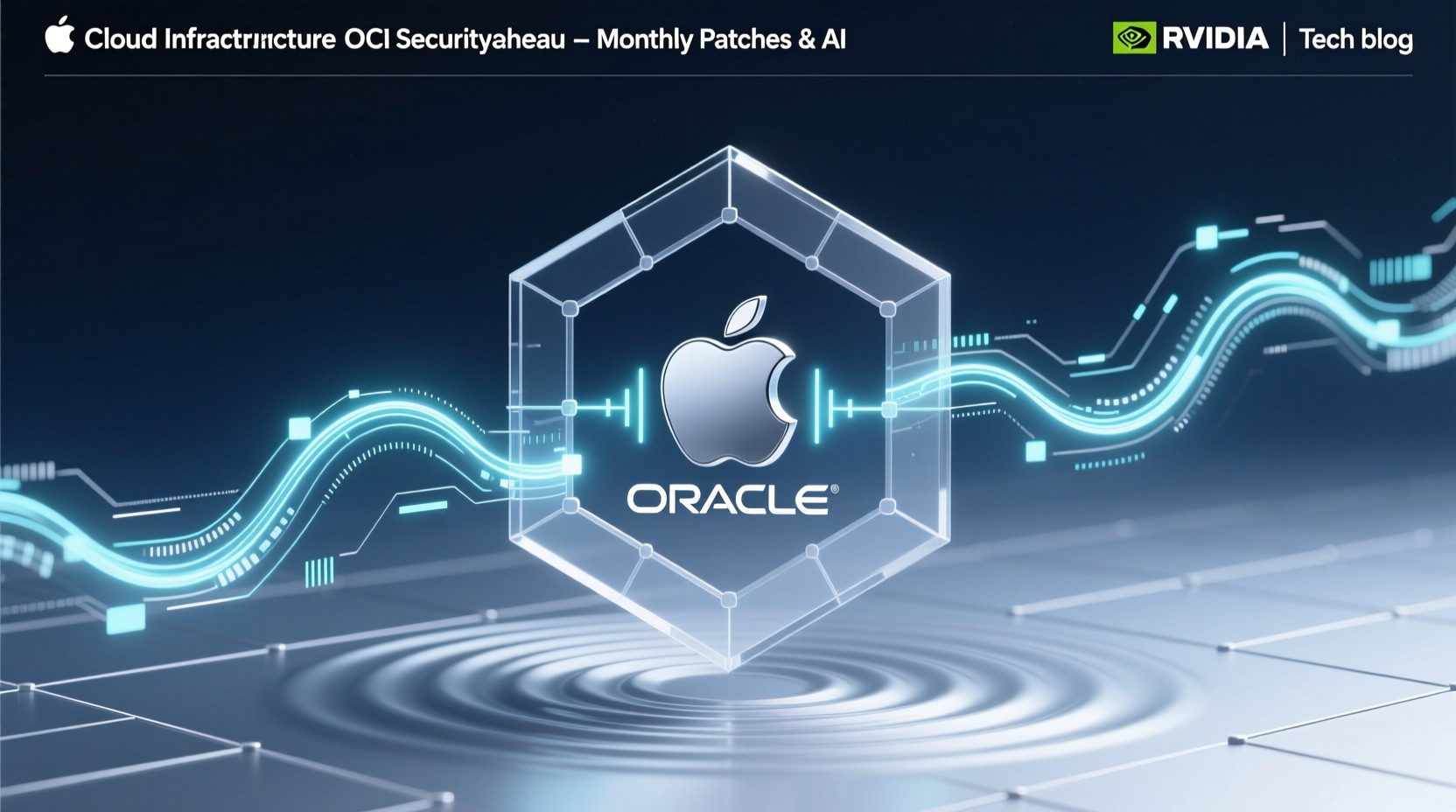
In the fast-paced realm of cloud computing, security is not a static state but a continuous evolution. For engineers and infrastructure teams managing critical workloads on Oracle Cloud Infrastructure (OCI), staying ahead of emerging threats is paramount. Recent developments underscore a significant shift in Oracle’s security strategy, moving towards a more agile and proactive approach. The introduction of monthly Critical Security Patch Updates (CSPUs) and the enhanced utilization of AI for vulnerability detection represent a critical juncture. This isn’t merely an update; it’s an imperative for all OCI users to reassess their patch management strategies and understand the implications of these advancements for their cloud environments.
Background: The Evolving Threat Landscape and Oracle’s Response
The cybersecurity landscape is in constant flux, with threat actors becoming increasingly sophisticated, often leveraging AI to discover and exploit vulnerabilities at an unprecedented speed. Traditional quarterly patching cycles, while robust, are being challenged by this accelerated pace of threat discovery. Oracle, recognizing this paradigm shift, has announced a significant acceleration in its security response mechanisms. This move is driven by the broad adoption of AI across its development and security operations, enabling faster code analysis, more efficient security testing, and more precise vulnerability detection.
Historically, Oracle has provided Critical Patch Updates (CPUs) on a quarterly basis. These cumulative updates address a wide array of security defects. However, the evolving threat landscape, particularly the rise of AI-assisted vulnerability discovery, necessitates a more frequent and targeted approach. Oracle’s new strategy supplements the quarterly CPUs with monthly CSPUs. These CSPUs are designed to deliver targeted fixes for critical security issues, allowing customers to address high-priority vulnerabilities much sooner than waiting for the next quarterly release. This proactive measure is a direct response to the increasing speed and scale at which software vulnerabilities can be identified and exploited.
Deep Technical Analysis: Monthly CSPUs and AI-Driven Detection
The introduction of monthly CSPUs signifies a fundamental change in how Oracle delivers security fixes. Unlike the comprehensive, cumulative nature of quarterly CPUs, CSPUs are smaller, more focused, and target specific high-priority vulnerabilities. This granular approach offers several technical advantages:
- Reduced Exposure Window: By addressing critical vulnerabilities monthly, Oracle significantly reduces the time customers are exposed to known exploits. This is particularly crucial for organizations operating in highly regulated industries or those handling sensitive data.
- Streamlined Patch Application: Smaller, more focused patches are generally easier and faster to test and deploy, minimizing potential disruption to production environments. For customers managing their own infrastructure, this translates to a more manageable patching process.
- AI Integration in Vulnerability Management: Oracle is leveraging advanced AI models, including frontier models, to enhance its vulnerability detection capabilities. This AI-driven approach allows for earlier identification of risks, improved code quality, and more robust security testing. These AI capabilities are integrated into OCI’s infrastructure and development platforms, enabling continuous, at-scale security operations.
The first CSPU was scheduled for May 28, 2026, with subsequent releases planned monthly. The quarterly CPU will continue to be released, but it will now incorporate all fixes from the preceding monthly CSPUs, ensuring a cumulative and comprehensive security update.
Practical Implications for OCI Users
The shift to monthly CSPUs has direct practical implications for development and infrastructure teams relying on Oracle Cloud Infrastructure:
- Patch Management Cadence: Teams will need to adapt their patch management schedules to accommodate monthly CSPUs. This requires a re-evaluation of testing procedures and deployment windows to ensure timely application of these critical updates.
- Automated vs. Self-Managed Environments: For customers using Oracle-managed cloud services, these security updates will be applied automatically. However, for those in self-managed environments, the responsibility of testing and applying these monthly patches falls on the customer. This necessitates robust internal processes and potentially dedicated resources for patch management.
- Enhanced Security Posture: By staying current with monthly CSPUs, organizations can significantly bolster their security posture, reducing the attack surface and mitigating risks associated with known vulnerabilities.
- Compliance Readiness: For many industries, maintaining compliance with security standards is non-negotiable. The faster patching cycle provided by CSPUs can assist organizations in meeting these stringent requirements more effectively.
Performance Benchmarks and AI Workloads
While the immediate focus is on security, OCI’s underlying infrastructure continues to be optimized for performance, particularly for AI and machine learning workloads. Recent benchmarks, such as those in the MLPerf Training 4.0 suite, demonstrate OCI’s ability to scale linearly with NVIDIA GPUs, offering significant reductions in AI training time. Similarly, MLPerf Inference 5.0 results showcase OCI’s capability to handle demanding AI tasks with impressive performance and scalability, utilizing hardware like the NVIDIA H200. These performance advancements are critical as AI models become more complex and data volumes increase, requiring robust and efficient cloud infrastructure. The integration of AI for security also leverages these powerful OCI compute and networking capabilities.
Deprecations and Migration Considerations
As OCI evolves, certain services and features are subject to deprecation. Engineers must stay informed about these changes to plan for migrations and avoid service disruptions. For instance, the OCI Data Labeling service is slated for End of Life (EOL) on August 30, 2025, with recommendations to migrate to open-source labeling tools. Similarly, support for the Text Generation Inference (TGI) service managed container within OCI Data Science AI Quick Actions will be deprecated starting January 31, 2026.
Furthermore, the OCI Terraform provider has seen various resources marked for deprecation, with suggested replacements to ensure continued functionality. For example, the oci_autonomous_data_warehouse resource has been deprecated in favor of oci_autonomous_database. Engineers should regularly consult the OCI Release Notes and Deprecation Notices to stay abreast of these changes and proactively manage their infrastructure’s migration path.
Best Practices for OCI Security and Patch Management
To effectively leverage Oracle Cloud Infrastructure in light of these security enhancements, consider the following best practices:
- Establish a Robust Patch Management Policy: Define clear procedures for testing, approving, and deploying monthly CSPUs. Automate where possible, but ensure thorough testing in non-production environments.
- Leverage OCI’s Security Services: Utilize OCI’s built-in security features, including Identity and Access Management (IAM), Security Zones, and Vulnerability Scanning.
- Continuous Monitoring and Auditing: Implement comprehensive monitoring solutions to detect suspicious activities and maintain audit trails for compliance purposes.
- Stay Informed: Regularly review OCI release notes, security advisories, and CSPU announcements to stay updated on the latest threats and remediation measures.
- Plan for Deprecations: Proactively identify deprecated resources and services within your OCI environment and develop migration plans well in advance of their EOL dates.
Actionable Takeaways for Teams
- Infrastructure Teams: Prioritize the integration of monthly CSPU deployment into your operational runbooks. Develop automated testing and deployment pipelines for these patches.
- Development Teams: Ensure your applications are designed with security best practices in mind and are compatible with the latest OCI security configurations.
- Security Operations Teams: Leverage OCI’s AI-driven security features and threat intelligence to enhance your incident response capabilities.
- All Teams: Foster a culture of security awareness. Regularly train personnel on the latest security threats and OCI best practices.
Related Internal Topic Links
- OCI Performance Benchmarking: Deep Dives into Compute and AI Workloads
- Ensuring Compliance and Governance on Oracle Cloud Infrastructure
- AI Security Best Practices for Enterprise Deployments
Conclusion: Embracing Agility for a Secure Cloud Future
Oracle Cloud Infrastructure’s evolution towards monthly security patching and AI-enhanced threat detection marks a significant step forward in cloud security. For engineers and IT professionals, this transition is not just about applying patches; it’s about embracing a more agile, proactive, and intelligent approach to cybersecurity. By understanding the technical underpinnings, practical implications, and adopting best practices, organizations can harness the full potential of OCI while maintaining a robust and resilient security posture in the face of ever-evolving threats.