Nvidia’s Omniverse Platform Embraces Agentic AI with PB 26h1 Release
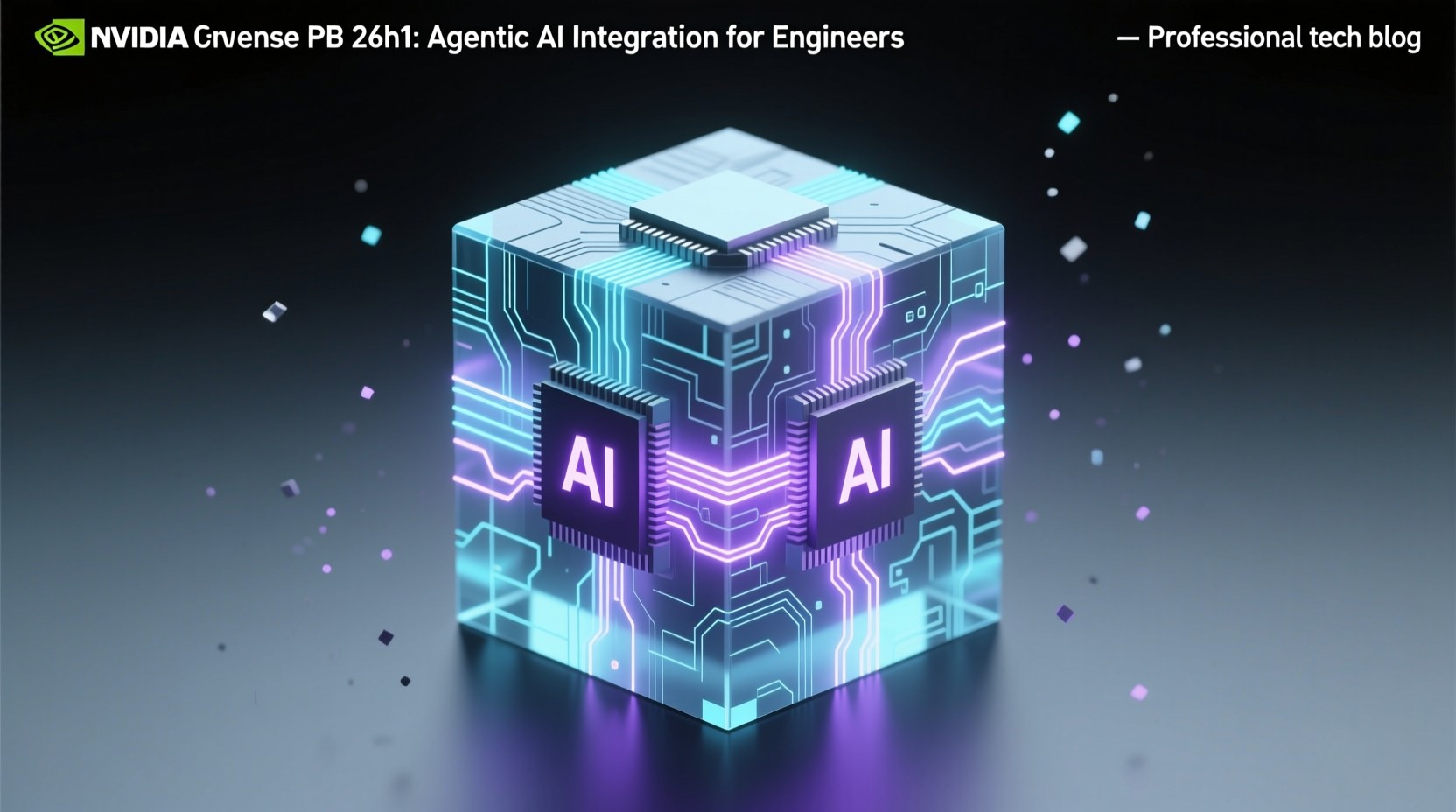
Nvidia’s continued push into the metaverse and digital twin technologies is underscored by the recent release of the Omniverse Production Branch (PB) 26h1. This update, available as of May 2026, signifies a major leap forward in enabling agentic AI development within the Omniverse ecosystem. Engineers and developers must pay close attention to these advancements, as they pave the way for more sophisticated, autonomous, and interconnected virtual environments. The implications for simulation, robotics, and synthetic data generation are profound, demanding a strategic approach to adoption and integration.
Background Context
Nvidia Omniverse, launched as a platform for 3D design collaboration and virtual world simulation, has steadily evolved from a visualization tool to a comprehensive ecosystem for building and deploying physically accurate simulations. Its foundation in Universal Scene Description (USD) allows for interoperability across various DCC (Digital Content Creation) tools and game engines. The Production Branch (PB) releases are designed to offer stable, long-term supported versions of Omniverse technologies, ensuring API consistency for extended periods. This stability is crucial for enterprise adoption and large-scale deployments. The PB 26h1 release builds upon the advancements seen in previous versions, such as PB 25h2, which introduced significant improvements in real-time rendering with RTX Real-Time 2.0 and enhanced sensor simulation capabilities. The continuous integration of new features and architectural refinements demonstrates Nvidia’s commitment to making Omniverse a leading platform for the development of digital twins, industrial automation, and synthetic data generation.
Deep Technical Analysis: Agentic AI Integration
The most significant technical advancement in Omniverse PB 26h1 is the deep integration of agentic AI capabilities. The platform now makes Kit and its associated services “agent-native.” This means that the Omniverse Kit (Kit) SDK ships with first-party MCP (Multi-Agent Communication Protocol) servers that expose over 400 Kit extensions and 1,000 configuration settings. These are made available through app templates for popular AI agents like Claude Code, Cursor, and Codex, accessible via the NVIDIA-Omniverse/kit-usd-agents GitHub repository.
A key enabler of this agentic shift is the new ovstorage Agent Skills package. This package scaffolds the deployment of Storage API configurations, allowing agents to interact with and manage data storage through conversational prompts. This abstraction simplifies complex storage management tasks, making them accessible to AI agents.
Furthermore, the release includes updated caching services: OV/USD Content Cache 3.0 and Derived Data Cache 5.0. These services are now equipped with agent skills packages, providing guided workflows for agents to evaluate, size, configure, and deploy caching solutions. This streamlines the process of managing large datasets and improving asset loading times within Omniverse.
From a rendering perspective, PB 26h1 introduces full path-tracing support for Gaussian splats via the new UsdVol.ParticleField OpenUSD schema. This significantly enhances the fidelity of volumetric effects and particle simulations. The new OmniProjectorAPI facilitates runtime projected UV generation, offering more dynamic texturing capabilities. Support for OpenPBR and an updated Material Graph Editor sample with full MaterialX support further bolster the platform’s material authoring and rendering pipeline.
In physics and performance, the PB 26h1 release brings notable optimizations. Nested rigid-body physics and enhanced Fabric performance deliver higher-fidelity, scalable simulations, particularly beneficial for large industrial and robotics scenes. This translates to improved throughput for digital twins, industrial automation, and large-scale synthetic data generation.
Practical Implications for Engineers
- Accelerated Simulation Development: Engineers can leverage AI agents to automate parts of the simulation setup, configuration, and data management process. This can drastically reduce the time spent on repetitive tasks, allowing teams to focus on core simulation logic and analysis.
- Enhanced Digital Twin Fidelity: The improvements in physics, rendering, and sensor simulation enable the creation of more accurate and detailed digital twins. This is critical for applications in manufacturing, robotics, and urban planning, where precise replication of real-world behavior is paramount.
- Streamlined Synthetic Data Generation: Agentic AI can automate the generation of diverse and realistic synthetic datasets for training AI models. This is particularly valuable in domains where real-world data is scarce, expensive, or difficult to obtain, such as autonomous driving or industrial defect detection.
- New Development Paradigms: The agent-native architecture encourages a shift towards developing applications that are controlled or augmented by AI agents. This opens up new possibilities for interactive and adaptive simulation environments.
Best Practices for Adoption
- Understand Agentic AI Concepts: Familiarize yourselves with the principles of agentic AI, including prompt engineering, agent communication protocols, and the capabilities of the supported AI models (Claude Code, Cursor, Codex).
- Explore the
NVIDIA-Omniverse/kit-usd-agentsRepository: This repository is the primary resource for understanding how to integrate AI agents with Omniverse Kit. Study the provided app templates and examples. - Gradual Integration: For existing Omniverse projects, consider a phased approach to integrating agentic AI. Start with automating specific tasks, such as asset management or scene configuration, before moving to more complex control scenarios.
- Data Management Strategy: Develop a robust strategy for managing data generated and consumed by AI agents, especially when using the
ovstorageAgent Skills package. Ensure proper access controls, versioning, and backup procedures. - Performance Monitoring and Optimization: Continuously monitor the performance of agentic workflows, particularly in complex simulations. Utilize Omniverse’s profiling tools and the new caching mechanisms to identify and address bottlenecks.
- Stay Updated on Production Branch Releases: Adhere to the recommended upgrade path by migrating to new Production Branch releases (like PB 26h1) within their support windows to benefit from the latest features, security patches, and stability improvements.
Actionable Takeaways for Development and Infrastructure Teams
- Development Teams:
- Experiment with Agent Templates: Begin experimenting with the provided app templates for Claude Code, Cursor, and Codex to understand how agents can interact with Omniverse scenes.
- Automate Scene Generation: Explore using agents to procedurally generate complex scenes or populate them with simulated assets based on defined parameters.
- Integrate Physics-Driven Agents: Leverage the improved physics engine for creating more intelligent and responsive agents within simulations, particularly for robotics and autonomous systems.
- Infrastructure Teams:
- Evaluate Storage API Needs: Assess how the
ovstorageAgent Skills package can simplify storage management for AI-driven workflows and digital twin deployments. - Optimize Caching Strategies: Review and potentially upgrade to OV/USD Content Cache 3.0 and Derived Data Cache 5.0 to improve data access performance for agentic workflows.
- Plan for Resource Allocation: Agentic AI workloads can be resource-intensive. Plan for adequate GPU, CPU, and network resources to support the increased computational demands of running AI agents alongside simulations.
- Evaluate Storage API Needs: Assess how the
Related Internal Topics
- /topic/digital-twin-development
- /topic/synthetic-data-generation-pipelines
- /topic/robotics-simulation-and-ai
Conclusion
The release of NVIDIA Omniverse Production Branch 26h1 marks a pivotal moment, transforming the platform into a powerful environment for agentic AI development. By making AI agents first-class citizens within the Omniverse ecosystem, Nvidia is enabling engineers to build more intelligent, autonomous, and scalable virtual worlds. The advancements in agent integration, rendering, physics, and data management offer significant opportunities for innovation across various industries. Proactive adoption of these new capabilities, guided by best practices and a clear understanding of the technical underpinnings, will be key for organizations looking to stay at the forefront of simulation, digital twin technology, and AI-driven development.
===TITLE===
Nvidia Omniverse PB 26h1: Agentic AI Integration for Engineers
===META===
Nvidia Omniverse PB 26h1 release enables agentic AI development, offering new tools for engineers in digital twins and simulation. Learn about technical details and best practices.
===EXCERPT===
Nvidia’s Omniverse platform has released Production Branch 26h1, significantly enhancing agentic AI development. This update integrates AI agents natively, offering new possibilities for simulation and digital twin creation.
===TAGS===
Nvidia Omniverse, Agentic AI, PB 26h1, Digital Twins, Simulation, OpenUSD, AI Development, Kit SDK
===KEYWORDS===
primary_keyword: Nvidia Omniverse
secondary_keywords: Agentic AI, Digital Twins, Simulation
search_intent: informational
===CONTENT===
Nvidia’s Omniverse Platform Embraces Agentic AI with PB 26h1 Release
Nvidia’s continued push into the metaverse and digital twin technologies is underscored by the recent release of the Omniverse Production Branch (PB) 26h1. This update, available as of May 2026, signifies a major leap forward in enabling agentic AI development within the Omniverse ecosystem. Engineers and developers must pay close attention to these advancements, as they pave the way for more sophisticated, autonomous, and interconnected virtual environments. The implications for simulation, robotics, and synthetic data generation are profound, demanding a strategic approach to adoption and integration.
Background Context
Nvidia Omniverse, launched as a platform for 3D design collaboration and virtual world simulation, has steadily evolved from a visualization tool to a comprehensive ecosystem for building and deploying physically accurate simulations. Its foundation in Universal Scene Description (USD) allows for interoperability across various DCC (Digital Content Creation) tools and game engines. The Production Branch (PB) releases are designed to offer stable, long-term supported versions of Omniverse technologies, ensuring API consistency for extended periods. This stability is crucial for enterprise adoption and large-scale deployments. The PB 26h1 release builds upon the advancements seen in previous versions, such as PB 25h2, which introduced significant improvements in real-time rendering with RTX Real-Time 2.0 and enhanced sensor simulation capabilities. The continuous integration of new features and architectural refinements demonstrates Nvidia’s commitment to making Omniverse a leading platform for the development of digital twins, industrial automation, and synthetic data generation.
Deep Technical Analysis: Agentic AI Integration
The most significant technical advancement in Omniverse PB 26h1 is the deep integration of agentic AI capabilities. The platform now makes Kit and its associated services “agent-native.” This means that the Omniverse Kit (Kit) SDK ships with first-party MCP (Multi-Agent Communication Protocol) servers that expose over 400 Kit extensions and 1,000 configuration settings. These are made available through app templates for popular AI agents like Claude Code, Cursor, and Codex, accessible via the NVIDIA-Omniverse/kit-usd-agents GitHub repository.
A key enabler of this agentic shift is the new ovstorage Agent Skills package. This package scaffolds the deployment of Storage API configurations, allowing agents to interact with and manage data storage through conversational prompts. This abstraction simplifies complex storage management tasks, making them accessible to AI agents.
Furthermore, the release includes updated caching services: OV/USD Content Cache 3.0 and Derived Data Cache 5.0. These services are now equipped with agent skills packages, providing guided workflows for agents to evaluate, size, configure, and deploy caching solutions. This streamlines the process of managing large datasets and improving asset loading times within Omniverse.
From a rendering perspective, PB 26h1 introduces full path-tracing support for Gaussian splats via the new UsdVol.ParticleField OpenUSD schema. This significantly enhances the fidelity of volumetric effects and particle simulations. The new OmniProjectorAPI facilitates runtime projected UV generation, offering more dynamic texturing capabilities. Support for OpenPBR and an updated Material Graph Editor sample with full MaterialX support further bolster the platform’s material authoring and rendering pipeline.
In physics and performance, the PB 26h1 release brings notable optimizations. Nested rigid-body physics and enhanced Fabric performance deliver higher-fidelity, scalable simulations, particularly beneficial for large industrial and robotics scenes. This translates to improved throughput for digital twins, industrial automation, and large-scale synthetic data generation.
Practical Implications for Engineers
- Accelerated Simulation Development: Engineers can leverage AI agents to automate parts of the simulation setup, configuration, and data management process. This can drastically reduce the time spent on repetitive tasks, allowing teams to focus on core simulation logic and analysis.
- Enhanced Digital Twin Fidelity: The improvements in physics, rendering, and sensor simulation enable the creation of more accurate and detailed digital twins. This is critical for applications in manufacturing, robotics, and urban planning, where precise replication of real-world behavior is paramount.
- Streamlined Synthetic Data Generation: Agentic AI can automate the generation of diverse and realistic synthetic datasets for training AI models. This is particularly valuable in domains where real-world data is scarce, expensive, or difficult to obtain, such as autonomous driving or industrial defect detection.
- New Development Paradigms: The agent-native architecture encourages a shift towards developing applications that are controlled or augmented by AI agents. This opens up new possibilities for interactive and adaptive simulation environments.
Best Practices for Adoption
- Understand Agentic AI Concepts: Familiarize yourselves with the principles of agentic AI, including prompt engineering, agent communication protocols, and the capabilities of the supported AI models (Claude Code, Cursor, Codex).
- Explore the
NVIDIA-Omniverse/kit-usd-agentsRepository: This repository is the primary resource for understanding how to integrate AI agents with Omniverse Kit. Study the provided app templates and examples. - Gradual Integration: For existing Omniverse projects, consider a phased approach to integrating agentic AI. Start with automating specific tasks, such as asset management or scene configuration, before moving to more complex control scenarios.
- Data Management Strategy: Develop a robust strategy for managing data generated and consumed by AI agents, especially when using the
ovstorageAgent Skills package. Ensure proper access controls, versioning, and backup procedures. - Performance Monitoring and Optimization: Continuously monitor the performance of agentic workflows, particularly in complex simulations. Utilize Omniverse’s profiling tools and the new caching mechanisms to identify and address bottlenecks.
- Stay Updated on Production Branch Releases: Adhere to the recommended upgrade path by migrating to new Production Branch releases (like PB 26h1) within their support windows to benefit from the latest features, security patches, and stability improvements.
Actionable Takeaways for Development and Infrastructure Teams
- Development Teams:
- Experiment with Agent Templates: Begin experimenting with the provided app templates for Claude Code, Cursor, and Codex to understand how agents can interact with Omniverse scenes.
- Automate Scene Generation: Explore using agents to procedurally generate complex scenes or populate them with simulated assets based on defined parameters.
- Integrate Physics-Driven Agents: Leverage the improved physics engine for creating more intelligent and responsive agents within simulations, particularly for robotics and autonomous systems.
- Infrastructure Teams:
- Evaluate Storage API Needs: Assess how the
ovstorageAgent Skills package can simplify storage management for AI-driven workflows and digital twin deployments. - Optimize Caching Strategies: Review and potentially upgrade to OV/USD Content Cache 3.0 and Derived Data Cache 5.0 to improve data access performance for agentic workflows.
- Plan for Resource Allocation: Agentic AI workloads can be resource-intensive. Plan for adequate GPU, CPU, and network resources to support the increased computational demands of running AI agents alongside simulations.
- Evaluate Storage API Needs: Assess how the
Related Internal Topics
- /topic/digital-twin-development
- /topic/synthetic-data-generation-pipelines
- /topic/robotics-simulation-and-ai
Conclusion
The release of NVIDIA Omniverse Production Branch 26h1 marks a pivotal moment, transforming the platform into a powerful environment for agentic AI development. By making AI agents first-class citizens within the Omniverse ecosystem, Nvidia is enabling engineers to build more intelligent, autonomous, and scalable virtual worlds. The advancements in agent integration, rendering, physics, and data management offer significant opportunities for innovation across various industries. Proactive adoption of these new capabilities, guided by best practices and a clear understanding of the technical underpinnings, will be key for organizations looking to stay at the forefront of simulation, digital twin technology, and AI-driven development.