AWS Lambda Scheduled Scaling: Precision Capacity Management for Cost and Performance
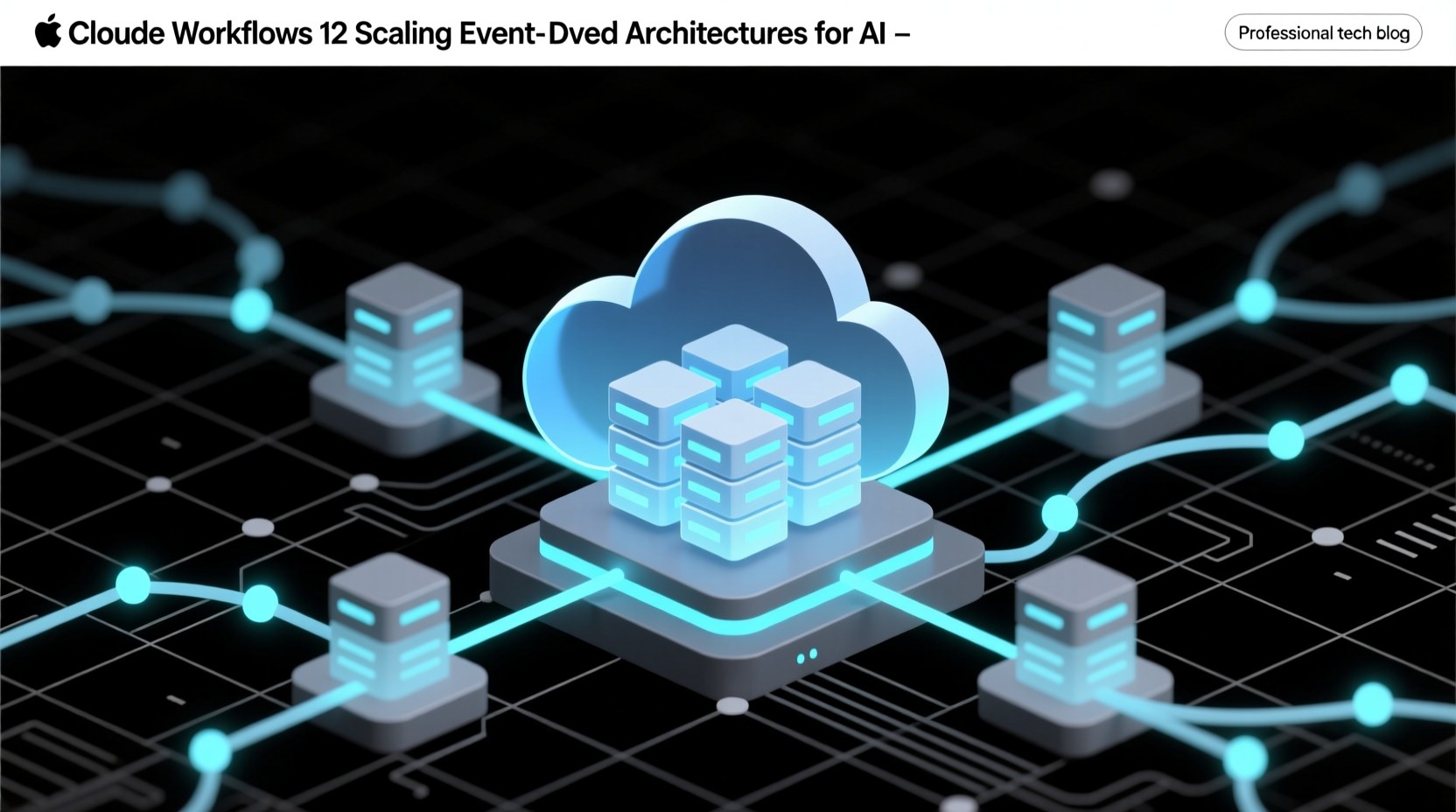
The latest enhancement to AWS Lambda, the introduction of scheduled scaling for functions running on Lambda Managed Instances, represents a significant leap forward in optimizing serverless application performance and cost-efficiency. This feature, powered by Amazon EventBridge Scheduler, empowers engineers to precisely control function capacity based on anticipated demand, a capability that was previously cumbersome and required significant custom automation.
Background Context
AWS Lambda has long been lauded for its automatic scaling capabilities, dynamically adjusting resources based on incoming traffic. However, for workloads with predictable traffic patterns—such as business-hour applications, scheduled batch jobs, or marketing events—this on-demand scaling could lead to either over-provisioning during lulls or delayed scaling during unexpected surges. Manually adjusting capacity limits was a reactive and often inefficient process. Lambda Managed Instances, which provide serverless execution on managed EC2 instances with built-in load balancing and autoscaling, offered more control but still relied on traffic-based scaling.
Deep Technical Analysis
Scheduled scaling introduces a declarative approach to capacity management. Engineers can now define one-time or recurring schedules to adjust the minimum and maximum execution environment limits for their Lambda functions. For instance, a function supporting a customer-facing application can be scheduled to increase its maximum concurrency an hour before business operations commence and scale down to zero or a minimal value during non-business hours.
Key technical aspects include:
- Integration with Amazon EventBridge Scheduler: This allows for sophisticated scheduling, including cron-like expressions and rate-based scheduling.
- Proactive Capacity Adjustment: Capacity limits are adjusted before traffic arrives, ensuring execution environments are ready and minimizing cold-start latency during anticipated peaks.
- Cost Optimization: Scaling down to zero during idle periods ensures that users only pay for actively serving traffic, a critical benefit for FinOps initiatives. This native capability eliminates the need for custom scripts or complex orchestration to manage scheduled scaling.
- Lambda Managed Instances: This feature is specifically available for functions running on Lambda Managed Instances, which offer EC2-like performance characteristics within the serverless paradigm. These instances provide built-in routing, load balancing, and autoscaling, now augmented with scheduled capacity control.
The ability to scale to zero is particularly impactful. It means that for periods of zero expected traffic, the associated compute resources are de-provisioned, leading to direct cost savings. Conversely, scheduling capacity increases ahead of known demand ensures that applications remain responsive and meet performance Service Level Objectives (SLOs) during critical periods.
Practical Implications
For development and infrastructure teams, scheduled scaling translates to:
- Improved Performance: Predictable traffic spikes are handled more gracefully, reducing the likelihood of performance degradation or request throttling.
- Enhanced Cost Efficiency: Significant cost reductions can be achieved by aligning capacity with actual usage, especially for non-24/7 workloads. This is a direct win for FinOps and cost-conscious engineering teams.
- Reduced Operational Overhead: The need for manual capacity adjustments or building custom scaling automation is eliminated, freeing up engineering resources.
- Simplified Capacity Planning: The declarative nature of scheduled scaling makes capacity planning more transparent and manageable.
Best Practices
To maximize the benefits of scheduled scaling:
- Analyze Traffic Patterns: Thoroughly understand the historical and anticipated traffic patterns of your Lambda functions. Utilize CloudWatch metrics and logs to identify peak and off-peak periods.
- Define Granular Schedules: Create schedules that precisely match your workload’s operational hours or demand cycles. Avoid overly broad schedules that might still lead to unnecessary costs or under-provisioning.
- Set Realistic Min/Max Limits: Configure appropriate minimum and maximum concurrency limits that reflect your application’s needs and cost constraints.
- Monitor Performance and Costs: Continuously monitor function performance (e.g., duration, error rates, cold starts) and associated costs after implementing scheduled scaling to fine-tune schedules and limits.
- Leverage EventBridge Scheduler Features: Explore advanced features of EventBridge Scheduler, such as flexible time windows, recurrence patterns, and retry policies, to build robust scaling strategies.
AWS Redshift RG Instances: Unifying Data Lakes and Warehouses with Graviton Power
AWS has significantly advanced its data analytics capabilities with the introduction of new AWS Graviton-powered RG instances for Amazon Redshift. This release is a strategic move to unify data warehousing and data lake analytics within a single query engine, addressing the growing need for cost-effective and efficient data processing in the age of AI.
Background Context
The proliferation of data lakes and warehouses has often led to fragmented analytics environments. Data often resides in object storage (data lakes) and managed databases (data warehouses), requiring complex ETL processes or separate query engines to access and analyze data across these silos. This fragmentation increases operational overhead, data movement costs, and latency. AWS has been working to bridge this gap, and the new Redshift RG instances represent a major step towards a unified analytics platform.
Deep Technical Analysis
The core innovation lies in the RG instances, which leverage AWS’s custom AWS Graviton processors. These ARM-based processors are designed for performance and cost-efficiency. The new instances offer:
- Unified Query Engine: Redshift RG instances combine warehouse and data lake analytics within a single engine. This means Redshift can now query both structured data in its data warehouse and semi-structured/unstructured data in data lakes (e.g., using Apache Iceberg or Parquet formats) from the same compute layer. This eliminates the need for separate Redshift Spectrum infrastructure or per-terabyte scan charges for data lake queries.
- Performance Improvements: AWS claims up to 2.2x faster data warehouse performance and up to 2.4x faster Apache Iceberg performance, and 1.5x faster Apache Parquet performance compared to previous-generation RA3 systems. These benchmarks suggest substantial gains for analytical workloads.
- Cost Efficiency: The new instances are positioned to deliver these performance gains at a 30% lower cost per vCPU. This is crucial for organizations looking to manage the escalating infrastructure costs associated with large-scale data processing and AI workloads.
- Targeted Workloads: AWS explicitly positions these instances for “analytics and agentic AI workloads” that demand low-latency access to large datasets. This indicates a strategic focus on supporting the data-intensive needs of modern AI applications.
The integration of data lake query capabilities directly into Redshift’s compute layer is a significant architectural decision. It simplifies data access, reduces data egress costs, and allows for more efficient query planning across diverse data sources. By using Graviton processors, AWS is also pushing its custom silicon higher into critical infrastructure stacks, aiming for better performance-per-watt and cost optimization.
Practical Implications
For data engineering and analytics teams, these Redshift RG instances mean:
- Simplified Data Architecture: Consolidating data warehousing and data lake querying into a single Redshift cluster reduces architectural complexity and operational overhead.
- Faster Insights: Improved query performance on both warehouse and data lake data accelerates the time to insight and enables more complex analytical queries.
- Reduced Costs: The combination of Graviton processors and a unified query engine offers a compelling cost-reduction opportunity for data analytics workloads.
- Enhanced AI Readiness: The low-latency access to large datasets and unified query capabilities are crucial for feeding data to AI models and supporting agentic workloads.
Best Practices
To leverage the new Redshift RG instances effectively:
- Benchmark Your Workloads: Before migrating, benchmark your existing data warehouse and data lake queries on the new RG instances to quantify performance and cost benefits.
- Optimize Data Lake Formats: Ensure your data lake data is stored in efficient open table formats like Apache Iceberg or Parquet and consider partitioning strategies for optimal query performance.
- Monitor Performance and Costs: Continuously monitor query performance, cluster utilization, and costs to identify further optimization opportunities.
- Explore Unified Querying: Actively experiment with querying data lake sources directly from Redshift to fully leverage the unified analytics engine.
- Consider Graviton for Other Workloads: If your organization uses other AWS services that support Graviton processors, evaluate their cost and performance benefits as part of a broader cloud optimization strategy.
Critical Security Alert: CVE-2026-33017 in Langflow Exploited for AWS Credential Theft
A recent and critical security vulnerability, CVE-2026-33017, in the Langflow platform has been actively exploited by malicious actors. This flaw allows for unauthenticated remote code execution, leading to the compromise of sensitive AWS credentials and the subsequent deployment of botnets. This incident serves as a stark reminder of the evolving threat landscape targeting AI workflow tools and underscores the paramount importance of securing these platforms.
Background Context
Langflow is a popular open-source tool designed for building and deploying AI-powered agents and workflows. Its user-friendly interface and integration capabilities make it attractive for developers working with large language models (LLMs) and complex AI pipelines. However, like many tools that handle sensitive configurations and credentials, exposed instances of Langflow become high-value targets for attackers.
Deep Technical Analysis
The vulnerability, CVE-2026-33017, resides in a public Langflow API endpoint that, prior to version 1.9.0, could be accessed without any authentication. By sending specially crafted requests to this endpoint, attackers can execute arbitrary commands within the Langflow container. The primary objective of these attacks is to extract sensitive environment variables stored by the application, which often include critical AWS access keys, secret access keys, and session tokens.
Once these AWS credentials are stolen, attackers can:
- Access Cloud Resources: Gain unauthorized access to an organization’s AWS environment.
- Abuse Cloud Services: Utilize compromised credentials to spin up resources, potentially for malicious purposes like crypto mining or launching further attacks.
- Query AI Services: Interact with AWS AI/ML services using the victim’s credentials.
- Deploy Botnets: Establish a command-and-control infrastructure, often using services like NATS (as seen in the “KeyHunter” campaign), to manage a network of compromised machines.
The fact that this vulnerability allows for unauthenticated remote code execution makes it particularly dangerous, as it requires no prior access or knowledge of the Langflow instance’s internal workings. The inclusion of CVE-2026-33017 in the CISA Known Exploited Vulnerabilities catalog further emphasizes its severity and the active exploitation in the wild.
Practical Implications
This exploitation has severe implications for organizations using Langflow or similar AI workflow tools:
- Credential Exposure: The primary risk is the direct compromise of AWS access credentials, potentially granting attackers broad access to an organization’s cloud infrastructure.
- Lateral Movement: Stolen credentials can be used to move laterally within the AWS environment, compromising other services and data.
- Financial Loss: Unauthorized resource consumption (e.g., for botnets, crypto mining) can lead to significant unexpected cloud bills.
- Reputational Damage: A security breach resulting from compromised credentials can severely damage an organization’s reputation and erode customer trust.
- Supply Chain Risk: This highlights the security risks associated with third-party AI tools and libraries, which can serve as an entry point for attackers.
Best Practices for Mitigation and Prevention
To defend against such threats and secure AI workflow tools:
- Patch Immediately: Organizations using Langflow must immediately update to version 1.9.0 or later to remediate CVE-2026-33017.
- Restrict Network Access: Ensure that Langflow instances are not exposed directly to the public internet. Utilize VPCs, security groups, and private endpoints to restrict access to authorized internal networks or specific IP addresses.
- Implement Least Privilege: The IAM roles associated with Lambda functions or any services interacting with Langflow should adhere to the principle of least privilege. Grant only the necessary permissions required for their specific tasks. Avoid using administrative or broad service-level policies.
- Secure Environment Variables: Avoid storing sensitive credentials directly in environment variables if possible. Consider using AWS Secrets Manager or AWS Systems Manager Parameter Store for more secure credential management.
- Continuous Monitoring: Implement robust monitoring for unusual activity within your AWS environment, such as unexpected API calls, resource provisioning, or network traffic originating from compromised credentials. AWS GuardDuty and Security Hub can be invaluable here.
- Vulnerability Management: Maintain a proactive vulnerability management program for all third-party software, including AI development tools. Regularly scan for and patch known vulnerabilities.
- Security Awareness Training: Educate development and operations teams about the risks associated with exposing AI workflow tools and the importance of secure credential management.
Related Internal Topics
- /topic/aws-lambda-performance-tuning
- /topic/aws-security-best-practices
- /topic/data-lake-architecture
Conclusion
The recent AWS updates highlight a dual focus on enhancing developer productivity and cost efficiency while simultaneously addressing emerging security threats. The introduction of scheduled scaling for AWS Lambda Managed Instances offers a powerful, native solution for optimizing serverless resource allocation and reducing operational overhead. Concurrently, the new Graviton-powered Redshift RG instances signal a strategic push towards unifying data analytics and preparing for the demands of AI-driven workloads.
However, the active exploitation of CVE-2026-33017 in Langflow serves as a critical reminder that as AI capabilities expand, so do the attack vectors. Engineers and security professionals must remain vigilant, prioritize patching, implement robust network segmentation, and adhere to the principle of least privilege. By embracing these proactive measures, organizations can harness the full potential of AWS services while safeguarding their critical cloud infrastructure and sensitive data. The continuous evolution of cloud platforms demands a corresponding evolution in our approach to both innovation and security.