Urgent Call to Action: Secure Your Smart Home Ecosystem
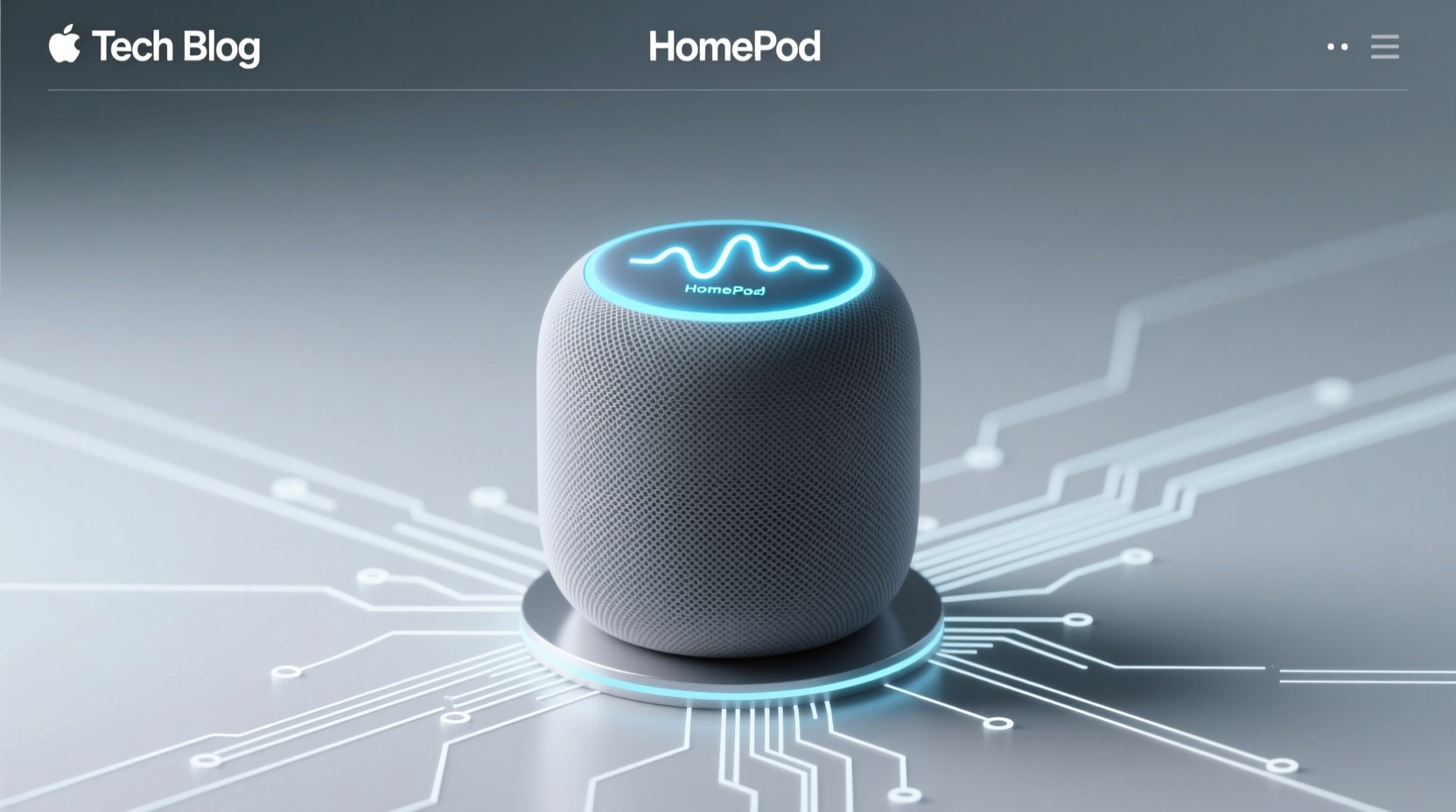
In today’s interconnected world, the security and stability of smart home devices are paramount. Recent developments in smart speaker firmware, particularly the latest HomePod software update, serve as a critical reminder for R&D engineers and IT professionals to prioritize timely updates. The release of HomePod Software version 26.5, alongside a suite of other Apple platform updates on May 11, 2026, highlights Apple’s continuous effort to refine its ecosystem. While the release notes for this particular update are concise, focusing on “performance and stability improvements,” the underlying implications for security, user experience, and the broader smart home landscape warrant a deep dive. For engineers working with IoT devices, understanding these updates is not just about adopting new features; it’s about safeguarding against evolving threats and ensuring the integrity of the systems we build and manage.
Background: The Evolution of HomePod Software
Apple’s HomePod and HomePod mini devices have evolved significantly since their inception. Initially launched with features focused on audio quality and Siri integration, subsequent software updates have progressively expanded their capabilities. Early versions, such as Software version 14.1 and 14.2, introduced essential features like HomePod mini support, Intercom, and enhanced home theater audio with Apple TV 4K integration. Later updates, like version 17.1, brought “Enhance Dialogue” capabilities to more HomePod models, improving the clarity of speech in media playback. Version 18 introduced SharePlay for collaborative music control, demonstrating a move towards more interactive user experiences. Most recently, version 26 brought crossfade functionality to Apple Music and AirPlay improvements, alongside bug fixes and stability enhancements. The cadence of these updates, often coinciding with broader OS releases like iOS, iPadOS, and macOS, underscores Apple’s integrated approach to its product ecosystem. The latest release, HomePod Software 26.5, continues this trend, emphasizing incremental improvements that are crucial for maintaining a robust and secure user environment.
Deep Technical Analysis: Version 26.5 and Beyond
While Apple’s official release notes for HomePod Software 26.5 are brief, stating “performance and stability improvements,” this often implies underlying changes that include security patches, bug resolutions, and architectural optimizations. The release of version 26.5 on May 11, 2026, alongside iOS 17.5, iPadOS 17.5, and macOS Sonoma 14.5, suggests a coordinated effort to enhance the overall security posture of Apple’s devices.
Historically, HomePod software updates have addressed various aspects. For instance, version 15.4.1 specifically targeted an issue where some HomeKit-enabled accessories failed to respond to Siri commands. This highlights the critical role of software updates in maintaining the interoperability and reliability of the HomeKit ecosystem. Furthermore, while specific CVEs for version 26.5 are not publicly detailed, Apple’s general security update practices often include patching vulnerabilities that could lead to arbitrary code execution, sensitive information disclosure, or privilege escalation. For example, broader Apple security updates in May 2024 addressed numerous vulnerabilities across iOS, macOS, and other platforms, with specific CVEs like CVE-2024-27804 and CVE-2024-23296 being patched. It is reasonable to infer that HomePod Software 26.5, as part of this release cycle, likely incorporates similar security hardening measures.
The forensic analysis of HomePod devices reveals a complex underlying architecture. Tools like the ElcomSoft iOS Forensic Toolkit can interact with HomePod firmware, often requiring devices to be in DFU mode for extraction. This process involves analyzing firmware images and extracting data such as the keychain and file system. While direct data extraction from HomePods can be challenging, the ability to analyze firmware provides insights into the device’s security mechanisms and potential vulnerabilities. The architecture decisions made by Apple, such as the tight integration with iOS and the use of secure boot processes, are key to its overall security. However, as seen with past vulnerabilities, no system is entirely impervious, making regular updates essential.
Practical Implications for Engineers and Users
The immediate practical implication of the HomePod Software 26.5 update is the need for all users and system administrators to ensure their devices are updated. HomePods and HomePod minis are designed to update automatically by default, but manual verification through the Home app on an iPhone, iPad, or Mac is always recommended. For engineers, this reinforces the importance of understanding the update mechanisms for all IoT devices within their purview.
Beyond basic updates, the HomePod’s integration with HomeKit brings additional considerations. Recent reports have highlighted security vulnerabilities within HomeKit that have been exploited for spyware attacks, notably involving NSO Group’s Pegasus spyware. While these exploits often target iPhones, the interconnected nature of the HomeKit ecosystem means that vulnerabilities in one area can have ripple effects. Therefore, maintaining up-to-date firmware across all Apple devices, including HomePods, is a critical defense layer.
Furthermore, the ongoing development of smart home technology means that engineers must consider the long-term implications of software versions. For example, the introduction of features like “Enhance Dialogue” or “Crossfade” requires specific hardware and software capabilities. As new features are introduced and older ones potentially deprecated, migration strategies may become necessary for organizations managing large deployments of smart devices. Understanding the changelog of each update, even if brief, is crucial for anticipating future compatibility and performance issues.
Best Practices for HomePod Management
To ensure optimal performance, security, and longevity of HomePod devices, adopting robust management practices is essential:
* Enable Automatic Updates: Ensure that automatic software updates are enabled for your HomePod and HomePod mini. This is the default setting and the most effective way to receive timely security patches and feature enhancements.
* Regular Manual Verification: Periodically check for updates manually via the Home app. This provides an extra layer of assurance and allows for immediate installation if automatic updates are somehow missed or delayed.
* Monitor Release Notes: While often brief, pay attention to Apple’s release notes for HomePod software updates. Even “performance and stability improvements” can mask critical security fixes. For more in-depth analysis, consult reputable tech news outlets and security blogs.
* Secure Your Network: The security of your HomePod is intrinsically linked to the security of your home network. Employ strong Wi-Fi passwords, consider network segmentation if possible, and ensure your router firmware is also up-to-date.
* HomeKit Security Awareness: Stay informed about potential HomeKit vulnerabilities. While Apple actively patches these, awareness of threats like those exploited by NSO Group is crucial for a comprehensive security strategy.
* Device Lifecycle Management: When decommissioning a HomePod, ensure it is properly removed from the Home app and factory reset to protect personal data.
Actionable Takeaways for Development and Infrastructure Teams
For R&D engineering and infrastructure teams, the HomePod software updates serve as a microcosm of broader IoT device management challenges:
1. **Prioritize Firmware Updates in IoT Deployments:** Treat firmware updates as a critical component of your IoT device lifecycle. Develop robust patch management strategies that include automated deployment, verification, and rollback procedures where applicable.
2. **Integrate Security into Design:** When developing new smart home or IoT products, build security in from the ground up. Consider secure boot, encrypted communication, and a clear strategy for delivering and managing firmware updates throughout the device’s lifespan.
3. **Develop Monitoring and Alerting Systems:** Implement systems that can monitor the status of IoT devices, including their firmware versions. Set up alerts for devices that are running outdated software or exhibiting unusual behavior.
4. **Understand Device Forensics and Vulnerability Analysis:** Familiarize yourselves with the tools and techniques for analyzing IoT device firmware and identifying potential vulnerabilities. This knowledge is invaluable for both proactive security and reactive incident response. For HomePods, understanding the process outlined by ElcomSoft can provide insights into the device’s internal workings.
5. **Stay Informed on Ecosystem Vulnerabilities:** Keep abreast of security advisories and reports related to the platforms and ecosystems your devices integrate with (e.g., HomeKit, Thread, Matter). A vulnerability in an adjacent technology can impact your own product’s security.
Related Internal Topics
* /topic/iot-security-best-practices
* /topic/homekit-ecosystem-deep-dive
* /topic/secure-firmware-development
Conclusion: The Unseen Work of Smart Device Maintenance
The release of HomePod Software version 26.5, like countless other minor updates across the tech landscape, represents the essential, often unseen, work required to maintain the security and functionality of our increasingly connected lives. For engineers and IT professionals, it’s a call to diligence. While the headline features might be sparse, the underlying improvements in performance, stability, and security are non-negotiable. As smart home technology continues to advance, the commitment to timely updates, robust security practices, and a deep understanding of device architecture will remain the cornerstones of reliable and secure smart ecosystems. The future of smart devices hinges not just on innovation, but on the diligent maintenance of the systems we have today.