The Urgency of AI Integration in the Modern Contact Center
The contact center landscape is undergoing a seismic shift, driven by the relentless advance of Artificial Intelligence (AI). For R&D engineers and infrastructure architects, the imperative to integrate AI is no longer a matter of future strategy but an immediate operational necessity. Legacy contact center technologies, while robust and deeply entrenched, were not designed for the dynamic, data-intensive demands of contemporary AI models. This collision point presents both immense challenges and unparalleled opportunities. TTEC Digital’s recent introduction of AI Gateway aims to directly address this friction, offering a pathway for enterprises to harness cutting-edge AI without discarding their existing investments. This article delves into the technical nuances of this development, exploring its implications for engineers tasked with modernizing customer experience (CX) platforms.
Background: The Legacy Dilemma and the AI Imperative
For decades, contact centers have relied on a patchwork of on-premises systems, proprietary hardware, and complex, often siloed, software. These systems, built for stability and specific functionalities, now face the challenge of integrating with rapidly evolving AI services, including large language models (LLMs) and sophisticated machine learning algorithms. The core problem lies in the fundamental architectural differences: legacy systems often lack the APIs, data formats, and processing power required for seamless AI interaction.
This dilemma is amplified by the growing customer expectation for intelligent, personalized, and immediate service. Customers are increasingly interacting with AI-powered chatbots and virtual assistants in other facets of their digital lives, and they expect similar sophistication from their brand interactions. Failure to meet these expectations can lead to customer churn, reputational damage, and a loss of competitive edge. TTEC Digital, with its extensive experience in contact center technologies and CX solutions, has recognized this critical gap. Their recent announcements, including the strategic collaboration with AWS to accelerate Amazon Connect adoption and the release of AI Gateway, underscore a focused effort to provide solutions for this complex integration challenge.
Deep Technical Analysis: TTEC Digital’s AI Gateway
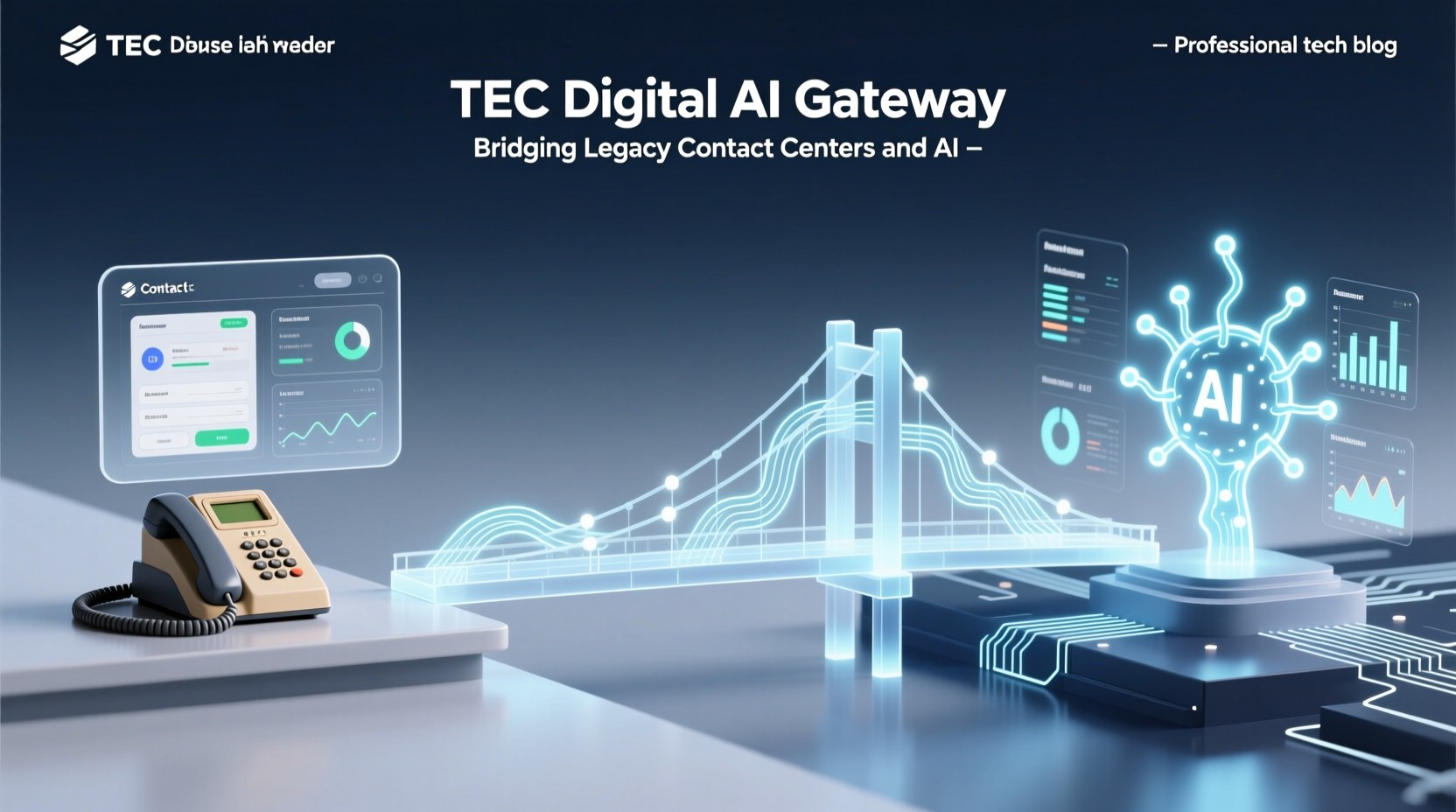
TTEC Digital’s AI Gateway, launched on April 2, 2026, is engineered as a universal connector. Its primary function is to abstract the complexities of integrating modern AI capabilities with diverse legacy contact center platforms. The solution acts as an intermediary layer, ingesting media streams and metadata from existing contact center systems and routing them to chosen AI providers via real-time APIs.
Architecture and Connectivity
AI Gateway’s architecture is designed for flexibility and extensibility. It supports direct integrations with major AI cloud providers, including:
* **Amazon Web Services (AWS)**
* **Google Cloud Platform (GCP)**
* **Microsoft Azure**
Furthermore, it is built with the flexibility to rapidly connect with emerging AI developers such as Anthropic, OpenAI, and NVIDIA. On the contact center side, it boasts compatibility with a wide array of established CX platforms and vendors, including:
* Avaya
* Cisco
* Five9
* Genesys
* NICE
* Twilio
* Zoom
* Major Session Border Controller (SBC) vendors
This broad compatibility is crucial, as it allows organizations to leverage AI Gateway without forcing a complete overhaul of their existing telephony, CRM, or contact center infrastructure. The solution’s “turnkey” nature suggests pre-built connectors and standardized API interfaces, significantly reducing the typical months-long custom integration timelines to weeks for common use cases.
Key Use Cases Enabled by AI Gateway
AI Gateway enables a suite of powerful AI-driven use cases by facilitating data flow and model interaction:
* **Agent Assist:** Empowering human agents with real-time information, suggestions, and automated task completion during customer interactions.
* **Virtual Agents/Chatbots:** Deploying intelligent self-service options for customers, handling routine inquiries and freeing up human agents for complex issues.
* **Real-time Transcription and Summarization:** Automatically transcribing calls and generating concise summaries, crucial for compliance, quality assurance, and post-call analysis.
* **Customer Insights and Analytics:** Ingesting interaction data to generate dashboards and provide prescriptive guidance for business improvements.
* **Intelligent Routing:** Predicting customer intent and routing them to the most appropriate agent or resource.
Version Control and Deprecations
As of its April 2026 launch, AI Gateway is positioned as a foundational layer. TTEC Digital emphasizes its role in connecting *any* contact center platform to the *best* AI tools for the job, implying a strategy that avoids vendor lock-in and embraces a fluid AI landscape. While specific version numbers for AI Gateway itself are not publicly detailed in the initial announcements, its design to connect with leading AI models (Gemini, potentially others) suggests an architecture that will require continuous updates to maintain compatibility with evolving AI APIs and feature sets. Deprecations would likely be managed through API versioning and clear communication from TTEC Digital regarding support lifecycles for specific AI provider integrations.
Practical Implications for Engineering and Infrastructure Teams
The introduction of AI Gateway has several immediate practical implications for R&D engineers and infrastructure teams:
Reduced Migration Burden
The most significant implication is the potential to drastically reduce the need for costly and time-consuming full-scale migrations from legacy systems. Instead of replacing entire platforms (e.g., migrating from an aging Avaya system to a cloud-native CCaaS like Amazon Connect), organizations can use AI Gateway to layer modern AI capabilities onto their existing infrastructure. This allows for a phased approach to digital transformation, prioritizing AI integration where it yields the highest ROI.
Accelerated Time-to-Value
By providing pre-built connectors and a standardized integration framework, AI Gateway aims to shrink use case deployment timelines from months to weeks. This rapid deployment capability is critical for businesses looking to quickly capitalize on AI’s benefits, such as improved agent productivity, enhanced customer satisfaction, and cost savings. Early adopters have reported material increases in ROI and cost savings.
Complexity Management
Integrating disparate AI models and legacy systems can introduce significant complexity. AI Gateway aims to abstract much of this complexity, presenting a unified interface for both AI providers and contact center platforms. This simplifies development and maintenance, allowing engineering teams to focus on business logic and CX improvement rather than low-level integration plumbing.
Data Governance and Security Considerations
While AI Gateway facilitates data flow, robust data governance and security protocols remain paramount. Contact centers handle sensitive customer data, and integrating AI introduces new vectors for potential breaches or misuse. Organizations must ensure that data ingress and egress through AI Gateway comply with regulations like GDPR, CCPA, and other relevant privacy laws. TTEC Digital’s collaboration with AWS, a hyperscaler with strong security postures, suggests a commitment to secure infrastructure, but the responsibility for data governance ultimately rests with the deploying organization.
Best Practices for AI Integration with Legacy Systems
Leveraging a solution like AI Gateway requires a strategic approach. Based on industry insights and TTEC Digital’s stated philosophy, here are key best practices:
* **Phased Implementation:** Don’t attempt to integrate all AI capabilities at once. Start with high-impact, lower-complexity use cases (e.g., agent assist for specific query types, basic virtual agents) and scale gradually.
* **Data Quality is Paramount:** AI models are only as good as the data they are trained on. Invest in data cleansing, standardization, and enrichment processes for your legacy data sources before feeding them into AI models.
* **Focus on Augmentation, Not Just Automation:** Position AI as a tool to augment human agents, not replace them entirely. This fosters employee buy-in and ensures that complex, empathetic interactions remain human-led.
* **Continuous Monitoring and Optimization:** AI models require ongoing training and fine-tuning. Establish processes for monitoring AI performance, gathering feedback, and updating models with fresh data to maintain relevance and accuracy.
* **Cross-Functional Collaboration:** Successful AI integration requires close collaboration between IT, operations, CX design, and business stakeholders. Ensure all parties are aligned on goals, metrics, and implementation plans.
* **Security and Compliance by Design:** Embed security and compliance considerations into every stage of the AI integration process. Understand data flows, access controls, and regulatory requirements.
Actionable Takeaways for Development and Infrastructure Teams
For engineering and infrastructure teams, the immediate steps should involve:
1. **Assess Current Infrastructure:** Conduct a thorough audit of your existing contact center technology stack. Identify key platforms, APIs, data sources, and integration challenges.
2. **Evaluate AI Gateway’s Fit:** Understand how AI Gateway’s supported integrations and use cases align with your organization’s immediate AI strategy and long-term CX goals.
3. **Pilot a Key Use Case:** Select a contained, high-value AI use case (e.g., agent assist for a specific agent group) and pilot it using AI Gateway. Measure performance against defined KPIs.
4. **Develop Data Strategy:** Define a clear strategy for data ingestion, quality management, and governance for AI initiatives.
5. **Plan for Continuous Evolution:** Recognize that the AI landscape is rapidly changing. Design your integration strategy with flexibility in mind, anticipating future AI model updates and new vendor integrations.
Related Internal Topic Links
* /topic/contact-center-platform-modernization
* /topic/generative-ai-in-enterprise-applications
* /topic/data-governance-for-ai-and-ml
Conclusion: Architecting the AI-Augmented Future
The collision of AI with legacy contact center technology is not a future event; it is happening now. TTEC Digital’s AI Gateway represents a significant development, offering a pragmatic and technically sound solution to bridge this gap. For R&D engineers and infrastructure architects, this means a shift from disruptive, wholesale replacements to intelligent, layered integration. By embracing solutions like AI Gateway, organizations can accelerate their AI adoption, unlock new levels of CX efficiency, and future-proof their contact center operations. The challenge is substantial, but the opportunity to redefine customer engagement through AI-powered legacy modernization is immense.