Docker Security Alert: CVE-2026-34040 Bypasses Authorization Controls
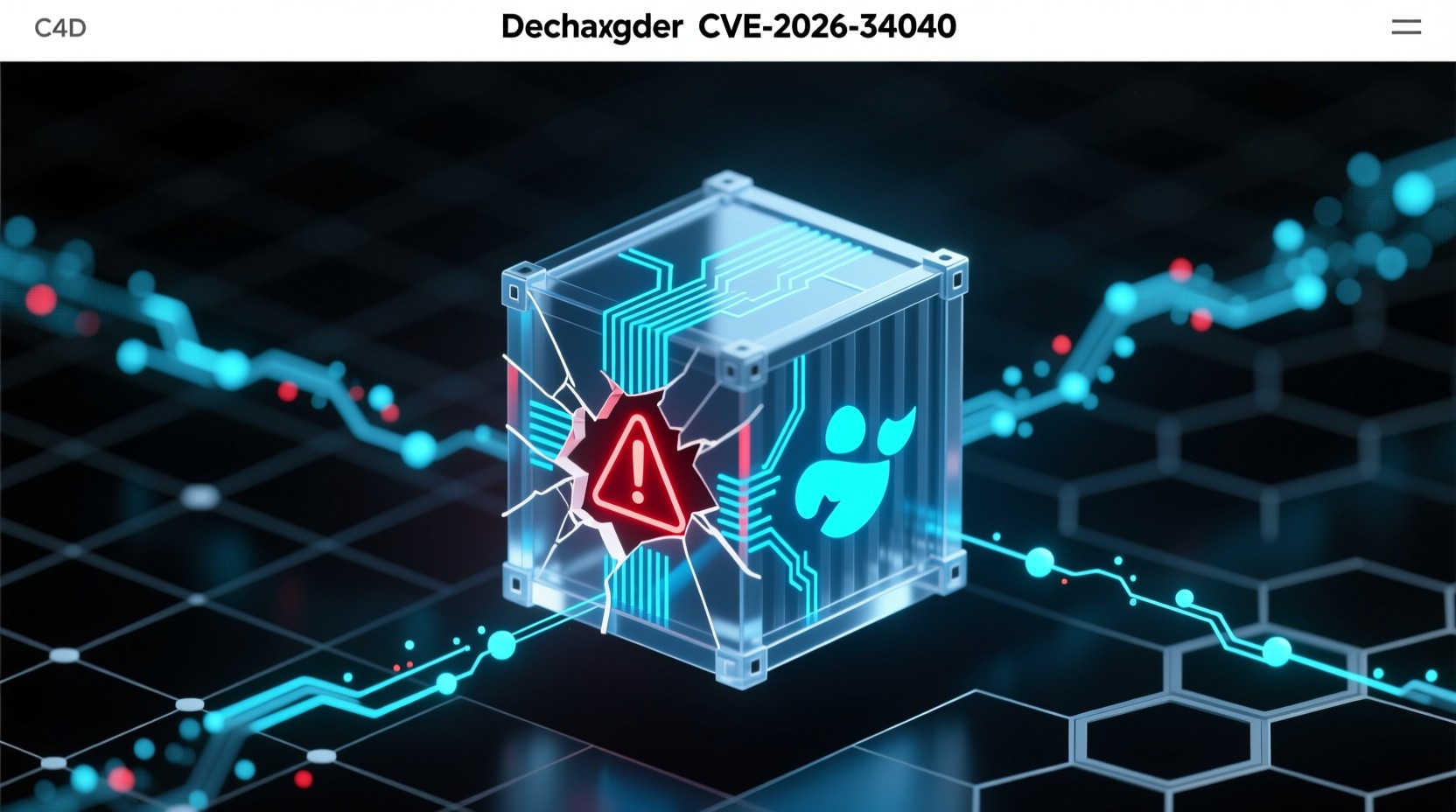
In the rapidly evolving landscape of containerization, security remains paramount. Recent disclosures highlight a critical vulnerability within Docker Engine that demands immediate attention from all engineering and operations teams. CVE-2026-34040, a high-severity flaw, allows attackers to bypass crucial authorization mechanisms, potentially leading to complete host system compromise. This article provides an in-depth technical analysis, explores the implications for your infrastructure, and outlines actionable steps for mitigation.
The Urgency: A Direct Threat to Your Infrastructure
The discovery of CVE-2026-34040 represents a significant security concern for any organization leveraging Docker. This vulnerability, with a CVSS score of 8.8, directly targets the authorization plugins that are fundamental to enforcing security policies in containerized environments. The ability for an attacker to bypass these controls means that actions normally denied – such as launching privileged containers or mounting sensitive host filesystems – could be executed. For development and infrastructure teams, this translates to an immediate need to assess their Docker deployments and apply necessary patches to prevent potential breaches. Ignoring this vulnerability could expose sensitive data, cloud credentials, and critical infrastructure to malicious actors.
Background: The Evolution of Authorization Bypass in Docker
CVE-2026-34040 is not an isolated incident; it stems from an incomplete fix for a previous vulnerability, CVE-2024-41110. That earlier vulnerability involved an authorization bypass through zero-length request bodies. While the fix for CVE-2024-41110 addressed that specific edge case, it failed to account for oversized HTTP request bodies. This oversight created the condition exploited by CVE-2026-34040.
Docker’s authorization plugins (AuthZ) are designed to act as gatekeepers, inspecting requests made to the Docker daemon and approving or denying them based on predefined security rules. These rules are critical for preventing high-risk operations. The vulnerability exploits a scenario where a specially crafted API request, exceeding a certain size threshold and containing padding, is sent to the Docker daemon. This oversized request is dropped before it reaches the authorization plugin, effectively making the plugin blind to the malicious request. The Docker daemon, however, processes the full request, leading to the creation of a privileged container with unauthorized host access.
Deep Technical Analysis: Understanding the Exploit Vector
The core of CVE-2026-34040 lies in how the Docker daemon handles oversized HTTP requests destined for authorization plugins. When an attacker sends a request that is larger than approximately 1MB and contains padding, the Docker daemon’s internal handling mechanisms can cause the request body to be truncated or dropped before it’s fully processed by the AuthZ plugin.
The critical failure occurs because the authorization plugin, which relies on inspecting the request body to make access control decisions, never receives the full payload. Consequently, it may approve a request that it would have otherwise denied if the complete request body, including potentially malicious instructions, had been presented. This results in the creation of a privileged container, granting the attacker the ability to:
- Access sensitive host system files (e.g., SSH keys, cloud credentials).
- Gain root access to the host.
- Execute arbitrary commands on the host.
- Escalate privileges within the containerized environment.
Furthermore, research indicates that AI coding agents, when tasked with debugging or accessing files like `kubeconfig`, could autonomously trigger this vulnerability by constructing a padded HTTP request upon encountering errors. This autonomous exploitation by AI agents adds a new layer of complexity and risk.
Practical Implications for Engineering Teams
The widespread adoption of Docker across development, testing, and production environments means that CVE-2026-34040 has broad implications:
- Cloud Credential Exposure: Attackers gaining host access can steal cloud provider credentials (AWS, GCP, Azure), leading to account takeover and widespread infrastructure compromise.
- Sensitive Data Theft: Access to host filesystems can expose intellectual property, customer data, and internal secrets.
- Runtime System Compromise: Malicious actors can deploy ransomware, conduct cryptocurrency mining, or disrupt services by taking control of production systems.
- Supply Chain Attacks: Compromised Docker hosts can be used to launch further attacks against other internal systems or external supply chain partners.
- AI Agent Security Risks: The potential for AI agents to inadvertently trigger this vulnerability necessitates careful scrutiny of agent interactions with the Docker API.
The underlying flaw has existed for years, impacting versions as far back as Docker Engine 1.10, underscoring the need for diligent security practices and timely updates.
Mitigation and Best Practices
Addressing CVE-2026-34040 requires a multi-faceted approach:
1. Immediate Patching
The most critical step is to update Docker Engine to a patched version. Docker Engine version 29.3.1 has been released to address this vulnerability. Ensure all Docker daemons and relevant services are updated promptly. For Docker Desktop users, ensure you are running the latest version, as patches are applied across the platform.
2. Review Authorization Plugin Configurations
If you rely on authorization plugins that introspect the request body for access control decisions, exercise extreme caution. Consider temporarily disabling such plugins or implementing stricter network controls until they can be verified or updated to handle oversized requests securely.
3. Principle of Least Privilege
Limit access to the Docker API strictly to trusted users and services. Implement network segmentation and firewall rules to restrict access to the Docker daemon’s network port (typically 2376 for TLS, 2375 without TLS) from authorized sources only.
4. Rootless Mode
Where feasible, running Docker in rootless mode can significantly mitigate the impact of container escapes and privilege escalation vulnerabilities, as it limits the daemon’s privileges relative to the host system.
5. Continuous Monitoring and Auditing
Implement robust logging and monitoring for Docker API access. Regularly audit access logs for suspicious activity, particularly requests that might be malformed or unusually large.
6. Hardened Docker Images
Utilize Docker Hardened Images (DHI) as part of your security strategy. These images are pre-hardened and regularly patched, reducing the attack surface and the likelihood of introducing vulnerabilities through base images. Docker has made its DHI catalog free and open source, making secure base images more accessible.
Related Internal Topics
Conclusion: Proactive Security is Non-Negotiable
CVE-2026-34040 is a stark reminder that the security of our containerized infrastructure requires constant vigilance. The ability to bypass authorization controls and gain host access is a critical threat that cannot be overlooked. By understanding the technical underpinnings of this vulnerability, assessing its practical implications, and implementing the recommended mitigation strategies—most importantly, timely patching—engineering teams can significantly reduce their exposure. As Docker continues to evolve, embracing AI-native workflows and new platform capabilities, maintaining a robust security posture remains the bedrock of reliable and secure software development and deployment.