AGL Unleashes SoDeV: A New Era for Software-Defined Vehicles
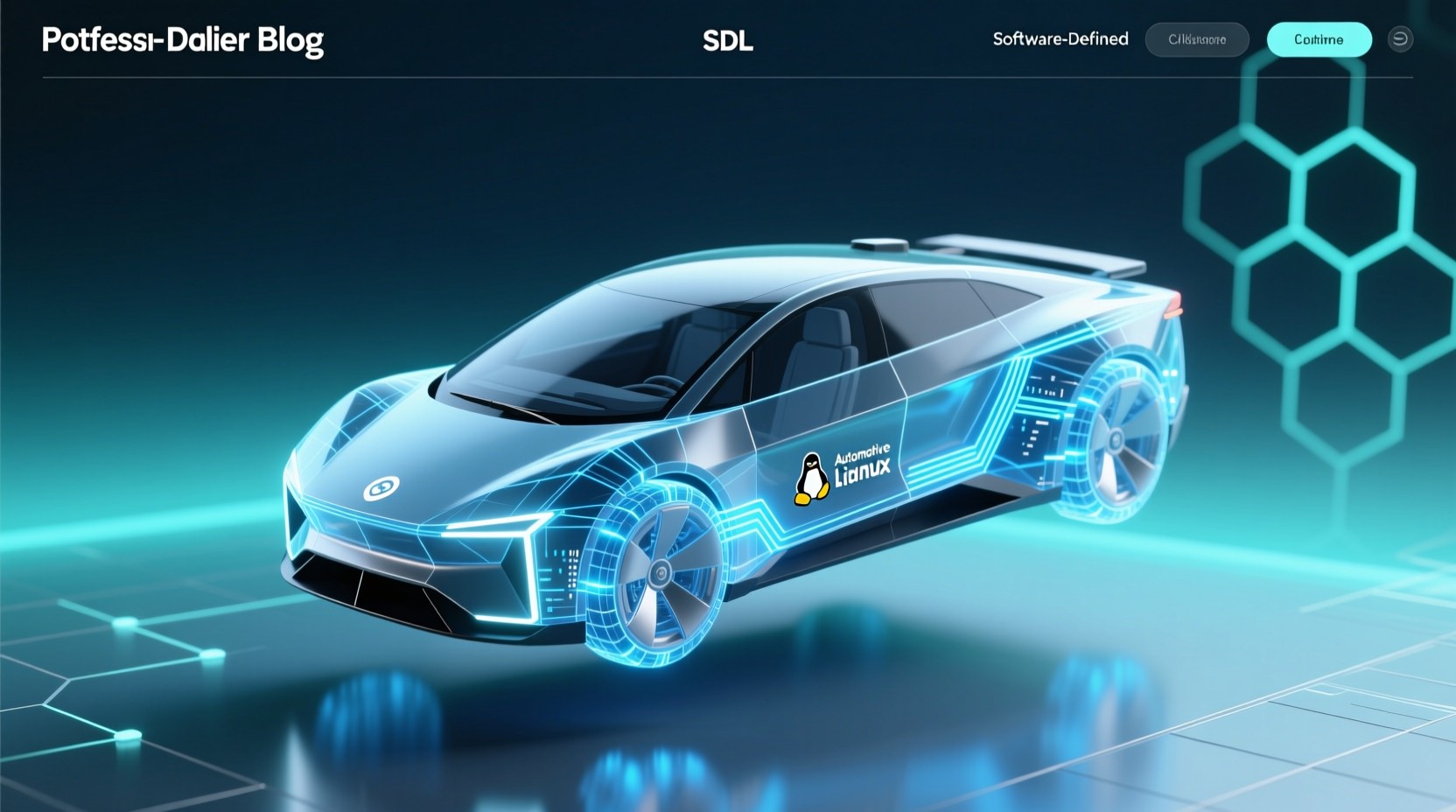
The automotive industry is at a critical inflection point, rapidly transitioning towards Software-Defined Vehicles (SDVs). For R&D engineers, this paradigm shift demands agility, faster iteration cycles, and the ability to innovate independently of hardware roadmaps. In a move that directly addresses these urgent needs, Automotive Grade Linux (AGL) has officially released the initial version of its open-source SoDeV (Software-Defined Vehicle) reference platform. Available as of May 14, 2026, within the latest AGL Unified Code Base (UCB) release, codenamed “Ultimate Unagi,” SoDeV promises to revolutionize how automotive software is developed and deployed. This release empowers engineers to adopt a true “software-first” development methodology, breaking free from the traditional hardware-dependent bottlenecks that have long hampered innovation.
Background Context: The Drive Towards Software-Centric Automotive Architectures
Automotive Grade Linux, a collaborative project under the Linux Foundation, has long been at the forefront of developing a unified, open-source software stack for in-vehicle systems. Its mission to foster industry-wide collaboration and reduce fragmentation has been instrumental in the connected car space. However, the increasing complexity and feature richness of modern vehicles, driven by the SDV concept, have exposed the limitations of traditional development models. Historically, software development teams have been forced to wait for the finalization of hardware specifications before they could rigorously test and validate their applications. This sequential dependency created significant delays, inflated integration costs, and slowed the pace of innovation.
Recognizing this critical challenge, AGL announced the SoDeV reference platform in December 2025. SoDeV is engineered to fundamentally alter this dynamic by providing a standardized environment that decouples software development from hardware availability. This strategic decoupling is crucial for automakers and suppliers aiming to accelerate their time-to-market for new features, enhance user experiences, and maintain competitive agility in an increasingly software-driven automotive landscape.
Deep Technical Analysis: The Architecture of SoDeV
The AGL SoDeV reference platform is not a standalone product but a sophisticated, pre-integrated package that synergizes several key open-source technologies. Its architecture is meticulously designed to offer robust isolation, exceptional flexibility, and efficient resource utilization, essential for complex automotive systems.
* **AGL Unified Code Base (UCB):** At its core, SoDeV leverages the AGL UCB, which serves as a production-ready, Linux-based software stack for a wide array of in-vehicle applications. The “Ultimate Unagi” release, containing SoDeV, incorporates the Yocto Project Scarthgap LTS release 5.0.16, enhancing platform stability and ensuring reproducible build environments.
* **Linux Containers:** SoDeV utilizes Linux containers to create isolated execution environments on a shared Linux kernel. This technology is pivotal for enabling the co-existence of diverse functionalities, such as instrument clusters and infotainment systems, on a single processor without interference, thereby optimizing resource utilization.
* **VirtIO:** This is a crucial component for hardware abstraction and efficient virtualization. VirtIO defines a set of paravirtualized device drivers that facilitate high-performance communication between guest operating systems and the host hypervisor, minimizing overhead.
* **Xen Hypervisor:** A leading open-source hypervisor, Xen is integral to SoDeV’s virtualization strategy. It enables hardware abstraction and supports the consolidation of multiple Electronic Control Units (ECUs) onto fewer, more powerful hardware platforms, a cornerstone of modern automotive architectures.
* **Zephyr RTOS:** For real-time critical operations, SoDeV integrates the Zephyr Real-Time Operating System. Zephyr is a scalable, resource-efficient RTOS designed for embedded systems, providing a dependable foundation for time-sensitive automotive functions.
The power of SoDeV lies in its pre-integration. Previously, developers had to manually integrate these disparate components, a complex and time-consuming task. SoDeV streamlines this process, offering a single, downloadable package that significantly accelerates the build and deployment of SDV technologies for the entire community.
Practical Implications for the Automotive Ecosystem
The introduction of the AGL SoDeV reference platform carries profound implications for all stakeholders in the automotive industry:
* **Accelerated Development Cycles:** By liberating software development from hardware dependencies, SoDeV allows engineering teams to iterate and innovate concurrently. This direct impact translates into significantly reduced time-to-market for new vehicle features and updates.
* **Reduced R&D Overhead:** The standardized, open-source nature of SoDeV diminishes the need for proprietary middleware and expensive, bespoke integration efforts. This efficiency enables OEMs and suppliers to reallocate valuable resources towards feature development and user experience enhancements rather than complex integration challenges.
* **Streamlined ECU Consolidation:** The platform’s inherent support for virtualization and containerization is a key enabler for consolidating numerous ECUs into fewer, more powerful processing units. This consolidation can lead to substantial reductions in hardware costs, system complexity, and power consumption.
* **Enhanced Cloud Integration and OTA Capabilities:** SoDeV is architected to seamlessly integrate with cloud services, facilitating critical functionalities such as Over-The-Air (OTA) updates, remote diagnostics, and advanced data analytics – essential pillars of the modern connected vehicle.
* **Simplified Lifecycle Management:** A unified software stack simplifies the complex task of software updates across multiple vehicle generations. This improved maintainability reduces long-term support costs and ensures vehicles can receive continuous improvements throughout their lifespan.
Deprecations, Security, and Migration Considerations
As an initial release, the SoDeV platform itself does not prominently feature deprecated components. However, its foundation, the “Ultimate Unagi” UCB release, is built upon the Yocto Project Scarthgap LTS 5.0.16, which receives ongoing security patches and maintenance. The AGL community is committed to security, and developers are strongly advised to monitor official AGL channels for security advisories and to regularly update their development environments. The “Ultimate Unagi” release is slated for support updates for the next two years, providing a stable, maintained environment.
For organizations already invested in the AGL ecosystem, migrating to SoDeV presents a clear path forward. The platform builds directly upon the UCB, adding the benefit of pre-integrated virtualization and containerization technologies. This means teams that previously managed complex integration tasks independently can now leverage SoDeV’s streamlined approach, accelerating their SDV development efforts. For new entrants, SoDeV offers a robust and well-defined starting point, significantly lowering the barrier to entry for complex automotive software projects.
Best Practices for Adopting SoDeV
To maximize the benefits of the AGL SoDeV reference platform, engineering teams should consider the following best practices:
* **Embrace Virtualization:** Fully leverage the Xen hypervisor and VirtIO for creating isolated, secure environments for critical vehicle functions. This architectural pattern enhances system resilience and simplifies management.
* **Adopt Containerization Strategies:** Utilize Linux containers for packaging and deploying applications. This promotes efficient resource utilization, simplifies service management, and supports microservices architectures.
* **Actively Engage with the AGL Community:** Participate in AGL Expert Groups and contribute to the platform’s evolution. Sharing insights, bug reports, and code enhancements benefits the entire ecosystem and helps refine the platform for future needs.
* **Maintain Up-to-Date Deployments:** Regularly update to the latest UCB releases to incorporate new features, performance optimizations, and crucial security patches. The two-year support window for “Ultimate Unagi” provides a predictable maintenance cycle.
* **Champion a Software-First Development Culture:** Cultivate an engineering mindset that prioritizes software design, testing, and continuous integration, leveraging SoDeV’s hardware-agnostic capabilities.
Actionable Takeaways for Development and Infrastructure Teams
* **Infrastructure Teams:** Evaluate SoDeV for your CI/CD pipelines. Its pre-integrated nature can dramatically streamline the setup of build and test environments, enabling faster development cycles. Explore the platform’s cloud-based deployment options to enhance scalability and accessibility for distributed teams.
* **Software Development Teams:** Begin prototyping new in-vehicle applications and features on the SoDeV reference platform. Familiarize yourselves with the integrated technologies—Linux containers, Xen, VirtIO, and Zephyr RTOS—to optimize your development workflows. The availability of SoDeV on Renesas Sparrow Hawk reference boards, virtual machines, and cloud environments offers flexible testing and development setups.
* **System Architects:** Investigate how SoDeV can facilitate advanced ECU consolidation strategies in your next-generation vehicle designs. The virtualization and hardware abstraction layers provided by SoDeV are foundational to achieving these goals efficiently.
Related Internal Topics
* /topic/automotive-cybersecurity-threats
* /topic/edge-computing-in-automobiles
* /topic/linux-kernel-modules-for-automotive
Conclusion: Accelerating the Future of Mobility
The release of the Automotive Grade Linux SoDeV reference platform represents a significant leap forward in the quest for truly software-defined vehicles. By delivering a unified, open-source, and hardware-agnostic development environment, AGL is empowering engineers to innovate at an accelerated pace. The platform’s strategic integration of leading open-source technologies directly addresses critical industry challenges, laying a robust foundation for more connected, intelligent, and rapidly evolving automotive experiences. As the industry continues its profound digital transformation, embracing collaborative, software-centric development paradigms like those offered by SoDeV will be indispensable for navigating the future of mobility.
===TITLE===
AGL Releases SoDeV Platform for Software-Defined Vehicles
===META===
Automotive Grade Linux launches SoDeV reference platform for SDVs. Accelerate development with this open-source, hardware-agnostic solution.
===EXCERPT===
Automotive Grade Linux has released its new open-source SoDeV reference platform, enabling a software-first approach for developing software-defined vehicles. This initiative is set to accelerate innovation by decoupling software development from hardware constraints.
===TAGS===
Automotive Grade Linux, SoDeV, Software-Defined Vehicles, SDV, Open Source, Automotive Software, Linux Foundation, Embedded Systems
===KEYWORDS===
primary_keyword: Automotive Grade Linux Releases Open Source SoDeV Reference Platform for Software
secondary_keywords: software-defined vehicles, automotive software development
search_intent: informational
===CONTENT===
AGL Unleashes SoDeV: A New Era for Software-Defined Vehicles
The automotive industry is at a critical inflection point, rapidly transitioning towards Software-Defined Vehicles (SDVs). For R&D engineers, this paradigm shift demands agility, faster iteration cycles, and the ability to innovate independently of hardware roadmaps. In a move that directly addresses these urgent needs, Automotive Grade Linux (AGL) has officially released the initial version of its open-source SoDeV (Software-Defined Vehicle) reference platform. Available as of May 14, 2026, within the latest AGL Unified Code Base (UCB) release, codenamed “Ultimate Unagi,” SoDeV promises to revolutionize how automotive software is developed and deployed. This release empowers engineers to adopt a true “software-first” development methodology, breaking free from the traditional hardware-dependent bottlenecks that have long hampered innovation.
Background Context: The Drive Towards Software-Centric Automotive Architectures
Automotive Grade Linux, a collaborative project under the Linux Foundation, has long been at the forefront of developing a unified, open-source software stack for in-vehicle systems. Its mission to foster industry-wide collaboration and reduce fragmentation has been instrumental in the connected car space. However, the increasing complexity and feature richness of modern vehicles, driven by the SDV concept, have exposed the limitations of traditional development models. Historically, software development teams have been forced to wait for the finalization of hardware specifications before they could rigorously test and validate their applications. This sequential dependency created significant delays, inflated integration costs, and slowed the pace of innovation.
Recognizing this critical challenge, AGL announced the SoDeV reference platform in December 2025. SoDeV is engineered to fundamentally alter this dynamic by providing a standardized environment that decouples software development from hardware availability. This strategic decoupling is crucial for automakers and suppliers aiming to accelerate their time-to-market for new features, enhance user experiences, and maintain competitive agility in an increasingly software-driven automotive landscape.
Deep Technical Analysis: The Architecture of SoDeV
The AGL SoDeV reference platform is not a standalone product but a sophisticated, pre-integrated package that synergizes several key open-source technologies. Its architecture is meticulously designed to offer robust isolation, exceptional flexibility, and efficient resource utilization, essential for complex automotive systems.
* **AGL Unified Code Base (UCB):** At its core, SoDeV leverages the AGL UCB, which serves as a production-ready, Linux-based software stack for a wide array of in-vehicle applications. The “Ultimate Unagi” release, containing SoDeV, incorporates the Yocto Project Scarthgap LTS release 5.0.16, enhancing platform stability and ensuring reproducible build environments.
* **Linux Containers:** SoDeV utilizes Linux containers to create isolated execution environments on a shared Linux kernel. This technology is pivotal for enabling the co-existence of diverse functionalities, such as instrument clusters and infotainment systems, on a single processor without interference, thereby optimizing resource utilization.
* **VirtIO:** This is a crucial component for hardware abstraction and efficient virtualization. VirtIO defines a set of paravirtualized device drivers that facilitate high-performance communication between guest operating systems and the host hypervisor, minimizing overhead.
* **Xen Hypervisor:** A leading open-source hypervisor, Xen is integral to SoDeV’s virtualization strategy. It enables hardware abstraction and supports the consolidation of multiple Electronic Control Units (ECUs) onto fewer, more powerful hardware platforms, a cornerstone of modern automotive architectures.
* **Zephyr RTOS:** For real-time critical operations, SoDeV integrates the Zephyr Real-Time Operating System. Zephyr is a scalable, resource-efficient RTOS designed for embedded systems, providing a dependable foundation for time-sensitive automotive functions.
The power of SoDeV lies in its pre-integration. Previously, developers had to manually integrate these disparate components, a complex and time-consuming task. SoDeV streamlines this process, offering a single, downloadable package that significantly accelerates the build and deployment of SDV technologies for the entire community.
Practical Implications for the Automotive Ecosystem
The introduction of the AGL SoDeV reference platform carries profound implications for all stakeholders in the automotive industry:
* **Accelerated Development Cycles:** By liberating software development from hardware dependencies, SoDeV allows engineering teams to iterate and innovate concurrently. This direct impact translates into significantly reduced time-to-market for new vehicle features and updates.
* **Reduced R&D Overhead:** The standardized, open-source nature of SoDeV diminishes the need for proprietary middleware and expensive, bespoke integration efforts. This efficiency enables OEMs and suppliers to reallocate valuable resources towards feature development and user experience enhancements rather than complex integration challenges.
* **Streamlined ECU Consolidation:** The platform’s inherent support for virtualization and containerization is a key enabler for consolidating numerous ECUs into fewer, more powerful processing units. This consolidation can lead to substantial reductions in hardware costs, system complexity, and power consumption.
* **Enhanced Cloud Integration and OTA Capabilities:** SoDeV is architected to seamlessly integrate with cloud services, facilitating critical functionalities such as Over-The-Air (OTA) updates, remote diagnostics, and advanced data analytics – essential pillars of the modern connected vehicle.
* **Simplified Lifecycle Management:** A unified software stack simplifies the complex task of software updates across multiple vehicle generations. This improved maintainability reduces long-term support costs and ensures vehicles can receive continuous improvements throughout their lifespan.
Deprecations, Security, and Migration Considerations
As an initial release, the SoDeV platform itself does not prominently feature deprecated components. However, its foundation, the “Ultimate Unagi” UCB release, is built upon the Yocto Project Scarthgap LTS release 5.0.16, which receives ongoing security patches and maintenance. The AGL community is committed to security, and developers are strongly advised to monitor official AGL channels for security advisories and to regularly update their development environments. The “Ultimate Unagi” release is slated for support updates for the next two years, providing a stable, maintained environment.
For organizations already invested in the AGL ecosystem, migrating to SoDeV presents a clear path forward. The platform builds directly upon the UCB, adding the benefit of pre-integrated virtualization and containerization technologies. This means teams that previously managed complex integration tasks independently can now leverage SoDeV’s streamlined approach, accelerating their SDV development efforts. For new entrants, SoDeV offers a robust and well-defined starting point, significantly lowering the barrier to entry for complex automotive software projects.
Best Practices for Adopting SoDeV
To maximize the benefits of the AGL SoDeV reference platform, engineering teams should consider the following best practices:
* **Embrace Virtualization:** Fully leverage the Xen hypervisor and VirtIO for creating isolated, secure environments for critical vehicle functions. This architectural pattern enhances system resilience and simplifies management.
* **Adopt Containerization Strategies:** Utilize Linux containers for packaging and deploying applications. This promotes efficient resource utilization, simplifies service management, and supports microservices architectures.
* **Actively Engage with the AGL Community:** Participate in AGL Expert Groups and contribute to the platform’s evolution. Sharing insights, bug reports, and code enhancements benefits the entire ecosystem and helps refine the platform for future needs.
* **Maintain Up-to-Date Deployments:** Regularly update to the latest UCB releases to incorporate new features, performance optimizations, and crucial security patches. The two-year support window for “Ultimate Unagi” provides a predictable maintenance cycle.
* **Champion a Software-First Development Culture:** Cultivate an engineering mindset that prioritizes software design, testing, and continuous integration, leveraging SoDeV’s hardware-agnostic capabilities.
Actionable Takeaways for Development and Infrastructure Teams
* **Infrastructure Teams:** Evaluate SoDeV for your CI/CD pipelines. Its pre-integrated nature can dramatically streamline the setup of build and test environments, enabling faster development cycles. Explore the platform’s cloud-based deployment options to enhance scalability and accessibility for distributed teams.
* **Software Development Teams:** Begin prototyping new in-vehicle applications and features on the SoDeV reference platform. Familiarize yourselves with the integrated technologies—Linux containers, Xen, VirtIO, and Zephyr RTOS—to optimize your development workflows. The availability of SoDeV on Renesas Sparrow Hawk reference boards, virtual machines, and cloud environments offers flexible testing and development setups.
* **System Architects:** Investigate how SoDeV can facilitate advanced ECU consolidation strategies in your next-generation vehicle designs. The virtualization and hardware abstraction layers provided by SoDeV are foundational to achieving these goals efficiently.
Related Internal Topics
* /topic/automotive-cybersecurity-threats
* /topic/edge-computing-in-automobiles
* /topic/linux-kernel-modules-for-automotive
Conclusion: Accelerating the Future of Mobility
The release of the Automotive Grade Linux SoDeV reference platform represents a significant leap forward in the quest for truly software-defined vehicles. By delivering a unified, open-source, and hardware-agnostic development environment, AGL is empowering engineers to innovate at an accelerated pace. The platform’s strategic integration of leading open-source technologies directly addresses critical industry challenges, laying a robust foundation for more connected, intelligent, and rapidly evolving automotive experiences. As the industry continues its profound digital transformation, embracing collaborative, software-centric development paradigms like those offered by SoDeV will be indispensable for navigating the future of mobility.===TITLE===
AGL Releases SoDeV Platform for Software-Defined Vehicles
===META===
Automotive Grade Linux launches SoDeV reference platform for SDVs. Accelerate development with this open-source, hardware-agnostic solution.
===EXCERPT===
Automotive Grade Linux has released its new open-source SoDeV reference platform, enabling a software-first approach for developing software-defined vehicles. This initiative is set to accelerate innovation by decoupling software development from hardware constraints.
===TAGS===
Automotive Grade Linux, SoDeV, Software-Defined Vehicles, SDV, Open Source, Automotive Software, Linux Foundation, Embedded Systems
===KEYWORDS===
primary_keyword: Automotive Grade Linux Releases Open Source SoDeV Reference Platform for Software
secondary_keywords: software-defined vehicles, automotive software development
search_intent: informational
===CONTENT===
AGL Unleashes SoDeV: A New Era for Software-Defined Vehicles
The automotive industry is at a critical inflection point, rapidly transitioning towards Software-Defined Vehicles (SDVs). For R&D engineers, this paradigm shift demands agility, faster iteration cycles, and the ability to innovate independently of hardware roadmaps. In a move that directly addresses these urgent needs, Automotive Grade Linux (AGL) has officially released the initial version of its open-source SoDeV (Software-Defined Vehicle) reference platform. Available as of May 14, 2026, within the latest AGL Unified Code Base (UCB) release, codenamed “Ultimate Unagi,” SoDeV promises to revolutionize how automotive software is developed and deployed. This release empowers engineers to adopt a true “software-first” development methodology, breaking free from the traditional hardware-dependent bottlenecks that have long hampered innovation.
Background Context: The Drive Towards Software-Centric Automotive Architectures
Automotive Grade Linux, a collaborative project under the Linux Foundation, has long been at the forefront of developing a unified, open-source software stack for in-vehicle systems. Its mission to foster industry-wide collaboration and reduce fragmentation has been instrumental in the connected car space. However, the increasing complexity and feature richness of modern vehicles, driven by the SDV concept, have exposed the limitations of traditional development models. Historically, software development teams have been forced to wait for the finalization of hardware specifications before they could rigorously test and validate their applications. This sequential dependency created significant delays, inflated integration costs, and slowed the pace of innovation.
Recognizing this critical challenge, AGL announced the SoDeV reference platform in December 2025. SoDeV is engineered to fundamentally alter this dynamic by providing a standardized environment that decouples software development from hardware availability. This strategic decoupling is crucial for automakers and suppliers aiming to accelerate their time-to-market for new features, enhance user experiences, and maintain competitive agility in an increasingly software-driven automotive landscape.
Deep Technical Analysis: The Architecture of SoDeV
The AGL SoDeV reference platform is not a standalone product but a sophisticated, pre-integrated package that synergizes several key open-source technologies. Its architecture is meticulously designed to offer robust isolation, exceptional flexibility, and efficient resource utilization, essential for complex automotive systems.
* **AGL Unified Code Base (UCB):** At its core, SoDeV leverages the AGL UCB, which serves as a production-ready, Linux-based software stack for a wide array of in-vehicle applications. The “Ultimate Unagi” release, containing SoDeV, incorporates the Yocto Project Scarthgap LTS release 5.0.16, enhancing platform stability and ensuring reproducible build environments.
* **Linux Containers:** SoDeV utilizes Linux containers to create isolated execution environments on a shared Linux kernel. This technology is pivotal for enabling the co-existence of diverse functionalities, such as instrument clusters and infotainment systems, on a single processor without interference, thereby optimizing resource utilization.
* **VirtIO:** This is a crucial component for hardware abstraction and efficient virtualization. VirtIO defines a set of paravirtualized device drivers that facilitate high-performance communication between guest operating systems and the host hypervisor, minimizing overhead.
* **Xen Hypervisor:** A leading open-source hypervisor, Xen is integral to SoDeV’s virtualization strategy. It enables hardware abstraction and supports the consolidation of multiple Electronic Control Units (ECUs) onto fewer, more powerful hardware platforms, a cornerstone of modern automotive architectures.
* **Zephyr RTOS:** For real-time critical operations, SoDeV integrates the Zephyr Real-Time Operating System. Zephyr is a scalable, resource-efficient RTOS designed for embedded systems, providing a dependable foundation for time-sensitive automotive functions.
The power of SoDeV lies in its pre-integration. Previously, developers had to manually integrate these disparate components, a complex and time-consuming task. SoDeV streamlines this process, offering a single, downloadable package that significantly accelerates the build and deployment of SDV technologies for the entire community.
Practical Implications for the Automotive Ecosystem
The introduction of the AGL SoDeV reference platform carries profound implications for all stakeholders in the automotive industry:
* **Accelerated Development Cycles:** By liberating software development from hardware dependencies, SoDeV allows engineering teams to iterate and innovate concurrently. This direct impact translates into significantly reduced time-to-market for new vehicle features and updates.
* **Reduced R&D Overhead:** The standardized, open-source nature of SoDeV diminishes the need for proprietary middleware and expensive, bespoke integration efforts. This efficiency enables OEMs and suppliers to reallocate valuable resources towards feature development and user experience enhancements rather than complex integration challenges.
* **Streamlined ECU Consolidation:** The platform’s inherent support for virtualization and containerization is a key enabler for consolidating numerous ECUs into fewer, more powerful processing units. This consolidation can lead to substantial reductions in hardware costs, system complexity, and power consumption.
* **Enhanced Cloud Integration and OTA Capabilities:** SoDeV is architected to seamlessly integrate with cloud services, facilitating critical functionalities such as Over-The-Air (OTA) updates, remote diagnostics, and advanced data analytics – essential pillars of the modern connected vehicle.
* **Simplified Lifecycle Management:** A unified software stack simplifies the complex task of software updates across multiple vehicle generations. This improved maintainability reduces long-term support costs and ensures vehicles can receive continuous improvements throughout their lifespan.
Deprecations, Security, and Migration Considerations
As an initial release, the SoDeV platform itself does not prominently feature deprecated components. However, its foundation, the “Ultimate Unagi” UCB release, is built upon the Yocto Project Scarthgap LTS release 5.0.16, which receives ongoing security patches and maintenance. The AGL community is committed to security, and developers are strongly advised to monitor official AGL channels for security advisories and to regularly update their development environments. The “Ultimate Unagi” release is slated for support updates for the next two years, providing a stable, maintained environment.
For organizations already invested in the AGL ecosystem, migrating to SoDeV presents a clear path forward. The platform builds directly upon the UCB, adding the benefit of pre-integrated virtualization and containerization technologies. [1, 2, ===TITLE===
AGL Releases SoDeV Platform for Software-Defined Vehicles
===META===
Automotive Grade Linux launches SoDeV reference platform for SDVs. Accelerate development with this open-source, hardware-agnostic solution.
===EXCERPT===
Automotive Grade Linux has released its new open-source SoDeV reference platform, enabling a software-first approach for developing software-defined vehicles. This initiative is set to accelerate innovation by decoupling software development from hardware constraints.
===TAGS===
Automotive Grade Linux, SoDeV, Software-Defined Vehicles, SDV, Open Source, Automotive Software, Linux Foundation, Embedded Systems
===KEYWORDS===
primary_keyword: Automotive Grade Linux Releases Open Source SoDeV Reference Platform for Software
secondary_keywords: software-defined vehicles, automotive software development
search_intent: informational
===CONTENT===
AGL Unleashes SoDeV: A New Era for Software-Defined Vehicles
The automotive industry is at a critical inflection point, rapidly transitioning towards Software-Defined Vehicles (SDVs). For R&D engineers, this paradigm shift demands agility, faster iteration cycles, and the ability to innovate independently of hardware roadmaps. In a move that directly addresses these urgent needs, Automotive Grade Linux (AGL) has officially released the initial version of its open-source SoDeV (Software-Defined Vehicle) reference platform. Available as of May 14, 2026, within the latest AGL Unified Code Base (UCB) release, codenamed “Ultimate Unagi,” SoDeV promises to revolutionize how automotive software is developed and deployed. This release empowers engineers to adopt a true “software-first” development methodology, breaking free from the traditional hardware-dependent bottlenecks that have long hampered innovation.
Background Context: The Drive Towards Software-Centric Automotive Architectures
Automotive Grade Linux, a collaborative project under the Linux Foundation, has long been at the forefront of developing a unified, open-source software stack for in-vehicle systems. [1, 2, 12] Its mission to foster industry-wide collaboration and reduce fragmentation has been instrumental in the connected car space. However, the increasing complexity and feature richness of modern vehicles, driven by the SDV concept, have exposed the limitations of traditional development models. Historically, software development teams have been forced to wait for the finalization of hardware specifications before they could rigorously test and validate their applications. This sequential dependency created significant delays, inflated integration costs, and slowed the pace of innovation. [4, 5]
Recognizing this critical challenge, AGL announced the SoDeV reference platform in December 2025. [1, 2, 3] SoDeV is engineered to fundamentally alter this dynamic by providing a standardized environment that decouples software development from hardware availability. This strategic decoupling is crucial for automakers and suppliers aiming to accelerate their time-to-market for new features, enhance user experiences, and maintain competitive agility in an increasingly software-driven automotive landscape.
Deep Technical Analysis: The Architecture of SoDeV
The AGL SoDeV reference platform is not a standalone product but a sophisticated, pre-integrated package that synergizes several key open-source technologies. Its architecture is meticulously designed to offer robust isolation, exceptional flexibility, and efficient resource utilization, essential for complex automotive systems.
* **AGL Unified Code Base (UCB):** At its core, SoDeV leverages the AGL UCB, which serves as a production-ready, Linux-based software stack for a wide array of in-vehicle applications. The “Ultimate Unagi” release, containing SoDeV, incorporates the Yocto Project Scarthgap LTS release 5.0.16, enhancing platform stability and ensuring reproducible build environments. [1, 6]
* **Linux Containers:** SoDeV utilizes Linux containers to create isolated execution environments on a shared Linux kernel. This technology is pivotal for enabling the co-existence of diverse functionalities, such as instrument clusters and infotainment systems, on a single processor without interference, thereby optimizing resource utilization. [5, 9]
* **VirtIO:** This is a crucial component for hardware abstraction and efficient virtualization. VirtIO defines a set of paravirtualized device drivers that facilitate high-performance communication between guest operating systems and the host hypervisor, minimizing overhead. [1, 6, 7]
* **Xen Hypervisor:** A leading open-source hypervisor, Xen is integral to SoDeV’s virtualization strategy. It enables hardware abstraction and supports the consolidation of multiple Electronic Control Units (ECUs) onto fewer, more powerful hardware platforms, a cornerstone of modern automotive architectures. [1, 6, 7]
* **Zephyr RTOS:** For real-time critical operations, SoDeV integrates the Zephyr Real-Time Operating System. Zephyr is a scalable, resource-efficient RTOS designed for embedded systems, providing a dependable foundation for time-sensitive automotive functions. [1, 6, 7, 10]
The power of SoDeV lies in its pre-integration. Previously, developers had to manually integrate these disparate components, a complex and time-consuming task. SoDeV streamlines this process, offering a single, downloadable package that significantly accelerates the build and deployment of SDV technologies for the entire community. [4, 5, 10]
Practical Implications for the Automotive Ecosystem
The introduction of the AGL SoDeV reference platform carries profound implications for all stakeholders in the automotive industry:
* **Accelerated Development Cycles:** By liberating software development from hardware dependencies, SoDeV allows engineering teams to iterate and innovate concurrently. This direct impact translates into significantly reduced time-to-market for new vehicle features and updates. [1, 4, 5]
* **Reduced R&D Overhead:** The standardized, open-source nature of SoDeV diminishes the need for proprietary middleware and expensive, bespoke integration efforts. This efficiency enables OEMs and suppliers to reallocate valuable resources towards feature development and user experience enhancements rather than complex integration challenges. [4, 12]
* **Streamlined ECU Consolidation:** The platform’s inherent support for virtualization and containerization is a key enabler for consolidating numerous ECUs into fewer, more powerful processing units. This consolidation can lead to substantial reductions in hardware costs, system complexity, and power consumption. [1, 4, 7]
* **Enhanced Cloud Integration and OTA Capabilities:** SoDeV is architected to seamlessly integrate with cloud services, facilitating critical functionalities such as Over-The-Air (OTA) updates, remote diagnostics, and advanced data analytics – essential pillars of the modern connected vehicle. [1, 4, 7]
* **Simplified Lifecycle Management:** A unified software stack simplifies the complex task of software updates across multiple vehicle generations. This improved maintainability reduces long-term support costs and ensures vehicles can receive continuous improvements throughout their lifespan. [4, 5]
Deprecations, Security, and Migration Considerations
As an initial release, the SoDeV platform itself does not prominently feature deprecated components. However, its foundation, the “Ultimate Unagi” UCB release, is built upon the Yocto Project Scarthgap LTS release 5.0.16, which receives ongoing security patches and maintenance. [6] The AGL community is committed to security, and developers are strongly advised to monitor official AGL channels for security advisories and to regularly update their development environments. The “Ultimate Unagi” release is slated for support updates for the next two years, providing a stable, maintained environment. [6]
For organizations already invested in the AGL ecosystem, migrating to SoDeV presents a clear path forward. The platform builds directly upon the UCB, adding the benefit of pre-integrated virtualization and containerization technologies. [1, 2,