The relentless pace of cloud innovation demands that engineering teams stay ahead of the curve. For those building and managing infrastructure on Amazon Web Services (AWS), a recent development promises significant performance uplifts and cost efficiencies: the unveiling and general availability of AWS Graviton4-powered EC2 instances. This new generation of custom-designed, ARM-based processors represents a pivotal moment for cloud-native architectures, offering compelling advantages for a wide range of workloads, from high-performance computing (HPC) to database operations and general-purpose applications. For engineers and architects, understanding the nuances of Graviton4 is no longer optional—it’s a strategic imperative.
Graviton4: Architecture and Core Innovations
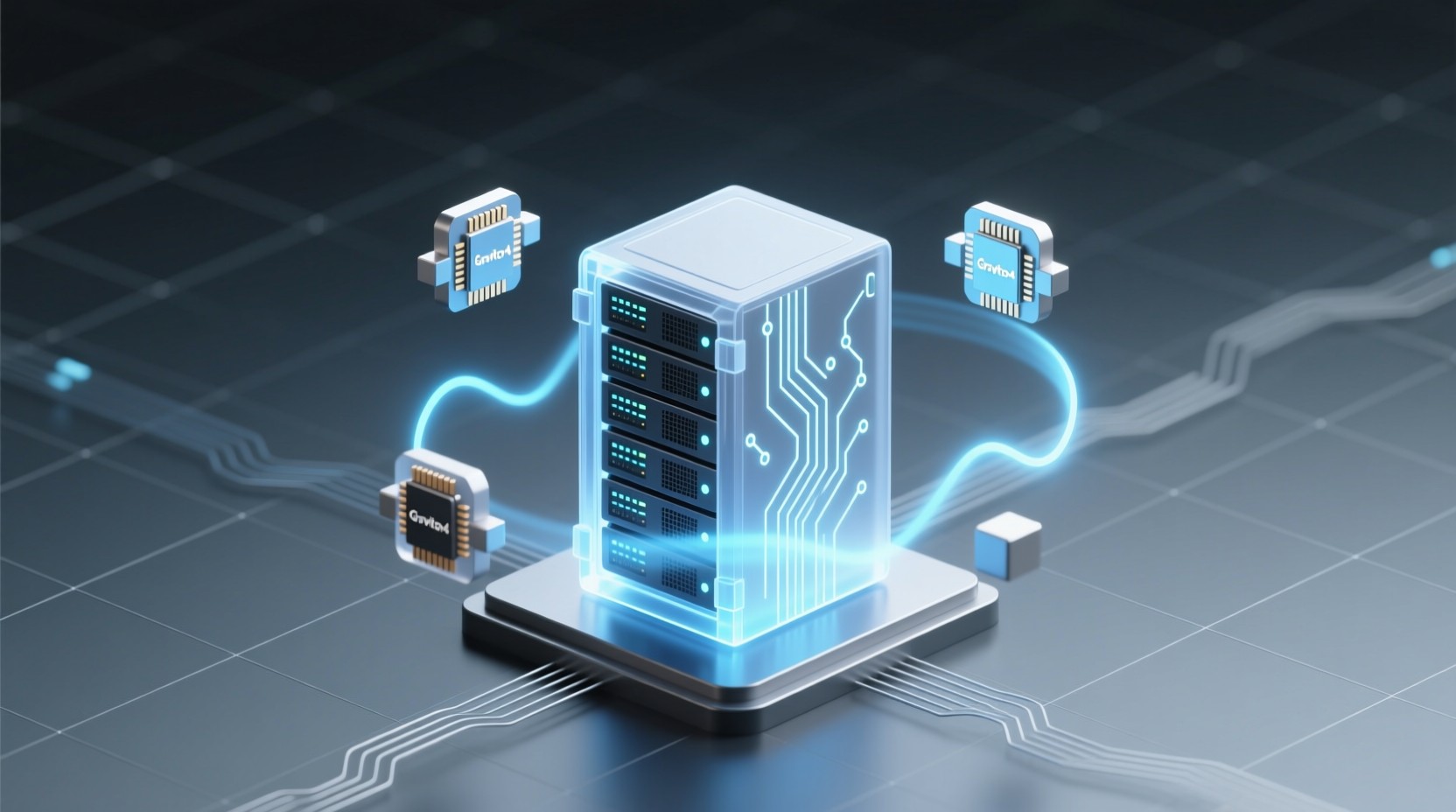
At the heart of the Graviton4’s advancements lies its foundation on the Arm Neoverse V2 architecture. This iteration boasts 96 cores, a 50% increase over its predecessor, Graviton3, providing substantially greater parallel processing capabilities. This core count is complemented by significant enhancements in memory bandwidth and cache. Graviton4 features 12 channels of DDR5-5600 memory, delivering up to 75% more memory bandwidth than Graviton3. This uplift is crucial for memory-bound applications, a common characteristic of many HPC and data-intensive workloads.
The processor also offers improved Instruction-Level Parallelism (ILP) and a larger L2 cache per core, contributing to higher instructions-per-cycle (IPC) performance. These architectural improvements are not just incremental; they represent a fundamental leap in processing efficiency. The Graviton4 powers several EC2 instance families, including the memory-optimized X8g, general-purpose M8g/C8g, and storage-optimized I8g instances, offering flexibility for diverse deployment scenarios. For instance, the X8g instances can scale up to 192 vCPUs with 3 TiB of DDR5 memory, making them particularly well-suited for large-scale in-memory databases and real-time analytics.
Performance Benchmarks: Graviton4 vs. The Competition
The real-world impact of Graviton4’s architectural enhancements is best illustrated through performance benchmarks. Independent analyses and AWS’s own testing reveal substantial gains across various domains.
High-Performance Computing (HPC)
In HPC environments, particularly for memory-bound seismic imaging applications, Graviton4 has demonstrated remarkable speedups. Case studies using DevitoPRO show Graviton4 running approximately 2.7 times faster than Graviton2 and 1.81 times faster than Graviton3 for 3D isotropic acoustic benchmarks. Similarly, other benchmarks like the 3D Fletcher Du Fowler TTI and 3D Self-adjoint TTI also show significant performance improvements, with Graviton4 outperforming previous generations by factors of 1.5 to 3.6.
Broader HPC benchmarks, such as OpenFOAM (computational fluid dynamics) and GROMACS (molecular dynamics), also report considerable per-vCPU performance improvements, with memory bandwidth increases playing a key role. For example, Graviton4 instances have shown up to 40% higher performance and up to 29% better price-performance compared to Graviton3-based instances in Amazon RDS workloads, with PostgreSQL seeing up to 23% more queries per second compared to Graviton3.
Databases and General-Purpose Workloads
For relational database workloads running on Amazon RDS, Graviton4-based instances (M8g) have shown consistent and substantial improvements. Compared to Graviton3 (M7g), M8g instances delivered a 23% increase in queries per second (QPS). Against Graviton2 (M6g), the increase was a remarkable 41% QPS. In terms of price-performance for RDS, Graviton4 offered a 34% improvement over Graviton2 and a 23% improvement over Graviton3.
In general-purpose computing, benchmarks comparing Graviton4 with Intel Xeon processors highlight its competitiveness. For heavy compilation tasks like Gem5, Graviton4 completed workloads approximately 187 seconds at a cost of $0.186 per run, while an Intel Xeon 8488C took 245 seconds and cost $0.288 per run. This translates to significant gains in both speed and cost efficiency.
SPEC CPU 2017 benchmarks also show Graviton4 instances outperforming comparable Intel Xeon instances in certain metrics, such as the r8g.2xlarge (Graviton4) achieving a SPECint2017_base score of 48.2, compared to 40.8 for the r7i.2xlarge (Intel Xeon 5th Gen).
Practical Implications and Migration Strategies
The performance and cost advantages of Graviton4 are substantial, but realizing these benefits requires a strategic approach to migration. For many Linux-based microservices and CI/CD pipelines, compatibility with ARM64 architectures is already high, meaning the migration can pay for itself within weeks.
Software Compatibility and Optimization
Most modern software, especially open-source projects and widely adopted frameworks, have ARM64 support. However, it’s crucial to ensure that your applications are compiled with ARM64-optimized compilers. Utilizing updated Amazon Machine Images (AMIs) and leveraging tools like GCC or Clang with appropriate flags (e.g., `-march=armv8-a+crc+lse`) can unlock the full potential of Graviton4. For applications with specific dependencies or older libraries, thorough testing is recommended before full-scale migration.
Instance Selection and Cost Savings
AWS offers Graviton4 in various EC2 instance families (M8g, R8g, X8g, etc.). The choice of instance family should align with your workload’s characteristics. Memory-intensive applications might benefit most from X8g instances, while general-purpose workloads could thrive on M8g or C8g. The price-performance improvements, often cited as up to 40% better than previous generations, can lead to significant reductions in cloud expenditure. By switching from x86 architectures to Graviton, engineering teams can often reduce cloud expenses by up to 40% while simultaneously increasing application throughput and performance.
Security Considerations: CVE-2026-31431 and Beyond
Recent security advisories highlight the ongoing importance of vigilance. A critical vulnerability, CVE-2026-31431 (also known as “Dirty Frag”), affecting the Linux kernel, could allow authenticated local users to escalate privileges. AWS has released updates for affected Amazon Linux kernels and other services like Bottlerocket, ECS, EKS, and Fargate. Customers are strongly advised to apply the latest kernel updates and security patches promptly. This includes monitoring AWS security bulletins and applying recommended patches for affected services such as Amazon Linux, Bottlerocket, and container orchestration platforms.
Another critical vulnerability, CVE-2026-8178, affects the Amazon Redshift JDBC Driver versions prior to 2.2.2, allowing for remote code execution under specific conditions. Upgrading to version 2.2.2 or later is essential for mitigating this risk. Regular patching and staying informed about AWS security advisories are paramount to maintaining a secure cloud environment.
Actionable Takeaways for Development and Infrastructure Teams
- Assess Workloads: Identify applications and services that are CPU-bound or memory-intensive. These are prime candidates for migration to Graviton4 instances to realize maximum performance and cost benefits.
- Pilot Migration: Start with a pilot migration of non-critical workloads or development/staging environments to Graviton4 instances. This allows for thorough testing of compatibility and performance before a full production rollout.
- Optimize Compilers and Libraries: Ensure your build systems are configured to use ARM64-optimized compilers and that all critical libraries are compatible or have ARM64 alternatives.
- Stay Updated on Security: Proactively monitor AWS security bulletins and advisories. Implement a robust patching strategy for your Amazon Machine Images (AMIs), container images, and operating systems to address vulnerabilities like CVE-2026-31431 and CVE-2026-8178.
- Leverage AWS Tools: Utilize AWS performance monitoring tools (CloudWatch, X-Ray) and cost management tools to track the impact of Graviton4 adoption and identify further optimization opportunities.
Related Internal Topics
- Deep Dive into AWS Lambda Durable Functions
- Strategies for Optimizing Amazon RDS Performance
- Securing Container Orchestration with AWS EKS
Conclusion: Embracing the ARM Revolution
The introduction of AWS Graviton4 signifies a major step forward in cloud computing efficiency and performance. Its advanced architecture, backed by compelling benchmark data, positions it as a superior choice for a wide array of workloads. For engineering teams, embracing Graviton4 is not just about adopting new hardware; it’s about future-proofing infrastructure, driving down operational costs, and unlocking new levels of application performance. By strategically assessing workloads, planning migrations, optimizing software, and maintaining a keen eye on security, organizations can harness the full power of AWS Graviton4 and lead the charge in the evolving landscape of cloud-native development.