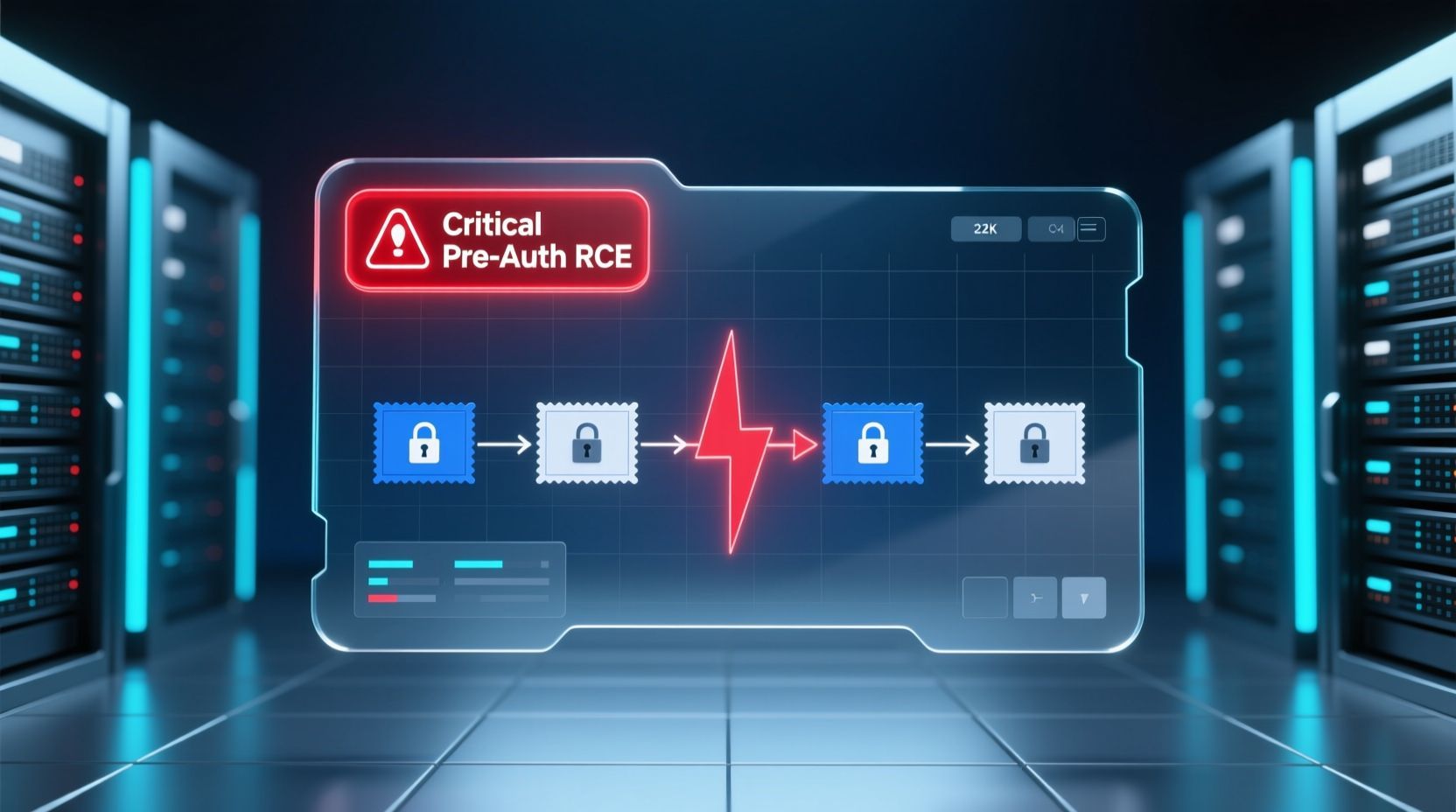
In the high-stakes world of enterprise software, a single vulnerability can unravel years of diligent development. Today, a critical revelation has sent ripples through the Java ecosystem: a chain of seven flaws, spearheaded by CVE-2026-1561, exposes IBM WebSphere Liberty to pre-authenticated Remote Code Execution (RCE). For engineers managing mission-critical web applications, this isn’t merely a bug; it’s an immediate, existential threat that demands swift and decisive action.
The implications are profound. Attackers could transition from network exposure to full server compromise without needing prior authentication. This vulnerability chain targets the SAML Web Single Sign-On (SSO) component, a cornerstone of identity and access management for countless applications. Ignoring this patch is akin to leaving the front door of your digital fortress wide open, inviting catastrophic data breaches, service disruptions, and severe reputational damage. The time for proactive security is now.
Background Context: WebSphere Liberty, SAML, and Deserialization
IBM WebSphere Liberty is a lightweight, modular Java application server designed for cloud-native applications and microservices. Its agility and small footprint have made it a popular choice for modern deployments, often serving as the backbone for critical business logic and data processing. A key component in enterprise identity management is SAML (Security Assertion Markup Language) SSO, which enables users to authenticate once and gain access to multiple services without re-entering credentials. This convenience relies heavily on the secure exchange and validation of digitally signed XML assertions, typically via HTTP POST requests containing Base64-encoded SAML responses.
At the heart of many complex vulnerabilities, including this one, lies deserialization. Deserialization is the process of converting a byte stream back into an object. When applications deserialize untrusted or unvalidated data, it can lead to arbitrary code execution. Attackers can craft malicious serialized objects that, when deserialized by the application, execute harmful code on the server. This class of vulnerability is well-documented, frequently appearing in the OWASP Top 10, and remains a persistent threat due to its potential for severe impact and often subtle exploitation vectors.
Deep Technical Analysis: CVE-2026-1561 and the Chained Exploits
The primary vulnerability, CVE-2026-1561, originates within the SAML Web SSO functionality of IBM WebSphere Liberty. While initial reports might indicate a CVSS score that doesn’t immediately scream “critical” (e.g., a base CVSS of 5.4 for the initial deserialization flaw itself), security researchers from Oligo Security have revealed that this flaw is the entry point for a chain of seven vulnerabilities that collectively achieve a full server compromise. This escalation path is what elevates the overall threat level significantly.
The core mechanism of CVE-2026-1561 involves unsafe deserialization within the SAML SSO cookie validation process. Specifically, the application attempts to validate a serialized cookie by appending a secret value and performing an integrity check. However, the flaw lies in a misunderstanding or misapplication of Java’s string manipulation. The `String.concat()` method in Java is non-mutating; it returns a new string with the concatenated value but does not modify the original string object.
String originalCookie = getCookieFromRequest();
String secret = getApplicationSecret();
String combined = originalCookie.concat(secret); // 'originalCookie' remains unchanged
// ... validation logic applied to 'combined' ...
// ... but if 'originalCookie' is used later, it's still untampered ...
Because the original serialized cookie string remains unchanged, an attacker can tamper with the SSO cookie and inject arbitrary serialized Java objects. The integrity check, unknowingly performed on the *newly created* (and then discarded) concatenated string, fails to detect the manipulation of the original cookie. This allows the crafted malicious payload to bypass validation and be deserialized by the server, leading to pre-authenticated Remote Code Execution.
This initial RCE then provides a foothold. The subsequent flaws in the chain exploit weak access controls and cryptographic protections within WebSphere Liberty. These allow an attacker to escalate privileges from the initial RCE to gain full control over the server. The architecture of SSO components, which inherently handle sensitive authentication data and often run with elevated privileges, makes them prime targets for such multi-stage attacks. The ability to manipulate session tokens, bypass authorization, and ultimately execute arbitrary commands on the underlying operating system underscores the severity. This isn’t just a coding bug; it’s a critical design and implementation failure around trust boundaries and data integrity.
Practical Implications for Web Application Security
The discovery of this critical vulnerability chain in IBM WebSphere Liberty carries severe practical implications for any organization utilizing the affected versions:
- Immediate Compromise Risk: The pre-authenticated RCE means that attackers do not need valid credentials to initiate the attack. Any internet-facing WebSphere Liberty instance with SAML Web SSO enabled is a potential target.
- Data Breaches and Intellectual Property Theft: Full server compromise grants attackers access to sensitive data, databases, and potentially other systems within the network, leading to exfiltration of customer data, proprietary code, or intellectual property.
- Systemic Disruption: Attackers can disrupt services, deploy ransomware, or establish persistent backdoors, severely impacting business operations and customer trust.
- Compliance and Regulatory Penalties: Organizations operating under regulations like GDPR, HIPAA, or PCI DSS face hefty fines and legal repercussions for breaches stemming from unpatched critical vulnerabilities.
- Supply Chain Risk: If WebSphere Liberty is part of a larger software supply chain, compromise of one component can propagate vulnerabilities to downstream systems and customers.
The fact that patches and configuration guidelines are now available is a double-edged sword: it provides a solution, but also signals to malicious actors that specific attack vectors have been identified and can now be targeted more precisely against unpatched systems.
Best Practices and Mitigation Strategies
Addressing this vulnerability requires a multi-faceted approach, combining immediate patching with long-term security best practices:
- Prioritize Immediate Patching: This is the most critical step. IBM has released patches and configuration guidelines. Organizations must identify all deployments of WebSphere Liberty, especially those with SAML Web SSO enabled, and apply the recommended security updates without delay. Treat this as a zero-day equivalent, given the active exploitation potential.
- Review SAML SSO Configurations: Even after patching, re-evaluate your SAML SSO configurations. Ensure that all integrity checks are robust and not susceptible to similar logic flaws. Implement strict validation for all incoming SAML assertions and cookies.
- Implement Deserialization Hardening: Beyond this specific vulnerability, adopt a comprehensive strategy to mitigate deserialization risks. This includes:
- Avoiding deserialization of untrusted data whenever possible.
- Using safe deserialization libraries or custom whitelisting mechanisms that restrict the types of objects that can be deserialized.
- Implementing digital signatures and encryption for serialized data to ensure integrity and confidentiality.
- Network Segmentation and Least Privilege: Isolate WebSphere Liberty instances into segmented network zones. Apply the principle of least privilege to both the application server itself and any user accounts or service accounts interacting with it.
- Enhanced Monitoring and Logging: Implement robust logging for authentication, authorization, and deserialization events. Monitor for unusual activity, failed login attempts, or unexpected process execution on WebSphere Liberty servers. Deploy Web Application Firewalls (WAFs) and Intrusion Detection/Prevention Systems (IDS/IPS) to detect and block suspicious traffic patterns.
- Regular Security Audits and Threat Modeling: Conduct regular security audits and penetration tests on your web applications and underlying infrastructure. Incorporate threat modeling into your development lifecycle to proactively identify and mitigate potential attack vectors, especially for critical components like SSO.
- Secure Coding Practices: Educate development teams on secure coding practices, particularly regarding data handling, input validation, and the dangers of unsafe deserialization.
Actionable Takeaways for Development and Infrastructure Teams
For Development Teams:
- Code Review Focus: Immediately review codebases for custom SAML implementations or any areas performing deserialization of external input. Validate that Java’s `String.concat()` behavior is correctly understood and applied in security-sensitive contexts.
- Dependency Management: Ensure that your dependency management practices allow for rapid identification and updating of vulnerable components. Automate vulnerability scanning in your CI/CD pipelines.
- Threat Modeling Workshops: Conduct specific threat modeling sessions focusing on authentication flows, data integrity, and potential deserialization gadget chains in your applications.
For Infrastructure Teams:
- Patch Management Priority: Elevate IBM WebSphere Liberty patches to critical priority. Schedule and execute updates for all affected instances, including development, staging, and production environments.
- Network Access Control: Restrict network access to WebSphere Liberty administrative interfaces and SAML endpoints to only necessary sources.
- Runtime Protection: Explore Runtime Application Self-Protection (RASP) solutions that can detect and prevent deserialization attacks and other runtime exploits, even before patches are applied.
- Incident Response Plan Activation: Review and prepare your incident response plan for potential exploitation of this vulnerability. Ensure clear communication channels and roles are established.
Related Internal Topic Links
- Java Security Best Practices in Enterprise Applications
- Understanding and Mitigating Deserialization Vulnerabilities
- Securing Single Sign-On (SSO) Implementations
Forward-Looking Conclusion
The IBM WebSphere Liberty vulnerability chain serves as a stark reminder that even mature, widely-used enterprise software can harbor critical flaws. The nuanced nature of the `String.concat()` issue, leading to a profound deserialization bypass, highlights the importance of deep technical understanding and rigorous security testing. As web applications grow in complexity, integrating more third-party components and relying on intricate authentication mechanisms, the attack surface only expands. Proactive security, continuous vigilance, and a robust patch management strategy are no longer optional but fundamental pillars of modern web application security. Engineers must remain at the forefront of threat intelligence, adapting their defenses and fostering a security-first culture to protect against the ever-evolving landscape of cyber threats.