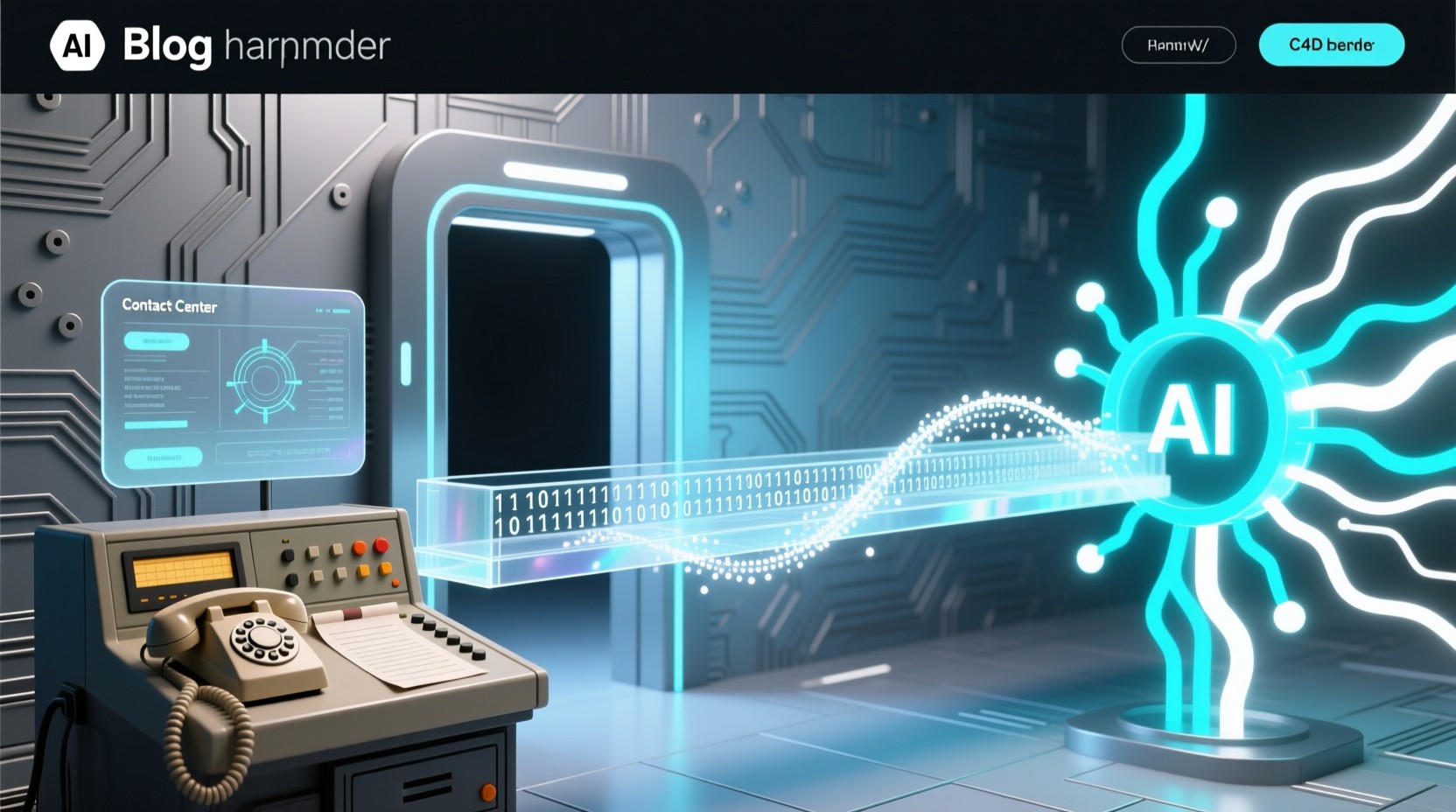
The relentless march of artificial intelligence is fundamentally reshaping the enterprise landscape, and nowhere is this more evident than in the contact center. For years, businesses have grappled with the challenge of integrating cutting-edge AI with their existing, often decades-old, contact center infrastructure. This collision point between the new and the legacy has created a significant bottleneck, hindering the adoption of advanced AI capabilities that promise enhanced customer experiences (CX) and operational efficiencies. Addressing this critical industry pain point head-on, TTEC Digital has unveiled its groundbreaking AI Gateway solution, a move that is poised to rewrite the enterprise AI playbook.
The Urgent Need for AI Integration in Contact Centers
Modern customers expect hyper-personalized, instant, and seamless interactions across all channels. Legacy contact center systems, typically built on older architectures, struggle to keep pace with these evolving demands. These systems are often characterized by high maintenance costs, limited scalability, and an inability to integrate with new technologies effectively. The result is a fragmented customer experience, frustrated agents juggling multiple disparate systems, and missed opportunities for intelligent automation and data-driven insights. The urgency for organizations to modernize is paramount; failing to do so risks not only customer dissatisfaction but also a significant competitive disadvantage.
TTEC Digital’s AI Gateway: A Technical Deep Dive
TTEC Digital’s recently launched AI Gateway (announced April 2, 2026) is engineered to act as a universal connector, bridging the gap between modern AI platforms and existing legacy contact center infrastructure. This innovative software solution is designed to enable TTEC clients to deploy, test, and scale AI within their current contact center ecosystems without necessitating costly and extensive migrations to entirely new technology platforms.
Architecture and Integration Capabilities
At its core, AI Gateway functions as an intelligent orchestration layer. It allows businesses to leverage multiple frontier AI solutions – including those from major providers like Amazon, Google, and Microsoft – and integrate them seamlessly with a wide array of contact center platforms, both on-premises and cloud-based. The architecture is designed for flexibility, supporting the ability to mix and switch AI models at any time and ingest data from numerous sources with advanced AI capabilities.
Key technical specifications and supported integrations highlighted by TTEC Digital include:
- AI Platform Support: Initially supporting Amazon, Google, and Microsoft, with architecture ready for Anthropic, OpenAI, and Nvidia.
- Contact Center Platform Compatibility: Designed to integrate with established platforms such as Avaya, Cisco, Five9, Genesys, Twilio, and Zoom, alongside major CRM platforms like Salesforce and Dynamics 365.
- API-First Design: Emphasizes an API-driven approach, facilitating easier integration with existing systems and enabling rapid deployment of new AI functionalities.
- Data Ingestion: Advanced capabilities for ingesting data from diverse sources, crucial for training and optimizing AI models for personalized customer interactions.
Addressing Migration Implications and Versioning
A significant technical challenge in AI adoption is the compatibility with existing software versions and the implications of migrating complex, often bespoke, legacy systems. AI Gateway sidesteps the need for a complete overhaul by acting as an intermediary. This means that specific versions of legacy contact center software (e.g., older versions of Avaya Aura or Cisco Unified Communications Manager) do not need to be immediately upgraded to their latest iterations to benefit from AI integrations. Instead, AI Gateway manages the communication protocols and data translation, reducing the immediate pressure on infrastructure teams to perform disruptive, high-risk upgrades.
The solution effectively creates a more agile AI ecosystem, allowing businesses to experiment with and adopt new AI models as they emerge, without being tethered to the release cycles of their core contact center infrastructure. This “plug-and-play” approach to AI integration is a critical differentiator.
Background Context: The Legacy Dilemma in Contact Centers
For decades, contact centers operated on a voice-centric model, with significant investments made in on-premises Private Branch Exchange (PBX) systems and Customer Relationship Management (CRM) tools. While these systems were robust for their time, they were not designed for the multi-channel, data-rich, and AI-driven customer interactions of today. The proliferation of digital channels (chat, social media, email) and the demand for real-time, personalized service have rendered many of these legacy systems inadequate.
The challenge is compounded by the fact that these legacy systems are often heavily customized, making migration a complex, costly, and time-consuming undertaking. Many enterprises face a critical decision: continue to operate with outdated technology, risking customer dissatisfaction and operational inefficiency, or embark on a potentially disruptive and expensive modernization journey. TTEC Digital’s AI Gateway emerges as a pragmatic solution to this dilemma, offering a middle ground that unlocks AI’s potential without the immediate need for a full “rip and replace” strategy.
Deep Technical Analysis: Enabling Enterprise AI
AI Gateway’s ability to connect disparate systems is a testament to sophisticated middleware design. It acts as an abstraction layer, decoupling the complexities of modern AI models from the intricacies of legacy contact center protocols. This approach is crucial for several reasons:
- Model Agnosticism: By supporting multiple AI providers, TTEC Digital ensures clients are not locked into a single vendor’s ecosystem. This fosters competition and allows for the selection of the best-fit AI models for specific use cases, whether it’s natural language processing (NLP) for chatbots, sentiment analysis for agent assistance, or predictive analytics for routing.
- Data Harmonization: Legacy systems often store data in disparate formats. AI Gateway’s advanced data ingestion capabilities are designed to harmonize this data, making it accessible and usable for AI models. This is critical for training AI to understand customer context and history across various touchpoints.
- Scalability and Performance: While not a direct replacement for core infrastructure, AI Gateway is built to handle the increased traffic and processing demands associated with AI integrations. Its architecture aims to ensure that the addition of AI services does not degrade the performance of the underlying contact center platform.
- Security Considerations: Integrating AI introduces new security vectors. TTEC Digital’s approach, by acting as a central gateway, allows for the implementation of robust security protocols and monitoring at a single point of integration, rather than managing security across numerous disparate AI tools.
Early adopters across various industries, including healthcare, BFSI, telecommunications, and the public sector, have reported significant improvements in ROI, cost savings, and customer satisfaction directly attributable to AI-enabled interactions facilitated by AI Gateway. These early successes underscore the practical impact of this integrated approach.
Practical Implications for Engineers and Infrastructure Teams
For R&D engineers and infrastructure teams, TTEC Digital’s AI Gateway presents a compelling pathway to adopt advanced AI capabilities with reduced immediate risk and investment.
- Reduced Migration Burden: The primary implication is the significant reduction in the immediate pressure to undertake costly and disruptive full-scale system migrations. Teams can focus on integrating AI functionalities rather than managing complex platform overhauls.
- Agile AI Experimentation: The ability to “mix and switch models” allows engineering teams to rapidly test and deploy various AI use cases (e.g., sentiment analysis, predictive routing, generative AI assistants) without committing to long-term vendor lock-ins or massive infrastructure changes. This accelerates innovation cycles.
- Focus on Value-Added Tasks: By abstracting away the complexities of AI integration with legacy systems, AI Gateway frees up engineering resources to focus on higher-value tasks, such as optimizing AI model performance, developing custom AI applications, and enhancing the overall customer journey.
- Phased Modernization Strategy: AI Gateway enables a more strategic, phased approach to contact center modernization. Businesses can gradually introduce AI capabilities, measure their impact, and then plan for deeper infrastructure modernization based on proven ROI, rather than attempting a risky “big bang” migration.
- Vendor Flexibility: The solution supports a multi-vendor AI strategy, preventing reliance on a single AI provider and allowing teams to select the best-performing models for specific tasks.
Best Practices for Implementing AI Gateway
To maximize the benefits of TTEC Digital’s AI Gateway, organizations should consider the following best practices:
- Define Clear Use Cases: Before implementation, clearly identify the specific business problems AI Gateway will solve. Whether it’s reducing average handling time (AHT), improving first-call resolution (FCR), enhancing agent productivity, or personalizing customer interactions, defined objectives are crucial.
- Data Governance and Quality: Ensure robust data governance policies are in place. The effectiveness of AI models heavily relies on the quality and accessibility of the data ingested. Clean, well-structured data will lead to more accurate and insightful AI-driven outcomes.
- Phased Rollout and Testing: Implement AI Gateway in stages, starting with pilot programs for specific use cases or departments. Thorough testing and feedback loops are essential to refine configurations and ensure seamless integration before a full-scale deployment.
- Agent Training and Change Management: While AI Gateway aims to simplify integration, human agents will still need training on how to work alongside new AI tools and understand the insights they provide. Effective change management is key to adoption and maximizing agent performance.
- Continuous Monitoring and Optimization: The AI landscape is dynamic. Regularly monitor the performance of integrated AI models, gather feedback, and leverage AI Gateway’s flexibility to update or switch models as needed to maintain optimal performance and adapt to evolving customer expectations.
- Security First Approach: Given the sensitive nature of customer data, prioritize security at every stage. Ensure that all integrations and data flows comply with relevant regulations (e.g., GDPR, CCPA) and industry best practices.
Related Internal Topics
- Contact Center Modernization Strategies
- Enterprise AI Adoption Frameworks
- CX Strategy and Digital Transformation
Conclusion: The Future of Integrated Contact Centers
TTEC Digital’s AI Gateway represents a significant advancement in the ongoing convergence of artificial intelligence and legacy contact center technology. By providing a flexible, robust, and non-disruptive integration layer, the company is empowering enterprises to unlock the transformative potential of AI without the daunting prospect of wholesale system overhauls. This solution not only addresses a critical industry challenge but also sets a new standard for how businesses can strategically adopt AI to enhance customer experiences, drive operational efficiencies, and maintain a competitive edge in an increasingly AI-driven world. As AI continues its rapid evolution, solutions like AI Gateway will be instrumental in enabling organizations to navigate this complex landscape and build the intelligent, responsive contact centers of the future.