OCI Accelerates Security Cadence: Monthly Patching Amidst AI-Driven Threats
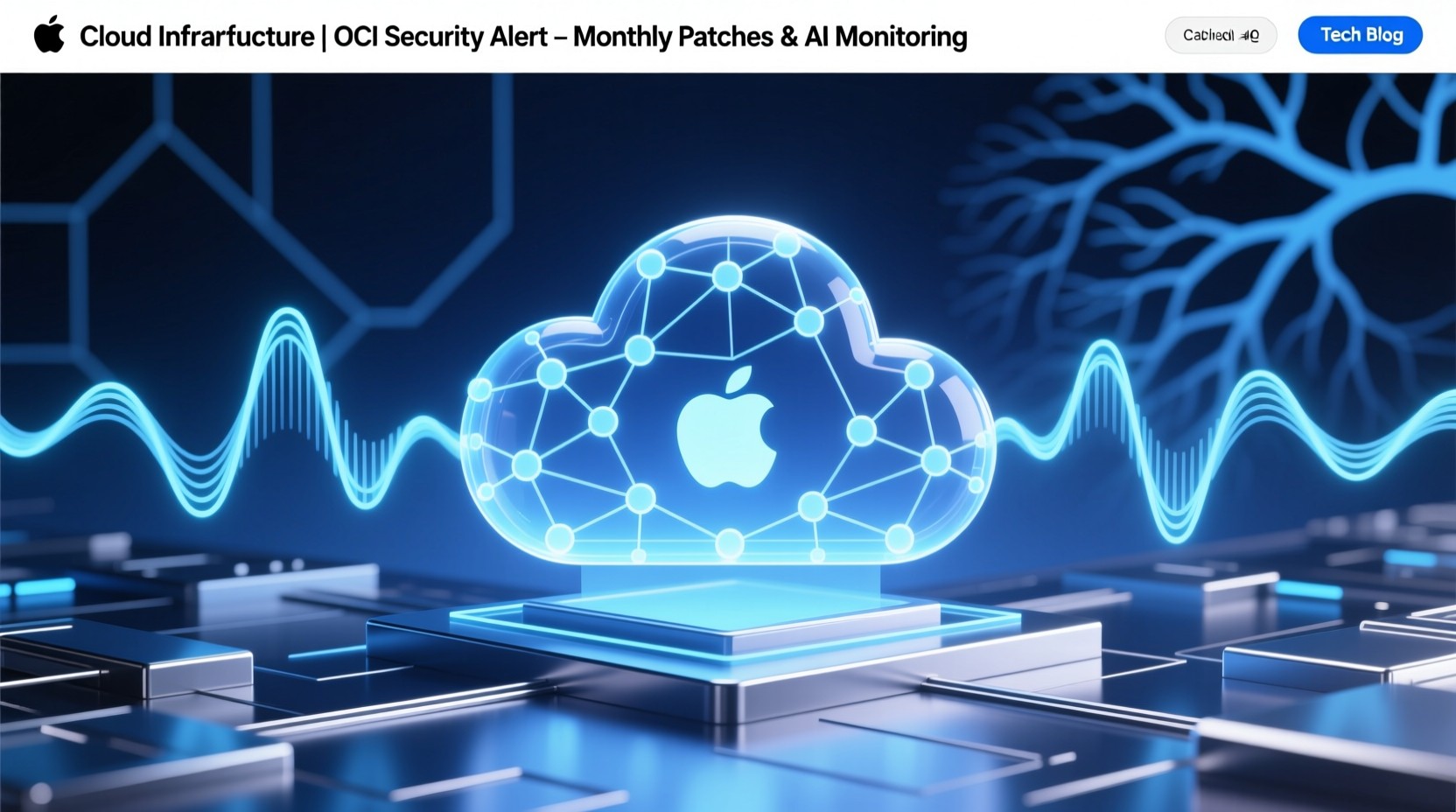
In a significant shift for cloud security and operational management, Oracle Cloud Infrastructure (OCI) is transitioning to a monthly cadence for its Critical Security Patch Updates (CSPUs), commencing May 2026. This proactive measure, driven by the escalating sophistication of AI-powered cyber threats and the accelerated speed of vulnerability discovery, mandates immediate attention from R&D engineers and infrastructure teams. The traditional quarterly Critical Patch Updates (CPUs) will continue, but the introduction of monthly CSPUs signifies Oracle’s commitment to a more agile and responsive security posture. This change is particularly critical for organizations leveraging OCI, as it introduces new operational rhythms and potential migration considerations.
Background: The Evolving Threat Landscape and Oracle’s Response
The cybersecurity landscape is in a perpetual state of evolution, with Artificial Intelligence emerging as a double-edged sword. While AI empowers organizations to enhance their security defenses, it also equips malicious actors with sophisticated tools for discovering and exploiting vulnerabilities at an unprecedented scale and speed. Oracle has openly acknowledged this trend, stating that “the latest generation of AI is transforming how software vulnerabilities are identified and fixed, increasing the speed and scale of discovery and remediation.” This acceleration necessitates a corresponding acceleration in the delivery of security fixes. Historically, quarterly patch cycles, while providing a predictable rhythm, could leave systems exposed for extended periods between updates. The new monthly CSPU model aims to mitigate this risk by providing more targeted and timely fixes for high-priority vulnerabilities. This strategic pivot is not merely a procedural update; it reflects a fundamental adaptation to the AI-driven threat intelligence era.
Deep Technical Analysis: Monthly CSPUs and AI Model Integration
The introduction of monthly CSPUs means that critical security fixes will be delivered more frequently, with the first CSPU scheduled for May 28, 2026, followed by subsequent releases on June 16 and August 18, 2026. The regular quarterly CPU in July will be cumulative, incorporating all previously released CSPU fixes. For Oracle-managed cloud services within OCI, these updates will be applied automatically, simplifying the patching process for customers. However, for customer-managed deployments, whether on-premises or within OCI, the responsibility for planning, testing, and applying these monthly patches still rests with the customer. This requires a robust patch management strategy that can accommodate the increased frequency without compromising system stability.
Concurrently, Oracle is significantly enhancing its AI capabilities on Oracle Cloud Infrastructure. The recent launch of OCI Enterprise AI provides access to cutting-edge models like xAI’s Grok 4.3, boasting a million-token context window and strong performance metrics (98% on τ²-Bench Telecom, 81% on IFBench), and NVIDIA Nemotron 3 Nano Omni, a multimodal open-source model. These advancements underscore Oracle’s commitment to providing a leading AI platform, which in turn influences the security considerations for data and model governance within OCI. The integration of advanced AI models also means that Oracle is leveraging these same frontier AI models to improve its own vulnerability detection and response mechanisms.
Practical Implications for OCI Users
The shift to monthly patching has several direct implications for organizations utilizing Oracle Cloud Infrastructure:
- Increased Patch Management Overhead: For customer-managed OCI environments, the need to test and deploy patches monthly will increase the operational burden. This necessitates dedicated resources and refined processes for patch management.
- Reduced Vulnerability Window: While increasing operational complexity, the monthly cadence significantly reduces the window of exposure to critical vulnerabilities, thereby enhancing overall security posture.
- AI Model Integration and Security: The rapid advancement and integration of new AI models within OCI require a parallel focus on securing AI workloads. This includes data privacy, model governance, and access control for AI services.
- Hybrid Cloud Strategy Refinement: With Oracle’s expanded partnership with IBM, including Red Hat Enterprise Linux (RHEL) support on OCI and enhanced IBM Guardium support for Oracle Exadata Database Service, organizations need to ensure their hybrid cloud security strategies are comprehensive and aligned across all environments.
- End-of-Life Considerations for Older Oracle Database Versions: While not directly tied to the monthly patching announcement, it’s crucial to note that Oracle Database 21c is not eligible for Extended Support and its error correction/patching ends on July 31, 2027. Running unsupported versions poses significant security risks, making migration to supported versions, such as Oracle Database 19c (with support until December 31, 2032), a critical undertaking.
Best Practices for Adapting to OCI’s Evolving Security and AI Landscape
To effectively navigate these changes, R&D engineers and infrastructure teams should adopt the following best practices:
- Automate Patch Management Where Possible: Leverage OCI’s automation capabilities and third-party tools to streamline the testing and deployment of monthly patches in customer-managed environments.
- Implement Robust Testing Protocols: Develop comprehensive regression testing suites that can be executed quickly to validate patch integrity before deployment, minimizing the risk of operational disruptions.
- Prioritize Security Updates: Establish clear priorities for applying CSPUs, focusing on those that address the most critical vulnerabilities affecting your specific OCI services and applications.
- Enhance AI Security Governance: Implement strict access controls, data encryption, and auditing for OCI AI services. Regularly review and update security policies related to AI model development and deployment.
- Stay Informed on Deprecations and EOL: Continuously monitor OCI service announcements for deprecations and end-of-life notices. Proactively plan migrations away from unsupported services and older database versions. For instance, the OCI Data Labeling service reached its end of life on August 30, 2025.
- Leverage Oracle Support Resources: Utilize Oracle’s My Oracle Support, Technical Account Management, and Customer Success teams to assist with planning, testing, and executing upgrades and patching cycles.
Actionable Takeaways for Development and Infrastructure Teams
- Review and Update Patch Management Workflows: Immediately assess current patch management processes and adapt them to accommodate a monthly patching cycle. This may involve allocating additional resources or investing in automation tools.
- Conduct a Security Posture Assessment: Evaluate your current OCI security configuration, paying close attention to IAM policies, network security, and data protection measures, especially for AI workloads.
- Develop a Migration Roadmap for Unsupported Oracle Databases: If running Oracle Database 21c or other versions nearing end-of-support, prioritize the development and execution of a migration plan to a supported version like 19c or newer.
- Explore OCI AI Services and Security Implications: Investigate the new OCI Enterprise AI offerings and understand the security and governance frameworks required for their effective and safe deployment.
Related Internal Topic Links
Conclusion: Embracing Agility in the AI-Secured Cloud Era
Oracle’s move to monthly security patches on Oracle Cloud Infrastructure is a necessary and strategic adaptation to the evolving threat landscape, amplified by AI. While this shift introduces new operational demands, particularly for customer-managed environments, the benefits of a reduced vulnerability window and enhanced security are undeniable. Coupled with the rapid advancements in OCI’s AI capabilities, this period marks a critical juncture for R&D engineers and infrastructure professionals. By embracing agile security practices, proactively managing updates, and staying abreast of platform evolution, organizations can harness the full potential of Oracle Cloud Infrastructure while maintaining a robust defense against emerging threats.