Cloudflare’s AI Agent Restructuring: Layoffs and the Future of Work
The tech landscape is in constant flux, and Cloudflare, a cornerstone of internet infrastructure and security, is making seismic shifts. Recent announcements reveal a significant restructuring effort, involving the layoff of over 1,100 employees, driven by an aggressive integration of AI agents into its operations. This move, while jarring, underscores a critical inflection point for R&D engineering teams, demanding a re-evaluation of workflows, security postures, and the very definition of productivity in the era of artificial intelligence.
The AI Imperative: Cloudflare’s Strategic Pivot
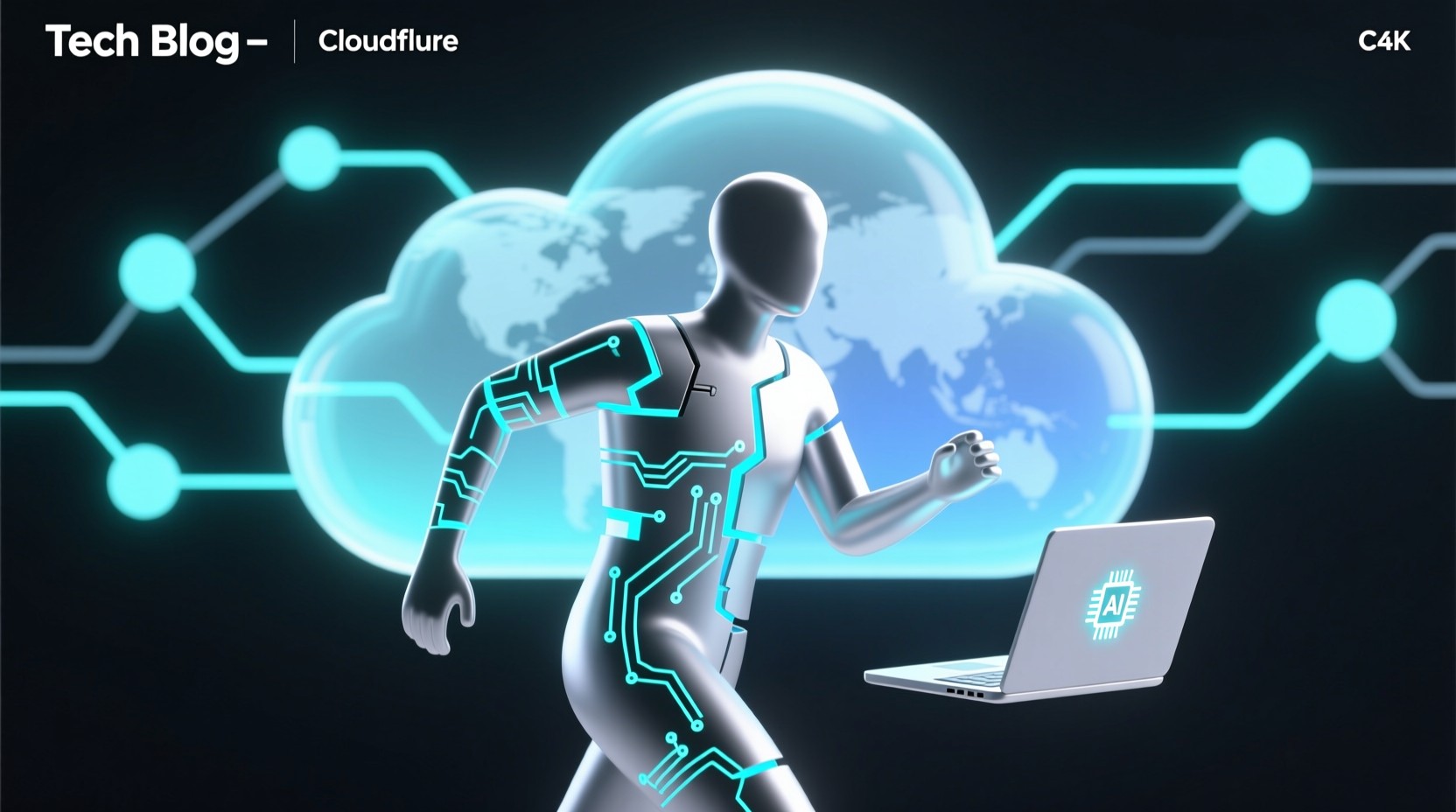
In a move that has sent ripples across the tech industry, Cloudflare announced in early May 2026 its decision to lay off more than 1,100 employees worldwide. This is not a cost-cutting measure, but rather a strategic re-architecture of the company to embrace the “agentic AI era.” CEO Matthew Prince and President Michelle Zatlyn communicated that the company’s AI usage has surged by over 600% in the past three months alone, with AI agents now deeply embedded in HR, marketing, finance, and crucially, engineering functions. The directive is clear: to “supercharge the value we deliver to our customers” and honor Cloudflare’s mission, the company must evolve its operational architecture for an AI-centric future. This implies a fundamental rethinking of human roles and AI agent collaboration, aiming for enhanced efficiency and innovation.
This strategic pivot is not merely about adopting new tools; it’s about fundamentally redesigning workflows and organizational structures. The emphasis is on intentionality—how to architect a company for maximum value delivery in an AI-driven world. For R&D engineering teams, this translates to a new paradigm where AI agents are not just assistants but integral components of the development lifecycle. This necessitates a deep understanding of how to leverage these agents for tasks ranging from code generation and testing to infrastructure management and security analysis, while ensuring human oversight and strategic direction remain paramount.
Deep Technical Analysis: AI Agents, Zero Trust, and Infrastructure Evolution
Cloudflare’s embrace of AI agents is not without its technical underpinnings and implications. The company has been actively developing and integrating AI capabilities across its platform. For instance, Cloudflare launched “Mesh to Secure the AI Agent Lifecycle” in April 2026, signaling a commitment to securing the very tools that are driving this transformation. This initiative, alongside partnerships with Wiz to “Secure the Global AI Attack Surface,” highlights a proactive approach to managing the complexities and potential vulnerabilities introduced by widespread AI adoption.
The integration of AI agents into Cloudflare’s own operations and product offerings raises critical questions about security. The “agentic AI era” necessitates robust Zero Trust frameworks to manage these new entities. Cloudflare’s existing strength in Zero Trust is likely to be further tested and expanded. As AI agents interact with systems, access data, and execute tasks, the principles of “never trust, always verify” become even more critical. This involves implementing granular access controls, continuous monitoring, and advanced threat detection specifically tailored for AI-driven activities. The development of AI Security Posture Management (AI-SPM) within Cloudflare’s Zero Trust platform is a direct response to this need, allowing organizations to monitor, analyze, and control AI usage.
Furthermore, Cloudflare’s infrastructure itself is evolving. The company has been investing in next-generation hardware, such as its Gen 13 servers utilizing AMD EPYC™ Turin CPUs, aiming to double compute throughput at the edge. This hardware evolution is coupled with software modernization, including the transition to a Rust-based proxy to replace NGINX, enhancing performance and resilience. These underlying infrastructure improvements are crucial for supporting the increased computational demands of AI agents and large-scale AI model inference.
Background Context: The Shifting Sands of Cybersecurity and AI
The recent developments at Cloudflare occur against a backdrop of rapidly advancing AI capabilities and an ever-evolving threat landscape. The incident in November 2025, where attackers gained access to Cloudflare’s Salesforce support environment via a third-party integration, served as a stark reminder of the supply-chain risks inherent in interconnected systems, even for security giants. While Cloudflare’s core infrastructure remained unaffected, the incident underscored the importance of securing every link in the operational chain.
Cloudflare’s strategic move towards AI agents is also a response to the broader industry trend of leveraging AI for both offensive and defensive purposes. The company’s own reports and analyses have highlighted the increasing sophistication of AI-driven cyberattacks, including large-scale DDoS attacks. By integrating AI agents more deeply into its own operations and product suite, Cloudflare aims to stay ahead of these threats, enhancing its ability to detect, respond to, and mitigate sophisticated attacks.
The layoffs, while significant, can also be viewed as Cloudflare’s attempt to optimize its workforce for the future. The company’s co-founders have emphasized that this is not about replacing humans but about redefining roles and maximizing human-AI collaboration. This aligns with broader discussions about the future of work, where AI agents are expected to augment human capabilities, automate routine tasks, and enable professionals to focus on higher-level strategic and creative endeavors.
Practical Implications for R&D Engineering Teams
For R&D engineering teams, Cloudflare’s strategic shift presents both challenges and opportunities. The increased reliance on AI agents means that engineers will need to develop new skill sets:
- Prompt Engineering and AI Orchestration: Mastering the art of crafting effective prompts to guide AI agents and orchestrating complex AI workflows will become a core competency.
- AI Security and Governance: Understanding how to secure AI agents, manage their access, and ensure compliance with data privacy regulations will be critical. This includes vigilance against new attack vectors like AI-powered phishing or the misuse of AI for credential harvesting.
- Integration and Observability: Engineers will need to integrate AI agents seamlessly into existing CI/CD pipelines and development workflows, while ensuring adequate observability into AI agent performance and behavior. Cloudflare’s recent release of Log Explorer for native observability and forensics is a step in this direction.
- Performance Optimization: With AI models becoming more prevalent, optimizing applications for AI inference and ensuring efficient resource utilization will be key. Cloudflare’s advancements in edge compute and server architecture (e.g., Gen 13 servers) are designed to support these demands.
- Understanding Vendor Risk: The November 2025 incident serves as a potent reminder for engineers to rigorously vet third-party integrations and understand the security posture of all components within their technology stack.
The layoffs themselves signal a potential shift in the demand for certain roles. While some tasks may become automated, the need for skilled engineers who can build, manage, secure, and strategically deploy AI systems will likely increase. The focus may shift from manual coding and routine tasks to higher-level system design, AI model evaluation, and ethical AI deployment.
Best Practices for Navigating the Agentic AI Era
To thrive in this evolving landscape, R&D engineering teams should consider the following best practices:
- Embrace Continuous Learning: Stay abreast of the latest advancements in AI, machine learning, and their security implications. Platforms like Cloudflare are rapidly innovating in this space.
- Prioritize Security by Design: Integrate security considerations into every stage of AI agent development and deployment. This includes implementing Zero Trust principles for AI entities.
- Foster Human-AI Collaboration: Identify tasks best suited for AI agents and those that require human expertise. Develop workflows that maximize the synergy between human creativity and AI efficiency.
- Develop Robust Monitoring and Auditing: Implement comprehensive logging and monitoring for AI agent activities to ensure accountability, detect anomalies, and facilitate incident response.
- Proactive Vendor Risk Management: Scrutinize third-party AI tools and integrations. Understand their security certifications, data handling practices, and potential impact on your overall security posture.
- Adaptability and Agility: The pace of change in AI is unprecedented. Teams must be agile, willing to experiment with new tools and methodologies, and quick to adapt to new security challenges and opportunities.
Actionable Takeaways for Development and Infrastructure Teams
Cloudflare’s strategic restructuring and emphasis on AI agents offer several actionable insights:
- Re-evaluate Your AI Strategy: Assess your organization’s current and planned use of AI. Are you prepared for the security and operational implications of deploying AI agents at scale?
- Strengthen Zero Trust for AI: Extend your Zero Trust policies to encompass AI agents. This includes identity management, access controls, and continuous monitoring of AI entities.
- Invest in AI Security Skills: Equip your engineering teams with the knowledge and tools to secure AI systems and data. Consider training in prompt engineering, AI security best practices, and AI governance.
- Review Third-Party AI Integrations: Just as Cloudflare learned from its supply-chain incident, rigorously assess the security of any third-party AI services or tools you integrate.
- Explore Cloudflare’s AI Offerings: Cloudflare is actively expanding its AI security and development capabilities, including AI Security Posture Management and tools for securing the AI lifecycle. Evaluate how these offerings could enhance your security and development posture.
Related Internal Topics
- Implementing a Comprehensive Zero Trust Architecture
- Securing AI/ML Development Pipelines
- DevSecOps in the Age of AI: Integration Strategies
Conclusion: Charting the Course in the Agentic AI Era
Cloudflare’s bold restructuring underscores a fundamental shift in how technology companies are preparing for the pervasive influence of AI. The layoffs, driven by the integration of AI agents, signal a future where human expertise and artificial intelligence collaborate more closely than ever before. For R&D engineers and infrastructure teams, this era demands adaptability, a deep commitment to security, and a proactive approach to learning. By understanding the technical underpinnings, embracing best practices, and acting on actionable insights, organizations can navigate the complexities of the agentic AI era and harness its transformative potential.