The Urgent Imperative: Integrating AI with Evolving Contact Center Architectures
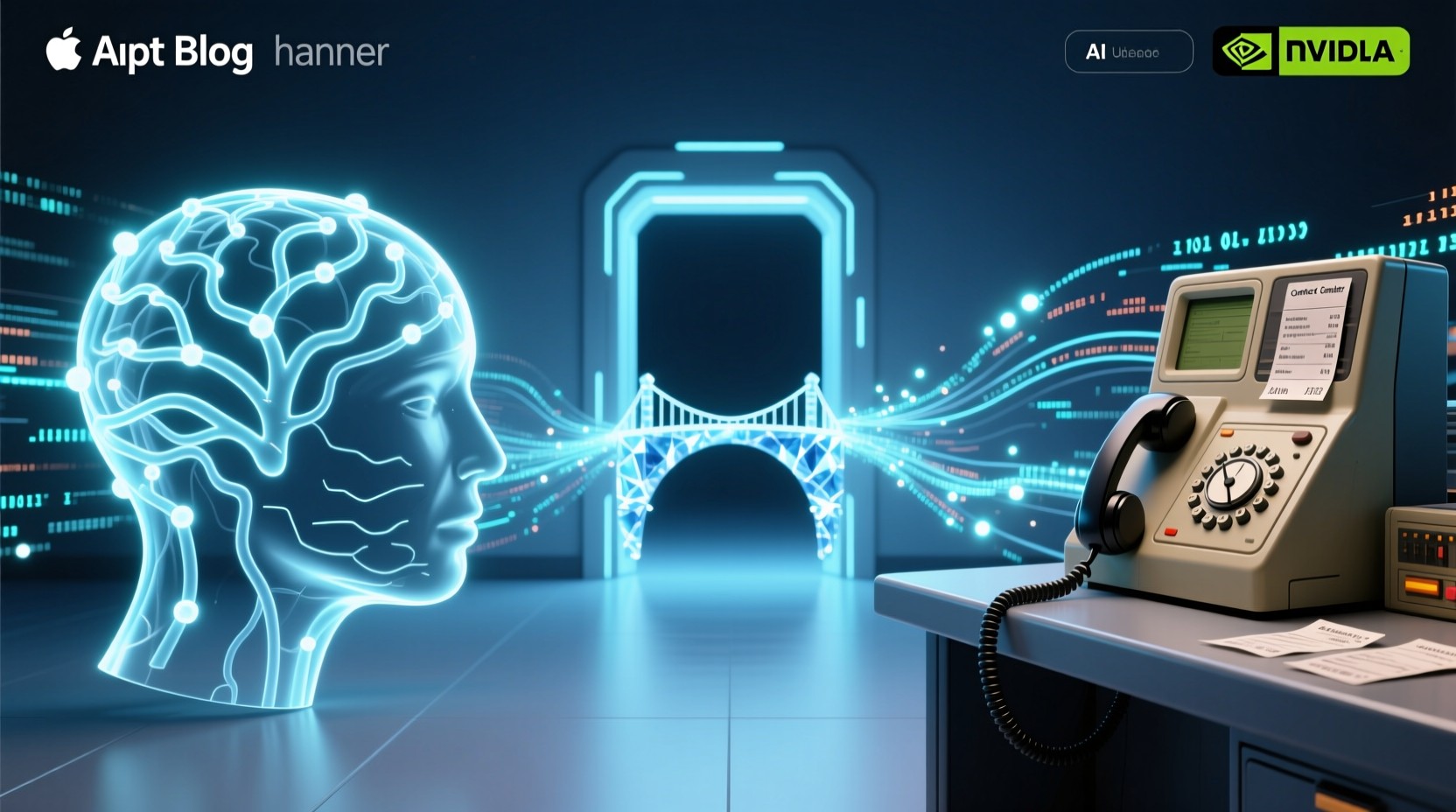
In today’s rapidly advancing technological landscape, the collision of cutting-edge Artificial Intelligence (AI) with entrenched, legacy contact center infrastructure presents a critical juncture for research and development engineers. The pressure to innovate and enhance customer experiences (CX) is immense, yet the reality of deeply embedded, decades-old systems often acts as a significant barrier. This isn’t merely an IT challenge; it’s a strategic imperative that directly impacts customer satisfaction, operational efficiency, and overall business competitiveness. Organizations are grappling with how to harness the transformative power of AI—from generative AI chatbots to sophisticated agent-assist tools—without undertaking costly, time-consuming, and high-risk migrations of their core contact center platforms. This article delves into TTEC Digital’s groundbreaking solution, AI Gateway, designed to bridge this chasm and unlock the potential of AI within existing contact center ecosystems.
Background: The Legacy Dilemma in Modern CX
For years, contact centers have relied on robust, albeit often monolithic, on-premises or older cloud-based systems. These platforms, from giants like Avaya and Cisco to specialized solutions, have been the backbone of customer interactions. They are characterized by deep customizations, intricate workflows, and significant capital investment, making them difficult and expensive to replace. Concurrently, the AI landscape has exploded. Frontier AI models from providers like Google, Amazon, Microsoft, Anthropic, and OpenAI are demonstrating unprecedented capabilities in natural language processing, predictive analytics, and automation.
The disconnect is stark: businesses recognize the competitive advantage AI offers—enhanced agent productivity, hyper-personalized customer interactions, predictive issue resolution, and significant cost savings. However, integrating these advanced AI capabilities directly into legacy contact center platforms is fraught with challenges. Traditional integration methods often involve complex point-to-point connections, which are brittle, difficult to maintain, and slow to adapt to the rapid evolution of AI models. This creates a significant “AI adoption trap,” where organizations either delay AI implementation indefinitely (“wait and see”), create unmanageable integration bloat, or commit to a full, multi-year platform migration that risks leaving them behind competitors.
TTEC Digital’s AI Gateway: A Strategic Architectural Solution
TTEC Digital’s newly released AI Gateway addresses this critical industry challenge head-on. Launched on April 2, 2026, AI Gateway is positioned as a universal connector, an “intelligence layer” that decouples AI capabilities from legacy infrastructure. Its core architectural decision is to act as an abstraction layer, enabling TTEC clients to integrate multiple AI solutions from various providers with their existing contact center platforms without requiring a complete overhaul.
Key features and technical underpinnings of AI Gateway include:
* **Universal Connectivity:** It is designed to connect a wide array of modern AI platforms (including Amazon, Google, Microsoft, and expandable to Anthropic, OpenAI, Nvidia) with major legacy and modern CX platforms such as Avaya, Cisco, Five9, Genesys, NICE, Twilio, and Zoom. This broad compatibility is crucial for organizations with diverse technology stacks.
* **Flexibility and Agility:** AI Gateway allows businesses to “mix and switch models at any time,” fostering a competitive, future-proof AI ecosystem. This agility is vital in a rapidly evolving AI landscape where new models and capabilities emerge constantly.
* **Reduced Integration Complexity:** Instead of building numerous custom, point-to-point integrations for each AI use case (e.g., agent assist, virtual agents, analytics, summarization), AI Gateway provides a single integration point. This significantly reduces the maintenance burden and accelerates deployment timelines.
* **Accelerated Time-to-Value:** By leveraging existing infrastructure, organizations can deploy, test, and scale AI solutions faster and at a lower initial investment compared to full migration projects. Early adopters have reported material increases in ROI, cost savings, and customer satisfaction.
* **Modular AI Use Cases:** AI Gateway supports a range of AI-driven functionalities, including agent assist, virtual agents for self-service, advanced analytics, conversation transcription, and summarization.
The underlying architecture appears to focus on API-driven interactions and a microservices-based approach, allowing for modularity and scalability. This enables TTEC Digital to rapidly onboard new AI models and connect to evolving CX platforms, ensuring the solution remains relevant.
Deep Technical Analysis and Implications
The strategic significance of AI Gateway lies in its ability to mitigate the risks associated with AI adoption in complex enterprise environments. It directly combats the “AI adoption traps” identified by TTEC Digital’s CTO, Alfredo Rizzo, and Global Lead of Experience Transformation, Larry Mead:
1. **The “Wait and See” Trap:** Delaying AI adoption means missing out on critical learning, use case development, and competitive advantage. AI Gateway enables immediate experimentation and deployment.
2. **The Custom Integration Trap:** Building numerous point-to-point integrations becomes unmanageable and costly over time, locking organizations into aging AI capabilities. AI Gateway consolidates these integrations.
3. **The Full Migration Trap:** Tying AI adoption to a multi-year platform modernization delays value. AI Gateway allows AI implementation to proceed independently of core infrastructure upgrades.
From a technical perspective, AI Gateway acts as an API orchestration layer. It likely utilizes robust API gateways and service meshes to manage communication between disparate AI services and legacy contact center systems. This approach ensures that the security, data governance, and performance requirements of both AI models and legacy platforms are respected.
The implications for R&D engineers and infrastructure teams are profound:
* **Reduced Technical Debt:** By abstracting AI capabilities, AI Gateway helps manage and potentially reduce the impact of technical debt associated with legacy systems.
* **Enhanced Agility:** Development teams can experiment with and deploy new AI features more rapidly without extensive infrastructure changes.
* **Vendor Neutrality:** The ability to integrate with multiple AI providers and CX platforms offers greater flexibility and avoids vendor lock-in.
* **Security Considerations:** While AI Gateway aims to simplify integration, it introduces a new layer of connectivity. Robust security protocols, authentication (e.g., OAuth 2.0, API keys), and authorization mechanisms are paramount to prevent unauthorized access and data breaches. The potential for AI systems to amplify vulnerabilities in legacy systems, as highlighted in recent security analyses, necessitates careful implementation and ongoing monitoring. TTEC Digital’s emphasis on expertise in managing these evolving CX systems and AI is therefore critical.
Practical Implications and Best Practices
For organizations deploying AI in their contact centers, AI Gateway offers a pragmatic path forward. The practical implications include:
* **Phased AI Rollout:** Businesses can begin with specific AI use cases (e.g., automated call summarization) and gradually expand as they gain confidence and see ROI.
* **Cost Optimization:** By avoiding immediate large-scale migrations, organizations can achieve significant cost savings and reallocate resources to AI innovation.
* **Improved Agent Experience:** AI-powered agent-assist tools can provide real-time guidance, knowledge retrieval, and response suggestions, empowering agents and reducing handle times.
* **Enhanced Customer Satisfaction:** Faster resolution times, more accurate information, and personalized interactions contribute to higher Net Promoter Scores (NPS) and overall customer loyalty.
Best practices for leveraging AI Gateway include:
* **Strategic AI Roadmap:** Develop a clear AI strategy aligned with business objectives, identifying high-impact use cases that can be addressed by AI Gateway.
* **Data Governance and Security:** Implement stringent data governance policies and security controls to protect sensitive customer data, especially when connecting to legacy systems with potentially weaker security postures.
* **Continuous Monitoring and Optimization:** Regularly monitor AI performance, integration health, and user feedback to ensure optimal functionality and identify areas for improvement. TTEC Digital emphasizes the need for continuous optimization and oversight.
* **Agent Training and Enablement:** Ensure agents are trained on how to effectively use AI-powered tools and understand their role in the evolving contact center environment.
Actionable Takeaways for Development and Infrastructure Teams
* **Evaluate Existing Infrastructure:** Conduct a thorough audit of your current contact center technology stack to identify integration points and potential challenges.
* **Pilot AI Gateway:** Consider a pilot program with AI Gateway to test specific AI use cases and measure their impact on key performance indicators (KPIs) such as Average Handle Time (AHT), First Contact Resolution (FCR), and customer satisfaction.
* **Collaborate with TTEC Digital:** Engage with TTEC Digital’s experts to understand how AI Gateway can be tailored to your specific environment and to leverage their experience in managing complex AI integrations.
* **Focus on API Strategy:** Ensure your infrastructure supports robust API management, as this will be critical for seamless integration with AI Gateway and future AI services.
* **Security First:** Prioritize security assessments and implement necessary safeguards to mitigate risks associated with connecting AI to legacy systems.
Related Internal Topics
* /topic/contact-center-modernization-strategies
* /topic/ai-security-in-enterprise-systems
* /topic/api-orchestration-for-cx
Conclusion: The Future of AI in Contact Centers is Hybrid
TTEC Digital’s AI Gateway represents a significant advancement in the ongoing evolution of contact center technology. By providing a flexible, secure, and efficient bridge between the dynamic world of AI and the stable, yet often rigid, realm of legacy systems, it empowers organizations to innovate without disruption. The message is clear: the future of AI in contact centers is not about wholesale replacement, but about intelligent integration. As AI capabilities continue to mature and converge with established infrastructure, solutions like AI Gateway will be instrumental in driving tangible business outcomes, enhancing customer experiences, and maintaining a competitive edge in an increasingly AI-driven world. This approach allows businesses to harness the immediate benefits of AI while strategically planning for longer-term architectural evolution.