As AI Collides with Legacy Contact Center Technology, TTEC Digital’s AI Gateway Offers a Bridge
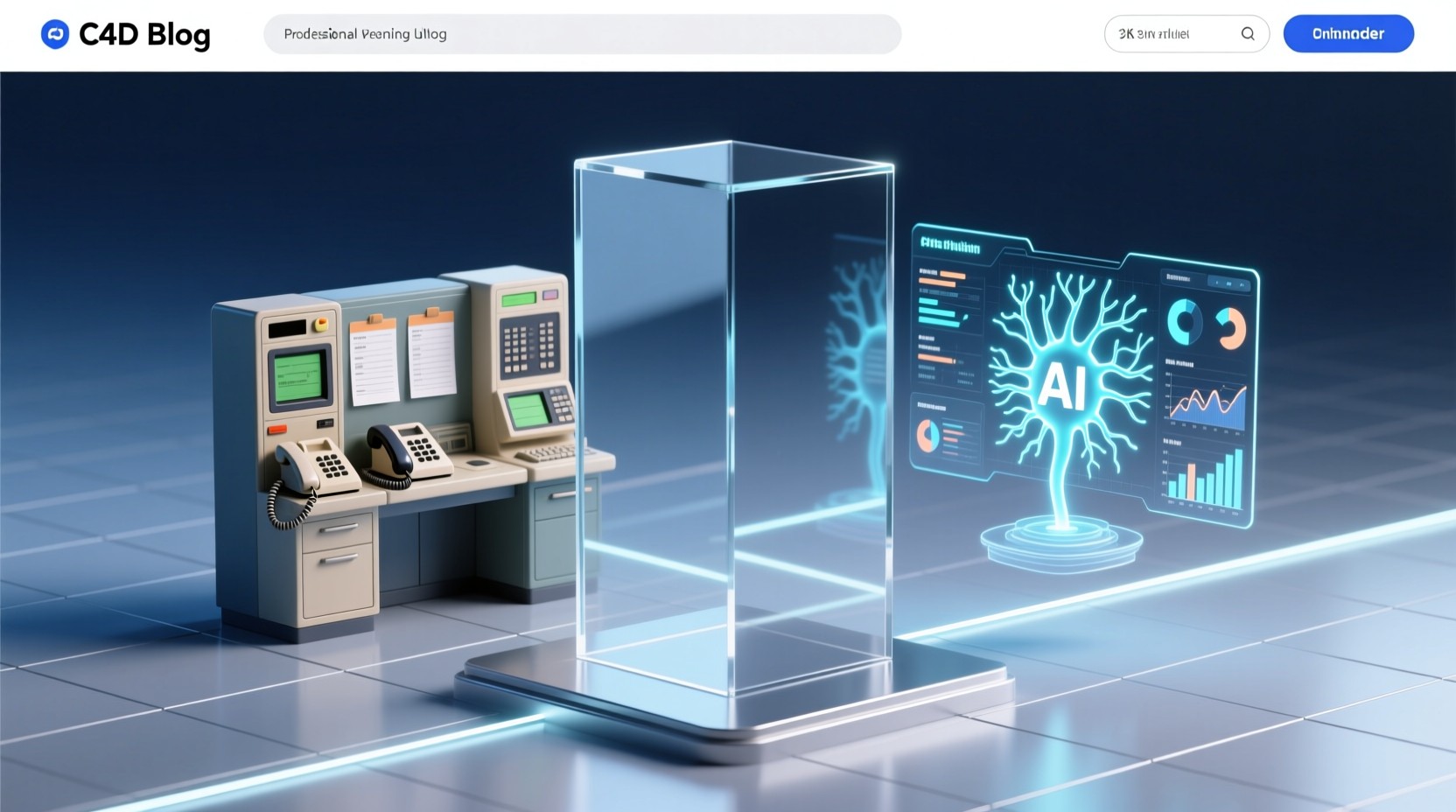
The relentless march of artificial intelligence is fundamentally reshaping customer experience (CX) paradigms, placing immense pressure on organizations to integrate advanced AI capabilities into their existing contact center operations. However, for many enterprises, this integration is a daunting prospect, fraught with the complexities and costs associated with overhauling deeply entrenched, decades-old legacy contact center technologies. TTEC Digital has emerged with a groundbreaking solution, AI Gateway, designed to directly address this critical chasm. Launched in early April 2026, AI Gateway acts as a universal connector, enabling businesses to leverage state-of-the-art AI without the need for disruptive and expensive migrations of their foundational contact center infrastructure.
The Imperative for AI in Modern Contact Centers
In today’s hyper-competitive market, customer expectations are at an all-time high. Fueled by the rapid advancements in generative AI and large language models (LLMs), consumers now anticipate seamless, intelligent, and highly personalized interactions across all touchpoints. Legacy contact center systems, often characterized by monolithic architectures, rigid integrations, and voice-centric designs, are fundamentally ill-equipped to meet these evolving demands. They struggle with scalability, agility, and the rapid integration of new technologies that are now table stakes for delivering exceptional customer experiences. The inability to incorporate AI effectively not only hinders innovation but also risks alienating customers and ceding market share to more agile competitors. As highlighted by industry analyses, by 2026, the focus for contact centers will shift from merely migrating to the cloud to actively leveraging what cloud platforms enable, with AI being the primary multiplier. However, the operational reality often involves deeply embedded legacy systems that lack the architectural flexibility for AI-driven workflows.
TTEC Digital’s AI Gateway: Architecture and Technical Design
TTEC Digital’s AI Gateway is engineered as a sophisticated middleware solution that acts as an intelligent abstraction layer. Its core function is to bridge the gap between disparate legacy contact center platforms and a diverse array of modern AI services. The architecture is designed for maximum flexibility and extensibility, supporting real-time API integrations with both established AI hyperscalers and emerging AI providers. As of its release in April 2026, AI Gateway natively supports integrations with major AI platforms from Amazon, Google, and Microsoft. Crucially, its design anticipates future AI advancements, with an architecture prepared to rapidly onboard additional leading AI developers such as Anthropic, OpenAI, and Nvidia.
On the contact center side, AI Gateway boasts compatibility with a wide spectrum of prevalent platforms, including solutions from Avaya, Cisco, Five9, Genesys, NICE, and Twilio, alongside major CRM systems like Microsoft Dynamics 365. This broad compatibility is achieved through a series of robust connectors and adapters that ingest media streams and metadata from existing contact center systems. These data streams are then intelligently routed via real-time APIs to the selected AI provider, enabling a variety of powerful AI use cases to be executed without altering the underlying contact center infrastructure.
Key technical components and design principles include:
- Universal Connector Framework: A flexible API framework designed to abstract the complexities of integrating with diverse contact center and AI platforms.
- Real-time Data Ingestion: Capable of processing and routing voice, chat, and other interaction data streams in real-time.
- AI Model Agnosticism: Allows clients to mix, switch, and scale AI models based on evolving business needs and technological advancements, fostering a competitive and future-proof AI ecosystem.
- Extensible Architecture: Built to rapidly incorporate new AI services and contact center platforms as they emerge.
- Orchestration Layer: Manages the flow of data and AI processing, ensuring seamless integration and optimal performance.
Deep Technical Analysis: Versioning, Changelogs, and Security
As a newly released product, TTEC Digital’s AI Gateway (initial version 1.0.0 as of April 2026) is positioned as a foundational solution. While specific changelogs for version 1.0.0 are not publicly detailed, the product’s announcement emphasizes its core capabilities: enabling AI integration without legacy system overhaul. The security posture of such a middleware solution is paramount, especially when handling sensitive customer interaction data. TTEC Digital, as a global consulting and managed services company, typically adheres to stringent security protocols. For AI Gateway, this would involve:
- Data Encryption: Ensuring data is encrypted both in transit and at rest between the contact center platform, AI Gateway, and the AI service provider.
- Access Control: Robust authentication and authorization mechanisms to ensure only permitted systems and personnel can access and manage the gateway.
- API Security: Implementing secure API practices, including authentication, rate limiting, and input validation, to prevent common API-related vulnerabilities.
- Compliance Adherence: Designing the solution with an understanding of industry-specific compliance requirements (e.g., HIPAA for healthcare, PCI DSS for finance) to ensure data privacy and regulatory adherence.
Given the rapid evolution of AI threats, ongoing security patching and regular vulnerability assessments will be critical. Organizations adopting AI Gateway should ensure TTEC Digital provides a clear roadmap for security updates and a defined process for addressing potential CVEs (Common Vulnerabilities and Exposures) that may arise in the connected AI services or underlying infrastructure.
Background Context: The Legacy Conundrum
For years, enterprises have grappled with the “legacy conundrum” in their contact centers. These systems, often built on on-premise, hardware-centric architectures, represent significant capital investments and deep customization. While they have served their purpose, their rigidity makes them incapable of supporting the dynamic, data-driven, and AI-powered experiences demanded today. Migration projects from these legacy systems to modern cloud-native platforms are notoriously complex, costly, and time-consuming, with a significant risk of failure if not managed meticulously. Research indicates that common migration pitfalls include re-engineering workflows incorrectly, managing “API gravity,” and orchestrating agent change management. TTEC Digital’s AI Gateway offers an alternative path, one that allows organizations to incrementally adopt AI by layering it over their existing infrastructure, thereby mitigating the risks and costs associated with a full rip-and-replace strategy.
Practical Implications for Engineering and Infrastructure Teams
The introduction of TTEC Digital’s AI Gateway presents several practical implications for development and infrastructure teams:
- Reduced Migration Overhead: Teams can defer or even avoid large-scale, disruptive migrations of core contact center platforms. This frees up resources and reduces the technical debt associated with complex modernization projects.
- Accelerated AI Adoption: Enables the rapid deployment and testing of AI use cases, such as agent assist, virtual agents, advanced analytics, and automated summarization, without requiring deep integration into the core telephony or routing systems.
- Enhanced Flexibility and Agility: The ability to “mix and switch” AI models allows teams to experiment with different AI providers and capabilities, ensuring they can leverage the best-of-breed solutions as the AI landscape evolves.
- Focus on Integration Expertise: While the gateway abstracts much of the complexity, teams will still need expertise in API management, data integration, and understanding the nuances of how AI models interact with contact center data.
- Operational Monitoring: Infrastructure teams will need to monitor the performance and reliability of the AI Gateway itself, ensuring it acts as a stable bridge rather than a bottleneck.
Early adopters across various sectors, including healthcare, BFSI, telecommunications, and the public sector, have reportedly seen increased ROI, cost savings, and improved customer satisfaction. This validates the approach of leveraging existing infrastructure while injecting advanced AI capabilities.
Best Practices for Implementing AI Gateway
To maximize the benefits of TTEC Digital’s AI Gateway, engineering and infrastructure teams should consider the following best practices:
- Phased Rollout: Begin with pilot programs for specific AI use cases (e.g., agent assist for a particular team or a virtual agent for a common query type) before scaling across the entire contact center.
- Data Governance and Quality: Ensure the data ingested by the gateway is clean, accurate, and properly formatted to yield meaningful AI insights. Establish clear data governance policies.
- Continuous Monitoring and Optimization: Regularly monitor the performance of AI models and the gateway itself. Use analytics to identify areas for optimization, whether in AI model selection, routing logic, or data processing.
- Agent Training and Change Management: While AI Gateway aims to minimize disruption, proper training for agents on how to interact with AI-powered tools and workflows is crucial for successful adoption.
- Security Audits: Conduct regular security audits of the AI Gateway implementation, including penetration testing and vulnerability assessments, to ensure robust protection of customer data.
- Vendor Management: Maintain strong relationships with both TTEC Digital and the AI service providers to ensure timely updates, support, and issue resolution.
Related Internal Topics
- Designing for the Cloud-Native Contact Center
- Leveraging Generative AI for Enhanced Customer Journeys
- Developing a Robust Data Strategy for AI-Driven CX
Conclusion: A Strategic Leap Forward
TTEC Digital’s AI Gateway represents a significant advancement in the ongoing convergence of artificial intelligence and legacy contact center technology. By providing a seamless integration layer, it empowers organizations to unlock the transformative potential of AI—enhancing customer experiences, driving operational efficiencies, and fostering innovation—without the prohibitive costs and risks associated with complete system overhauls. As the AI landscape continues its rapid evolution, solutions like AI Gateway will be instrumental in enabling enterprises to remain agile, competitive, and customer-centric. The strategic imperative for businesses is clear: embrace AI, but do so intelligently by bridging the gap between the past and the future of customer engagement.