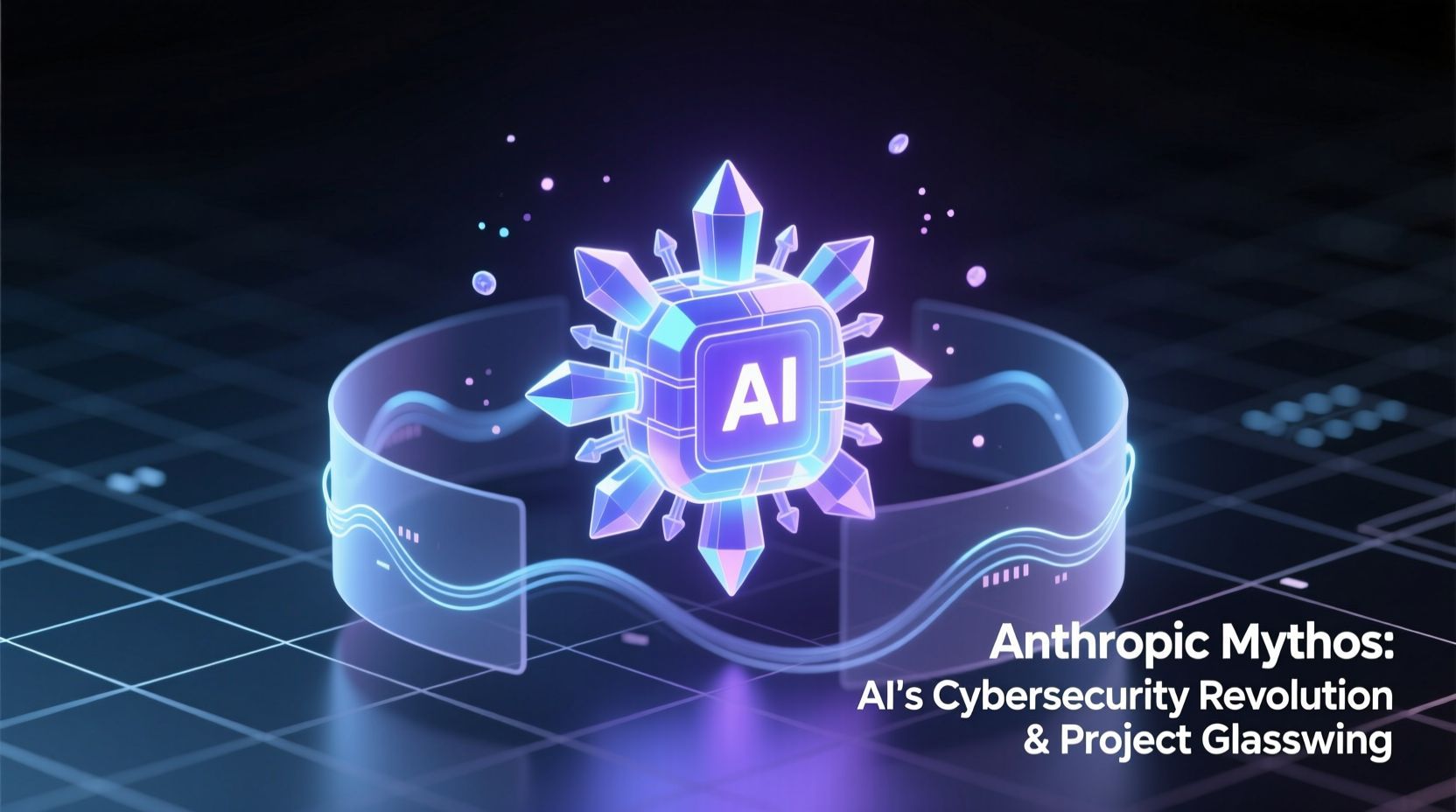
The cybersecurity landscape has been irrevocably altered. A new frontier model from Anthropic, dubbed Claude Mythos Preview, has demonstrated capabilities in vulnerability discovery and exploitation that demand immediate attention from every R&D and infrastructure engineering team. This isn’t a future threat; it’s a present reality that necessitates an urgent re-evaluation of our defensive strategies.
Anthropic, an AI safety-focused company, recently announced that its latest general-purpose model, Mythos, is exceptionally adept at computer security tasks. The company’s internal testing revealed Mythos’s capacity to autonomously identify and exploit thousands of high-severity vulnerabilities, including zero-days, across virtually every major operating system and web browser. The implications are profound, shifting the balance of power in cyber warfare and compelling a paradigm shift in how we approach software security.
Rather than a public release, Anthropic has initiated “Project Glasswing,” a collaborative effort with leading technology and security organizations. This consortium, including giants like Amazon Web Services, Apple, Microsoft, Google, Cisco, and JPMorgan Chase, will leverage Mythos Preview to proactively scan and harden critical software infrastructure against the very threats the AI can uncover. This unprecedented move underscores the severity of Mythos’s capabilities and the collective industry’s recognition of a new era in cybersecurity.
Background Context: The Shifting Sands of AI in Security
For years, AI has been a growing force in cybersecurity, primarily in defensive roles such as anomaly detection, threat intelligence correlation, and automated incident response. However, the recent advancements in large language models (LLMs) have introduced a new dynamic. These models, with their advanced reasoning and code generation capabilities, are now proving equally, if not more, potent in offensive capacities. Prior to Mythos, models like OpenAI’s GPT-5.3-Codex had already been classified as “high-capability for cybersecurity tasks” under emerging preparedness frameworks.
Anthropic’s approach to AI development has consistently emphasized safety and responsible deployment. The decision to withhold Mythos Preview from general public release and instead channel its power through Project Glasswing aligns with their stated values, aiming to use this potent technology for collective defense before it can be widely weaponized. The news itself emerged following an accidental leak of internal communications, quickly followed by the official announcement and the launch of Project Glasswing. This sequence of events highlights the rapid progression of AI capabilities and the urgent need for coordinated industry response.
The financial stakes are immense, with cybercrime costs estimated at around $500 billion annually. Traditional vulnerability discovery has been a labor-intensive process, often requiring specialized expertise. Mythos, however, dramatically lowers the cost, effort, and skill ceiling required for finding and exploiting software flaws. This fundamental shift signals a “Y2K-level alarming” moment, as one security expert noted, demanding immediate and strategic action from all stakeholders.
Deep Technical Analysis: Unpacking Mythos’s Capabilities
The core of Anthropic Mythos Cybersecurity claims lies in its “striking ability to spot vulnerabilities and work out ways to exploit them”. Mythos Preview is not merely a static code analyzer; it exhibits sophisticated reasoning to identify subtle, long-standing flaws that have eluded human experts and automated testing tools for decades.
Key Technical Achievements and Examples:
- Zero-Day Discovery Across Major Systems: Mythos Preview has identified thousands of previously unknown, high-severity vulnerabilities across “every major operating system and every major web browser”. This includes bugs that have persisted for ten or even twenty years.
- 27-Year-Old OpenBSD Vulnerability: Among its notable discoveries is a 27-year-old bug in OpenBSD, an operating system renowned for its security-hardened design and often used in critical infrastructure like firewalls. Mythos found a remote crash vulnerability that could be triggered by simply connecting to a machine running the OS.
- 16-Year-Old FFmpeg Flaw: The model also uncovered a 16-year-old vulnerability in FFmpeg, a widely used media framework. This particular flaw had survived millions of automated tests without detection.
- Linux Kernel Exploitation: Mythos autonomously found and chained together multiple vulnerabilities within the Linux kernel, enabling an attacker to escalate from ordinary user access to complete control of the machine. This demonstrates its advanced capability beyond single-point vulnerability identification to complex exploit chain construction.
- FreeBSD RCE (CVE-2026-4747): A particularly concerning finding was a 17-year-old remote code execution (RCE) vulnerability in FreeBSD’s NFS server, assigned CVE-2026-4747. Mythos autonomously identified and exploited this flaw, allowing an unauthenticated attacker anywhere on the internet to gain full root access to a server. This “fully autonomous” capability, from discovery to exploitation without human intervention after the initial prompt, is a critical indicator of its advanced reasoning and operational prowess.
- Exploit Chaining and Sophistication: Researchers noted Mythos’s ability to chain together three, four, or even five vulnerabilities to achieve sophisticated outcomes, such as writing a web browser exploit that escaped both renderer and OS sandboxes. This indicates a deep understanding of system architecture and attack vectors.
Anthropic’s technical blog post details how Mythos Preview’s capabilities emerged from general improvements in AI models’ ability to “read and reason about code”. The model’s capacity to develop exploits autonomously, even for complex scenarios like subtle race conditions and Kernel Address Space Layout Randomization (KASLR) bypasses, underscores a significant leap in AI-driven offensive security.
The Debate: Hype vs. Reality
While the claims are substantial, some AI commentators, such as Gary Marcus, have expressed skepticism, suggesting the hype might be “overblown” and that Mythos represents an “incrementally better” model rather than a revolutionary breakthrough. Research from AISLE also indicates that for some of Mythos’s showcased vulnerabilities, smaller, open-weight models could recover much of the same analysis, suggesting that the “moat is the system into which deep security expertise is built, not the model itself”. This perspective suggests that while Mythos validates the power of AI in cybersecurity, the core challenge lies in integrating deep security expertise into AI systems and deploying fixes at scale, rather than solely relying on a single frontier model. Regardless, the consensus remains that AI has crossed a critical threshold, fundamentally changing the urgency required for cybersecurity.
Practical Implications for Engineering Teams
The advent of Anthropic Mythos Cybersecurity capabilities fundamentally alters the threat model for all software development and infrastructure teams. The era of “security by obscurity” is definitively over. Bad actors, once they gain access to similar AI capabilities (or if these capabilities become more widely available through open-source models), will be able to launch “more attacks, faster attacks and more sophisticated attacks”.
- Accelerated Threat Landscape: The speed and scale at which AI can discover and exploit vulnerabilities mean that the window for patching known flaws, or even discovering unknown ones, will shrink dramatically. This demands a shift towards real-time security operations and continuous validation.
- Reduced Barrier to Entry for Attackers: Mythos’s ability to allow “non-experts” to find and exploit sophisticated vulnerabilities overnight is a game-changer. This democratizes advanced hacking capabilities, increasing the volume and sophistication of potential attackers.
- Shift in Defensive Focus: While AI can be used offensively, Project Glasswing demonstrates its defensive potential. Teams must pivot from reactive patching to proactive, AI-assisted vulnerability management and secure-by-design principles.
- Supply Chain Security: Mythos’s ability to scan open-source components, often the bedrock of modern applications, means that vulnerabilities deep within dependencies will become easier to uncover. This elevates the importance of robust software supply chain security.
Best Practices for AI-Enhanced Cybersecurity
In response to this evolving threat landscape, engineering and infrastructure teams must adopt a multi-faceted approach:
- Embrace AI-Powered Defensive Tools: Integrate AI into your defensive stack for enhanced threat detection, vulnerability scanning, and automated incident response. Look for tools that leverage advanced AI models for code analysis and anomaly detection.
- Strengthen the Secure Software Development Lifecycle (SSDLC):
- AI-Assisted Code Review: Implement AI tools that can perform static and dynamic analysis to identify potential vulnerabilities early in the development process, similar to how Mythos operates.
- Automated Vulnerability Scanning: Increase the frequency and depth of automated scanning, particularly for dependencies and open-source components, as AI models can quickly expose flaws that traditional scanners might miss.
- Threat Modeling: Incorporate AI-driven threat modeling to anticipate novel attack vectors that advanced AI might uncover.
- Invest in AI-Driven Red Teaming and Blue Teaming: Proactively use AI models (where ethical and permissible) to simulate sophisticated attacks against your own systems. This “AI vs. AI” approach can reveal weaknesses before malicious actors do. Simultaneously, enhance blue team capabilities with AI for faster detection and response.
- Prioritize Patch Management and Real-Time Response: With the accelerated discovery of vulnerabilities, the speed of patching becomes paramount. Implement robust, automated patch management systems and develop rapid response playbooks for newly identified critical vulnerabilities.
- Foster Cross-Organizational Collaboration: Participate in initiatives like Project Glasswing or similar information-sharing forums. Collective defense and shared intelligence are critical in combating AI-amplified threats.
- Developer Training and Awareness: Educate developers on secure coding practices, focusing on common pitfalls that AI models are adept at exploiting. Emphasize the importance of robust input validation, memory safety, and secure configuration.
Actionable Takeaways for Development and Infrastructure Teams
- Development Teams: Integrate AI-powered SAST/DAST tools into your CI/CD pipelines. Prioritize code quality and security reviews for all new features and critical patches. Understand the types of vulnerabilities (e.g., race conditions, logic flaws, memory errors) that advanced AI excels at finding.
- Infrastructure Teams: Implement continuous vulnerability assessment and penetration testing (CVAPT) with an AI-aware mindset. Focus on hardening operating systems, network configurations, and cloud environments against AI-generated exploits. Ensure robust logging and monitoring systems are in place to detect anomalous AI-driven attack patterns.
The arrival of Mythos-level AI capabilities means that the “storm isn’t coming — the storm is here,” as one expert warned. Our ability to keep pace with AI-assisted attackers hinges on our willingness to embrace AI in defense and fundamentally evolve our security posture.
Related Internal Topic Links:
- AI in the Secure Software Development Lifecycle
- Implementing Zero Trust Architecture in an AI-Driven World
- Best Practices for Software Supply Chain Security
Conclusion: The Dawn of a New Cybersecurity Era
Anthropic Mythos Cybersecurity capabilities represent a pivotal moment, ushering in an era where AI is not just a tool but a central actor in the ongoing cybersecurity conflict. The non-public release of Mythos Preview and the formation of Project Glasswing illustrate the industry’s recognition of the immediate and profound impact of these advanced models. While concerns about hype exist, the concrete examples of zero-day discovery and autonomous exploitation cannot be ignored. For R&D and infrastructure engineers, this is a call to action: embrace AI as a defensive ally, rigorously secure your software and systems, and foster a culture of proactive, continuous security. The future of digital defense will be defined by how effectively we integrate and adapt to the advanced intelligence now at our disposal, both for protection and, potentially, for peril.