The New Baseline: Ubuntu 26.04 LTS Demands Immediate Engineering Attention
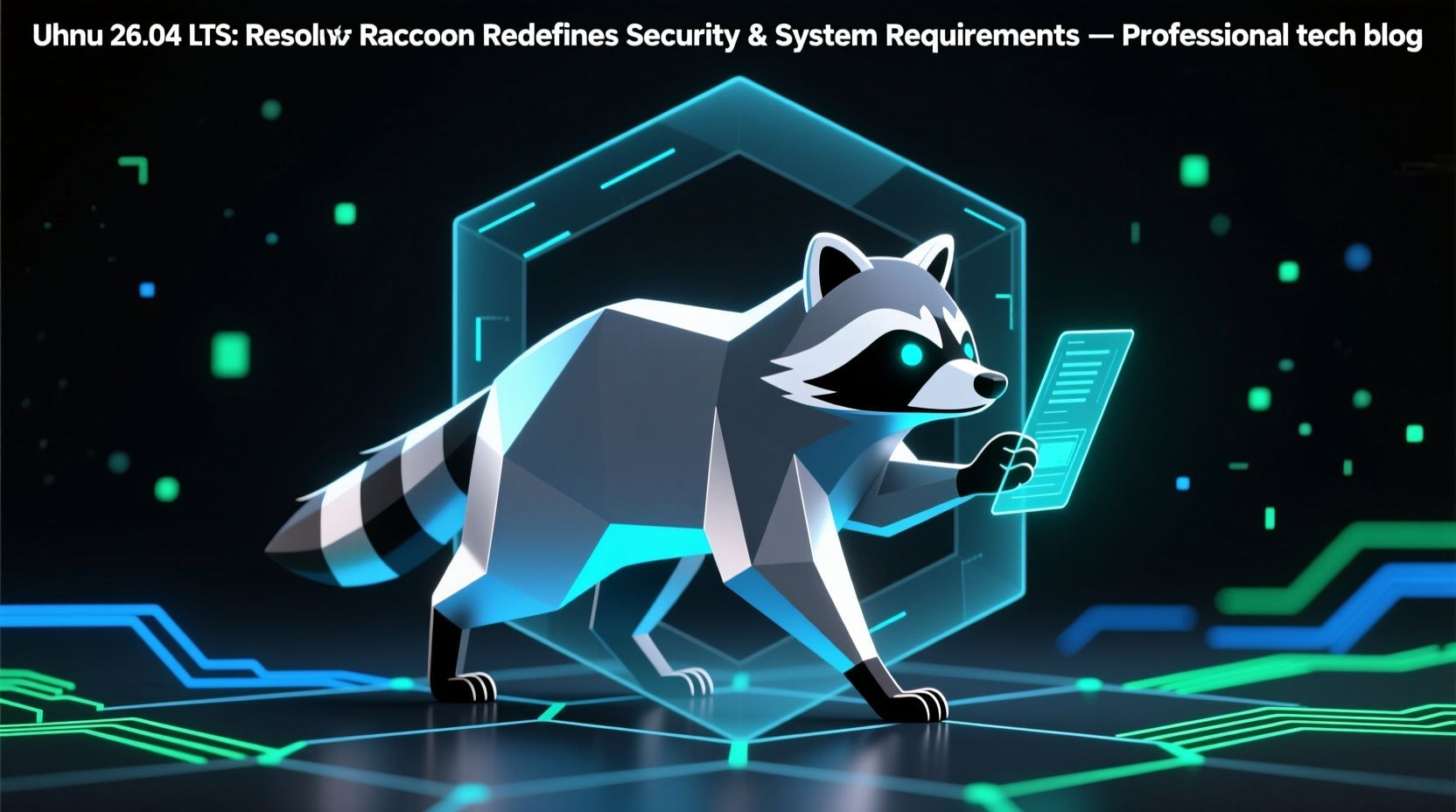
For R&D engineering teams, the release of a new Ubuntu Long Term Support (LTS) version is always a pivotal event, dictating the strategic direction for infrastructure, development environments, and security postures for years to come. The impending arrival of Ubuntu 26.04 LTS, affectionately codenamed "Resolute Raccoon" and scheduled for release on April 23, 2026, is no exception. However, this particular LTS cycle introduces changes so profound—particularly in security and system resource demands—that they warrant immediate and meticulous analysis. Ignoring these shifts risks not only operational inefficiencies but also significant security vulnerabilities in critical deployments. This isn’t just an update; it’s a recalibration of the foundational operating system, demanding proactive engagement from every engineering discipline.
Background Context: A Decade of Enhanced Security and Evolving Demands
Ubuntu LTS releases are the bedrock for countless enterprise, cloud, and edge deployments, offering five years of standard support and up to ten years with Ubuntu Pro. Each LTS aims to deliver a stable, secure, and feature-rich platform. However, the threat landscape is constantly evolving, with advanced persistent threats (APTs), quantum computing advancements, and increasingly sophisticated cyberattacks pushing the boundaries of conventional security. Ubuntu 26.04 LTS emerges as Canonical’s robust answer to these challenges, setting a new and significantly higher default security floor for the next decade of Linux deployments. This release doesn’t merely add features; it fundamentally strengthens every layer of the system without necessarily breaking existing deployments, a remarkable achievement in cybersecurity.
Beyond security, the continuous evolution of hardware capabilities, especially in AI/ML and data-intensive workloads, necessitates a re-evaluation of baseline system requirements. As applications become more resource-hungry and user expectations for responsiveness rise, the underlying OS must adapt. Ubuntu 26.04 LTS reflects these realities, pushing the minimum specifications to ensure a "comfortable experience" and optimize performance on modern hardware.
Deep Technical Analysis: A Paradigm Shift in Security and Resource Management
Revolutionizing Security with Ubuntu 26.04 LTS
The core of Ubuntu 26.04 LTS’s innovation lies in its revamped security architecture. Canonical has prioritized reinforcing security defaults, making it a foundational pillar for secure infrastructures from desktops and servers to confidential VMs and edge systems.
- Hardware-Backed Encryption (TPM-backed Full-Disk Encryption): Building on capabilities introduced in earlier interim releases, Ubuntu 26.04 LTS fully integrates TPM-backed full-disk encryption. This feature significantly enhances data at rest security by leveraging the Trusted Platform Module (TPM) to secure encryption keys, mitigating risks associated with physical access attacks. It includes passphrase support, recovery key regeneration, and better integration with firmware updates. This move is critical for compliance-driven environments and sensitive data handling.
- Post-Quantum Cryptography (PQC) Defaults: Looking ahead, "Resolute Raccoon" positions itself at the forefront of cryptographic evolution by integrating post-quantum aware defaults. As quantum computing capabilities advance, current asymmetric cryptography methods face obsolescence. Ubuntu 26.04 LTS begins the crucial transition to "post-quantum" algorithms and practices, preparing to protect data against future quantum threats and ensuring long-term confidentiality and integrity for mission-critical infrastructures.
- Rejection of Legacy TLS: In line with modern security standards, web servers in Ubuntu 26.04 LTS will reject legacy Transport Layer Security (TLS) versions by default. This hardens network communications against known vulnerabilities associated with older, weaker protocols, forcing a more secure baseline for all web-facing services.
- Unified Security Center: Ubuntu 26.04 LTS introduces a new Security Center, transforming security from a one-time installation event into a continuous lifecycle responsibility. This control plane surfaces critical platform protections, making them inspectable and manageable long after initial deployment, providing engineers with better visibility and control over their security posture.
Evolving System Requirements and Core Component Updates
To deliver on its promise of stability and performance, Ubuntu 26.04 LTS has adjusted its baseline requirements:
- Increased RAM for Desktop: For a "comfortable experience," Ubuntu Desktop 26.04 LTS now officially requires a minimum of 6GB RAM, an increase from the previous 4GB. This is accompanied by a recommendation for a 2 GHz dual-core processor or better and 25GB of free storage space. While installation on lower-spec machines might be possible, Canonical recommends using lighter Ubuntu flavors for such scenarios. Server requirements remain more flexible, starting as low as 1.5GB RAM and 4GB storage, scaling with use case.
- Wayland-Only GNOME Shell Session: The Ubuntu Desktop session now exclusively runs on the Wayland backend for GNOME Shell, with X.org applications running via the XWayland compatibility layer. This signals a complete transition towards Wayland for the flagship desktop environment, bringing benefits in security, performance, and display consistency, particularly for multi-monitor and high-DPI setups. Importantly, machines using Nvidia graphics are now stated to fully support Wayland.
- Updated Software Stacks: Key components have received significant updates. Samba has been upgraded to version 4.23, enabling SMB3 Unix Extensions by default and disabling NetBios for fresh installs. Django is updated to its latest LTS release 5.2 from 4.2, bringing numerous new features and bug fixes for Python developers. ClamAV sees an update to 1.4.3, enhancing its malware detection capabilities, including scanning OneNote attachments and UDF partitions.
Architectural and Hardware Decisions
Ubuntu 26.04 LTS also reinforces Canonical’s commitment to diverse architectures:
- IBM Z (s390s) Requirements: The minimum architectural level for IBM Z has been raised to z15, meaning Ubuntu 26.04 LTS cannot be installed on older z14 generation machines. This move ensures the OS leverages the latest hardware capabilities for mainframe deployments.
- RISC-V Focus: Canonical has declared 2026 as "the year of Ubuntu Linux on the RISC-V desktop, server, and more." This highlights a strategic push towards mass adoption of RISC-V across consumer and enterprise products, aligning with the RVA23 standard for modern computing architectures.
Practical Implications for Development and Infrastructure Teams
The changes in Ubuntu 26.04 LTS have direct, actionable implications for engineering teams:
- Migration Strategy & Compatibility: Teams currently on Ubuntu 22.04 LTS or earlier must begin planning their upgrade path. Assess application compatibility with updated libraries (e.g., Django 5.2, Samba 4.23) and the Wayland-only GNOME Shell. For server environments, the transition should be smoother, but dependency checks are paramount.
- Hardware Refresh Cycles: The increased 6GB RAM requirement for desktop deployments will necessitate hardware audits. Older workstations or virtual desktop infrastructure (VDI) instances with 4GB RAM will likely require upgrades or a transition to lighter Ubuntu flavors to maintain productivity. For cloud and edge deployments, resource provisioning strategies should be re-evaluated to accommodate potentially higher memory footprints for desktop-like workloads.
- Enhanced Security Posture: Embrace the new security defaults. Leverage TPM-backed encryption for sensitive data stores, especially on laptops and physical servers. Begin evaluating how post-quantum cryptography will impact existing cryptographic systems, certificates, and secure communication protocols within your applications and infrastructure. This is a long-term shift that requires early planning.
- Containerization and Immutable Infrastructure: With stricter security and evolving dependencies, containerization becomes even more critical. "Chiseled Ubuntu containers," now supported by partnerships with security scanning tools like Snyk, offer minimal attack surfaces and efficient resource usage, ideal for microservices and CI/CD pipelines.
- Developer Workflow Adaptation: Desktop developers accustomed to X.org may need to adjust to Wayland-native tools or ensure XWayland compatibility. Testing applications thoroughly in a Wayland environment is crucial.
Best Practices for a Smooth Transition
- Pilot Programs: Establish a pilot program with a small subset of test machines and applications to identify potential breaking changes or performance regressions before a broader rollout.
- Automated Testing: Implement comprehensive automated testing for all applications and services on Ubuntu 26.04 LTS release candidates. Focus on integration, performance, and security testing.
- Security Audits & Training: Conduct internal security audits focusing on the new PQC and legacy TLS rejection. Train your security and development teams on the new Security Center functionalities and the implications of hardware-backed encryption.
- Resource Planning: Forecast hardware and cloud resource needs based on the new system requirements. Consider the total cost of ownership (TCO) for upgrading existing hardware versus provisioning new.
- Leverage Ubuntu Pro: For mission-critical systems, consider Ubuntu Pro for access to expanded security maintenance (ESM) and optional support for the full open-source application stack, extending security coverage for up to ten years and reducing CVE exposure time significantly.
Actionable Takeaways for Teams
- Development Teams: Verify application compatibility with updated libraries (Django 5.2, Samba 4.23) and ensure seamless operation under Wayland.
- Infrastructure Teams: Audit existing hardware for 6GB RAM compliance for desktop use cases. Plan for TPM-backed encryption deployment and assess its impact on provisioning and recovery workflows.
- Security Teams: Develop a strategy for integrating post-quantum cryptography, update security policies to reflect legacy TLS rejection, and utilize the new Security Center for continuous monitoring.
- DevOps Teams: Update CI/CD pipelines to build and test against Ubuntu 26.04 LTS. Explore chiseled Ubuntu containers for enhanced security and efficiency.
Related Internal Topic Links
- Ubuntu Pro: Deep Dive into Enterprise Security Features
- Wayland Migration Strategies for Desktop Developers
- The Future of Computing: Ubuntu and RISC-V Integration
Conclusion: Future-Proofing with Resolute Raccoon
Ubuntu 26.04 LTS "Resolute Raccoon" is more than just another operating system release; it’s a strategic move by Canonical to future-proof Linux deployments against an increasingly complex digital landscape. By raising the bar on default security, embracing post-quantum cryptography, and adapting to modern hardware demands, this LTS release provides a robust, forward-looking foundation. Engineers who proactively understand and adapt to these changes will not only ensure the stability and performance of their systems but also significantly enhance their organization’s long-term security posture. The time to prepare is now, to harness the full potential of Resolute Raccoon and build resilient, secure, and high-performing R&D environments for the decade ahead.