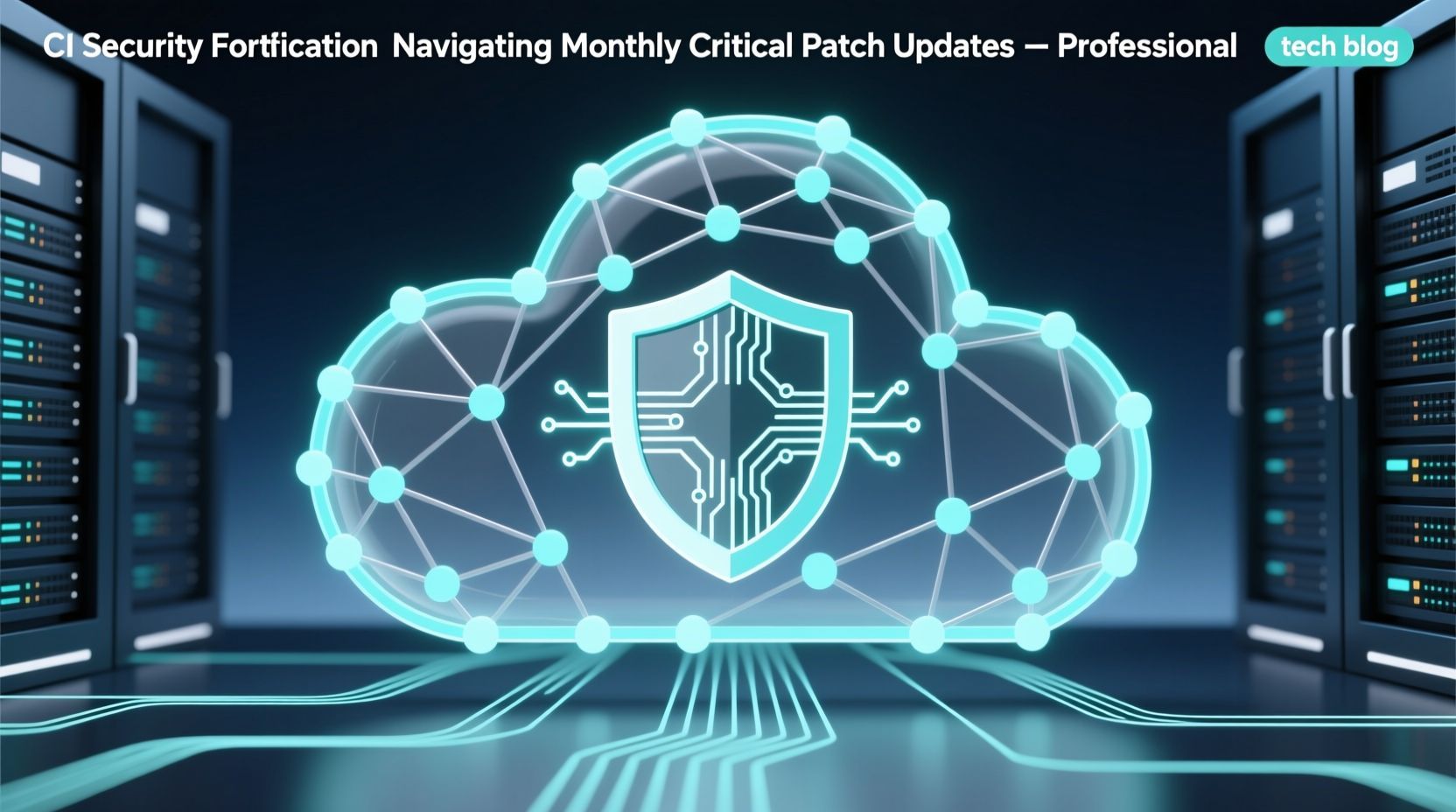
The landscape of cloud security is in constant flux, with new threats emerging daily and the attack surface expanding at an unprecedented rate, especially with the proliferation of advanced services like Generative AI. For engineers building and managing solutions on Oracle Cloud Infrastructure (OCI), staying ahead of these threats is not merely a best practice—it’s an existential necessity. Oracle has just announced a pivotal change to its security patching cadence, introducing monthly Critical Security Patch Updates (CSPUs) starting May 2026. This move signifies a more agile, responsive approach to vulnerability management, demanding immediate adaptation from development and infrastructure teams to fortify their OCI deployments.
Background Context: The Evolving Threat Landscape and Oracle’s Response
For years, Oracle’s quarterly Critical Patch Updates (CPUs) have been a cornerstone of enterprise security. These comprehensive updates addressed a multitude of vulnerabilities across Oracle’s vast product portfolio, from databases to middleware and cloud services. While effective, the quarterly cycle often meant a longer window between a vulnerability’s discovery and the deployment of a patch, potentially exposing systems to risk.
The rapid evolution of cloud-native architectures, coupled with the increasing sophistication of cyber threats, has necessitated a more dynamic defense strategy. The advent of Generative AI services, for instance, while offering immense innovation potential, also introduces new vectors for attack, from prompt injection to model poisoning and data exfiltration. OCI has been aggressively expanding its Generative AI capabilities, offering a fully managed service for building, deploying, and operating AI applications at enterprise scale, supporting tasks like chat, embeddings, and OpenAI-compatible APIs. The availability of powerful models like Llama 3.1 on OCI Generative AI further underscores the need for continuous security vigilance.
Recognizing this accelerated threat landscape, Oracle is expanding its security fix delivery mechanism. The introduction of monthly CSPUs is a direct response to the need for more frequent, targeted remediation of high-priority vulnerabilities. This new schedule complements the existing quarterly CPUs, which will continue to encompass all fixes released in prior CSPUs, providing a layered approach to security.
Deep Technical Analysis: CSPU Mechanics and Generative AI Implications
The shift to monthly CSPUs represents a significant operational change. Previously, engineers might plan for a major patching cycle four times a year. Now, the expectation is that critical fixes will arrive with greater frequency, requiring a more agile patch management strategy. These CSPUs are designed to be “smaller and more focused,” allowing for quicker application of urgent fixes.
Patching Cadence and Versioning
The latest quarterly release, the Critical Patch Update – April 2026, Rev 2, was released on April 24, 2026, setting the stage for the inaugural monthly CSPU in May 2026. This means that while comprehensive updates will still anchor the quarterly schedule, targeted patches for zero-day exploits or newly discovered critical vulnerabilities can be deployed within weeks, rather than months. For customer-managed deployments on OCI, teams remain responsible for planning, testing, and applying these updates. However, for Oracle-managed cloud services, Oracle’s operations and security teams continuously evaluate and apply relevant patches, significantly reducing the operational burden on customers.
Security Posture for OCI Generative AI
The rapid adoption of OCI Generative AI services introduces unique security considerations that CSPUs will likely address. Engineers deploying Large Language Models (LLMs) and Retrieval-Augmented Generation (RAG) agents on OCI must consider:
- Model Vulnerabilities: Beyond traditional software flaws, AI models can be susceptible to adversarial attacks, data poisoning, and prompt injection. While OCI Generative AI offers enterprise governance for access, networking, and AI behavior, CSPUs may include patches for the underlying platform components that host these models.
- Data Security for RAG: RAG agents interact with enterprise data sources. Ensuring the security of these knowledge bases—whether they reside in Oracle Autonomous Database, OCI Object Storage, or other data services—is paramount. CSPUs will continue to address vulnerabilities in these foundational OCI services. For instance, the availability of new Dynamic Performance Views on Oracle Autonomous AI Database on Dedicated Exadata Infrastructure, released April 14, 2026, allows for deeper monitoring, which indirectly aids in security posture for AI workloads.
- API Security: OCI Generative AI services are consumable via APIs. Ensuring these APIs are secured against unauthorized access, DDoS attacks, and other web-based threats is crucial. CSPUs will continue to fortify OCI’s API Gateway and Web Application Firewall (WAF) services.
- Supply Chain Security: As OCI integrates more third-party models (e.g., Llama 3.1 from Meta), the security of the AI supply chain becomes critical. CSPUs may include updates to OCI’s container registry or artifact management services to ensure the integrity of AI model deployments.
This enhanced patching frequency will be vital in mitigating risks associated with the complex interplay of new AI services and underlying infrastructure. Oracle’s proactive stance, including using AI itself to improve vulnerability detection and accelerate fix delivery, demonstrates a commitment to securing its cloud ecosystem.
Practical Implications and Best Practices
For R&D and infrastructure teams, the new monthly CSPU schedule translates into a need for more frequent review, testing, and deployment cycles. This isn’t just about applying patches; it’s about integrating this cadence into your existing DevSecOps pipelines.
Streamlining Patch Management
- Automate Where Possible: Leverage OCI’s native automation tools, such as OCI DevOps, Resource Manager (Terraform), and OCI Functions, to automate patch deployment and rollback procedures. This minimizes manual effort and reduces human error.
- Dedicated Patching Environments: Maintain non-production environments that mirror your production setup. This is critical for testing CSPUs before broad deployment, ensuring compatibility and stability.
- Prioritize and Plan: While CSPUs are targeted, understanding the specific vulnerabilities they address (e.g., via CVE IDs if provided) allows teams to prioritize patching efforts based on the criticality to their specific applications and data.
- Leverage Oracle Support: For customer-managed deployments, Oracle provides resources like My Oracle Support, Technical Account Management, and Customer Success teams to assist in planning and executing updates.
Enhancing Cloud Security Posture for AI Workloads
- Identity and Access Management (IAM): Reinforce strict IAM policies for all OCI Generative AI resources. Implement least privilege access, multi-factor authentication, and regularly audit access logs.
- Network Segmentation: Isolate AI workloads using OCI Virtual Cloud Networks (VCNs), security lists, and network security groups. Employ Zero Trust Packet Routing (ZPR) with Cross-VCN Support, a feature recently introduced, to build robust, layered network security.
- Data Encryption: Ensure all data used by Generative AI models, both at rest and in transit, is encrypted using OCI Key Management Service (KMS).
- Continuous Monitoring: Implement robust observability with OCI Monitoring, Logging, and Cloud Guard to detect anomalous behavior in AI applications and infrastructure. OCI Cloud Guard Instance Security, which provides runtime security for VM and bare metal hosts, is a valuable addition.
- Secure Software Development Lifecycle (SSDLC): Integrate security testing into every phase of AI application development, from model selection to deployment. This includes vulnerability scanning of container images and code.
Actionable Takeaways for Development and Infrastructure Teams
- Revise Patch Management SOPs: Update your standard operating procedures (SOPs) to accommodate monthly CSPUs. This includes allocating dedicated time and resources for more frequent patching cycles.
- Invest in Automation Tools: If not already in place, invest in and configure automation tools for patch deployment, testing, and monitoring to handle the increased frequency efficiently.
- Cross-Functional Collaboration: Foster closer collaboration between security, development, and operations teams to ensure a shared understanding of risks and responsibilities. DevSecOps principles are more critical than ever.
- Audit AI Deployments: Conduct regular security audits of all OCI Generative AI implementations, focusing on data provenance, model integrity, API security, and access controls.
- Stay Informed: Subscribe to Oracle’s security advisories and the OCI blog for the latest announcements regarding CSPUs, new services, and security best practices.
Related Internal Topic Links
- Building a Secure DevSecOps Pipeline on OCI
- Best Practices for Securing Generative AI Workloads
- Advanced OCI Network Security Architectures
Conclusion
Oracle’s strategic pivot to monthly Critical Security Patch Updates for OCI is a clear signal of its commitment to enterprise-grade cloud security in an increasingly volatile digital world. This enhanced cadence, coupled with the rapid expansion of services like OCI Generative AI, presents both challenges and opportunities for engineers. By embracing more agile patch management, reinforcing security best practices across AI workloads, and leveraging OCI’s robust security features, development and infrastructure teams can not only navigate this change effectively but also build more resilient, secure, and innovative solutions on Oracle Cloud Infrastructure. The future of cloud security demands continuous vigilance and proactive adaptation, and OCI’s latest move empowers organizations to meet this demand head-on.