In a critical update for the global PHP development community, two high-severity security vulnerabilities have been disclosed in Composer, the ubiquitous package manager for PHP. These flaws, identified as CVE-2026-40176 and CVE-2026-40261, allow for arbitrary command execution and demand immediate attention from all development and infrastructure teams. Ignoring these patches could expose your systems to significant risks, particularly within CI/CD pipelines and local development environments where Composer commands are frequently executed.
The disclosure, made today, April 14, 2026, highlights the ever-present threat of supply chain attacks and the critical importance of maintaining up-to-date tooling. As senior technology analysts, we cannot stress enough the urgency of assessing your Composer installations and implementing the recommended security updates without delay.
Background Context: Composer’s Critical Role and Supply Chain Risks
Composer stands as the cornerstone of modern PHP development, managing project dependencies and facilitating the integration of countless libraries and frameworks. Its pervasive use across virtually every PHP project, from small scripts to large enterprise applications, makes any vulnerability within Composer itself a significant threat to the entire ecosystem.
The nature of these newly disclosed vulnerabilities falls under the umbrella of supply chain security concerns. A supply chain attack targets the weakest link in a software development process—often a third-party component, tool, or library—to compromise the final product or its development environment. In this instance, the attack vector leverages Composer’s functionality, specifically its handling of Version Control System (VCS) drivers, to inject and execute malicious commands. This bypasses traditional application-level security measures, making it particularly insidious.
The increasing sophistication of cyber threats in 2026 means that dependency vulnerabilities are no longer theoretical risks but tangible, immediate dangers that can lead to data breaches, system compromise, and significant operational disruption. Proactive security measures, including diligent patching of development tools, are paramount.
Deep Technical Analysis: Command Injection in Composer’s Perforce VCS Driver
The two high-severity command injection flaws specifically target Composer’s Perforce VCS (version control software) driver. While Perforce might not be as widely used as Git, the vulnerabilities are critical because Composer would execute the injected commands even if Perforce VCS is not installed on the system. This broadens the attack surface considerably, affecting any environment where Composer is run, regardless of the VCS in use for the project.
CVE-2026-40176: Improper Input Validation (CVSS 7.8)
This vulnerability stems from an improper input validation flaw. An attacker can control a repository configuration within a malicious composer.json file. By declaring a Perforce VCS repository with specially crafted input, the attacker can inject arbitrary commands. When Composer processes this malicious composer.json, it executes these injected commands in the context of the user running Composer.
Consider a scenario where a developer unknowingly clones a project containing a malicious composer.json or adds a compromised package as a dependency. Upon running composer install or composer update, the injected commands could execute, leading to:
- Data exfiltration (e.g., sending environment variables, SSH keys, or source code to an external server).
- Installation of backdoors or malware.
- Modification or deletion of files on the developer’s machine or CI/CD server.
CVE-2026-40261: Inadequate Escaping (CVSS 8.8)
The second, even more critical vulnerability, is an improper input validation flaw with a higher CVSS score of 8.8, indicating a severe impact. This issue arises from inadequate escaping of input, allowing an attacker to inject arbitrary commands through a crafted source reference that contains shell metacharacters.
This means that even a seemingly innocuous reference, such as a branch name or tag within a package’s metadata, could be weaponized. If Composer fails to properly sanitize or escape these metacharacters before passing them to a shell command, the shell interprets them as executable commands rather than literal strings. This could lead to a similar range of devastating outcomes as CVE-2026-40176, but potentially with a wider array of exploitation vectors due to the nature of source references.
Affected and Fixed Versions
The vulnerabilities affect a broad range of Composer versions:
- All versions greater than or equal to 2.3 and less than 2.9.6.
- All versions greater than or equal to 2.0 and less than 2.2.27.
The patches have been released in:
- Composer 2.9.6
- Composer 2.2.27
As a precautionary measure, publication of Perforce source metadata has been disabled on Packagist.org since Friday, April 10th, 2026.
Broader Security Landscape: Related PHP Ecosystem Updates
It’s also important to acknowledge other recent security updates within the broader PHP ecosystem. The phpseclib library, a critical component for secure communications in PHP, recently addressed two vulnerabilities:
- CVE-2026-40194 (April 13, 2026): A variable-time comparison issue in
phpseclibNetSSH2::get_binary_packet(), which could lead to an SSH2 HMAC timing attack. This was fixed in versions 3.0.51, 2.0.53, and 1.0.28. - CVE-2026-32935 (March 19, 2026): A padding oracle timing attack when using AES in CBC mode. This was fixed in versions 1.0.27, 2.0.52, and 3.0.50.
These concurrent disclosures underscore the ongoing necessity for vigilance across all layers of the PHP application stack, from core language to critical libraries and development tools.
Practical Implications for Development and Infrastructure Teams
The implications of these Composer vulnerabilities are far-reaching and directly impact the security posture of any organization utilizing PHP. Arbitrary command execution means an attacker could gain control over the environment where Composer is run, which is often a developer’s workstation, a staging server, or a crucial CI/CD build agent. In a CI/CD pipeline, a compromised Composer instance could inject malicious code into deployed applications, leading to a full-scale production breach.
For development teams, the immediate risk is code integrity and workstation compromise. For infrastructure teams, the concern extends to server security and the potential for malicious deployments. The fact that the vulnerabilities can be triggered even without Perforce VCS installed means that the attack surface is much wider than initially perceived, affecting nearly all PHP projects.
Best Practices and Actionable Takeaways
Given the severity and immediacy of these vulnerabilities, development and infrastructure teams must take swift and decisive action:
-
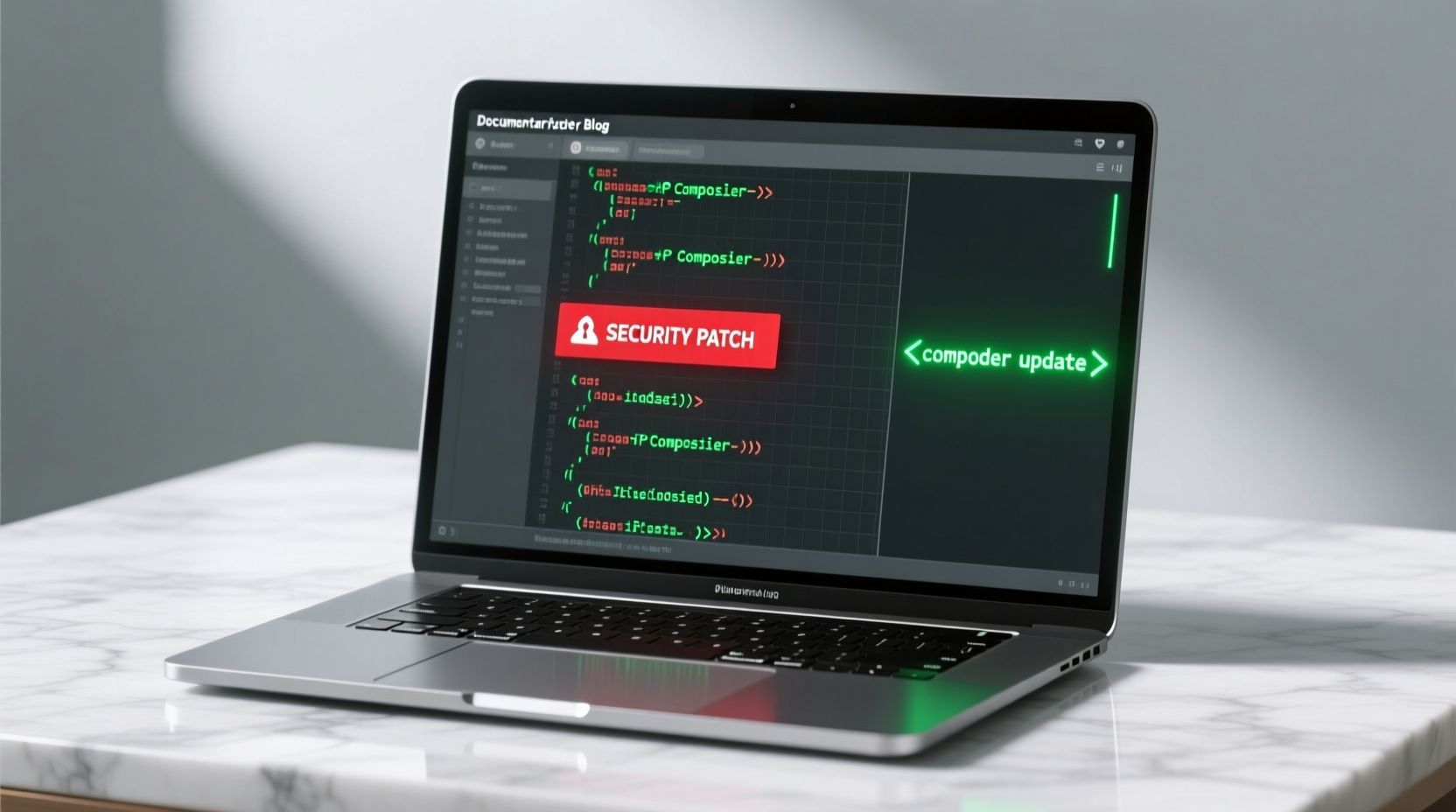
Upgrade Composer Immediately: This is the most critical and urgent step. Update all Composer installations, both local and on CI/CD servers, to version 2.9.6 or 2.2.27 (or newer patch versions if available).
composer self-update --2
composer self-update --stable
Ensure that your CI/CD pipelines are configured to use the latest secure Composer versions.
-
Scrutinize
composer.jsonFiles: If immediate patching is not feasible for some reason, it is advised to inspectcomposer.jsonfiles before running Composer. Verify that any Perforce-related fields contain valid, expected values and do not appear to be tampered with. - Trust Your Sources: Only use Composer with projects from trusted sources and ensure that you are only adding dependencies from reputable Packagist or private repository providers. Avoid downloading dependencies from untrusted or unknown sources.
-
Avoid
--prefer-distorpreferred-install: distfor Untrusted Projects: For projects of unknown provenance, avoid using the--prefer-distflag or settingpreferred-install: distin your configuration. This can sometimes bypass certain security checks that apply to source installations. - Implement Dependency Scanning in CI/CD: Integrate security scanning tools into your continuous integration and deployment pipelines. These tools can automatically detect known vulnerabilities in your project’s dependencies, including Composer packages. Catching vulnerabilities early in the pipeline is significantly cheaper and safer than addressing them after a production breach.
- Regularly Update PHP Runtimes and Libraries: While not directly related to the Composer vulnerability, the recent patch releases for PHP 8.5.5, 8.4.20, and 8.3.30 (all released April 9, 2026) highlight the ongoing need to keep your core PHP environment updated for bug fixes and performance improvements. Similarly, ensure critical libraries like phpseclib are on their latest secure versions (3.0.51, 2.0.53, 1.0.28).
- Security Awareness Training: Educate developers on the risks of supply chain attacks, how to identify suspicious packages or repository configurations, and the importance of secure coding practices.
Related Resources
- Elevating PHP Application Security: A Comprehensive Guide
- Securing Your CI/CD Pipeline: A Developer’s Handbook
- Advanced PHP Dependency Management with Composer
Conclusion
The disclosure of CVE-2026-40176 and CVE-2026-40261 in Composer serves as a stark reminder that security is a continuous process, not a one-time checklist item. These high-severity command injection vulnerabilities underscore the critical need for proactive dependency management and robust security practices throughout the entire software development lifecycle. By immediately patching Composer, scrutinizing project configurations, and adopting a security-first mindset, PHP engineering teams can significantly mitigate their exposure to these and future supply chain threats. Staying informed about the latest releases and security advisories, such as the recent PHP runtime and phpseclib updates, is non-negotiable in today’s dynamic threat landscape. Protect your projects, protect your data, and safeguard your infrastructure by acting now.