The relentless march of artificial intelligence is reshaping every facet of enterprise operations, and nowhere is this more acutely felt than in the customer contact center. For engineering and R&D teams, the mandate is clear: harness AI for unprecedented efficiency and personalized customer experiences (CX). Yet, this ambition often collides head-on with the deeply entrenched, often decades-old, legacy systems that form the backbone of existing contact center infrastructure. This isn’t merely a challenge; it’s an architectural chasm demanding innovative solutions to prevent technological stagnation and competitive obsolescence.
In a significant development, TTEC Digital, a global leader in CX technology and services, has unveiled a new software solution designed to directly address this critical juncture. Announced on April 2, 2026, the AI Gateway by TTEC Digital aims to connect modern AI capabilities with legacy contact center infrastructure through a single, unified integration. This release is poised to rewrite the enterprise AI playbook, offering a strategic path forward for organizations grappling with the complexities of AI adoption in their established environments.
Background Context: The Legacy AI Chasm
For years, contact centers have evolved incrementally, adding new channels and functionalities atop existing telephony, CRM, and workforce management (WFM) platforms. These systems, while robust for their original purposes, were never designed for the dynamic, data-intensive, and real-time demands of modern AI. The collision manifests in several critical areas:
- Data Fragmentation and Silos: Customer data often resides in disparate systems—CRM, ticketing, interaction history, knowledge bases—each with its own schema and access protocols. Training and deploying AI models require a unified, clean, and real-time data feed, which legacy silos inherently obstruct.
- Rigid Architectures: Traditional contact center platforms are often monolithic, with tightly coupled components that resist modular integration. Introducing new AI services typically necessitates extensive custom development, point-to-point integrations, or costly overhauls, leading to “bolt-on AI” that can become a new form of legacy fragmentation itself.
- Scalability and Performance Barriers: AI, particularly generative AI, demands significant computational resources and low-latency processing. Legacy on-premises hardware or older cloud deployments may lack the elasticity and performance necessary to scale AI inference in real-time across thousands of concurrent customer interactions.
- Security and Compliance Complexities: Integrating third-party AI models and cloud-based services with sensitive customer data in regulated industries (e.g., healthcare, BFSI) introduces formidable security, privacy, and compliance challenges (e.g., GDPR, HIPAA). Legacy systems often have established, but sometimes outdated, security perimeters that don’t easily extend to hybrid AI architectures.
TTEC Digital, with its decades of experience in CX orchestration, recognized these systemic bottlenecks. Their existing AI solutions, such as Agent Enablement and Training, Customer-Facing Automation, and Executive Insights, already leverage AI to enhance contact center operations. However, the core challenge remained: how to seamlessly integrate these advanced capabilities and frontier AI models into the diverse, often heterogeneous, technology stacks of their enterprise clients without forcing disruptive and expensive platform migrations.
Deep Technical Analysis: Unpacking AI Gateway
The TTEC Digital AI Gateway is positioned as a transformative “universal connector” or “turnkey solution” designed to abstract away the underlying complexities of integrating diverse AI and contact center platforms. Launched on April 2, 2026, its core value proposition lies in enabling enterprises to “deploy, test, and scale AI within the contact center ecosystem they already operate without embarking on costly and extensive migrations to new technology platforms.”
Architectural Design and Interoperability:
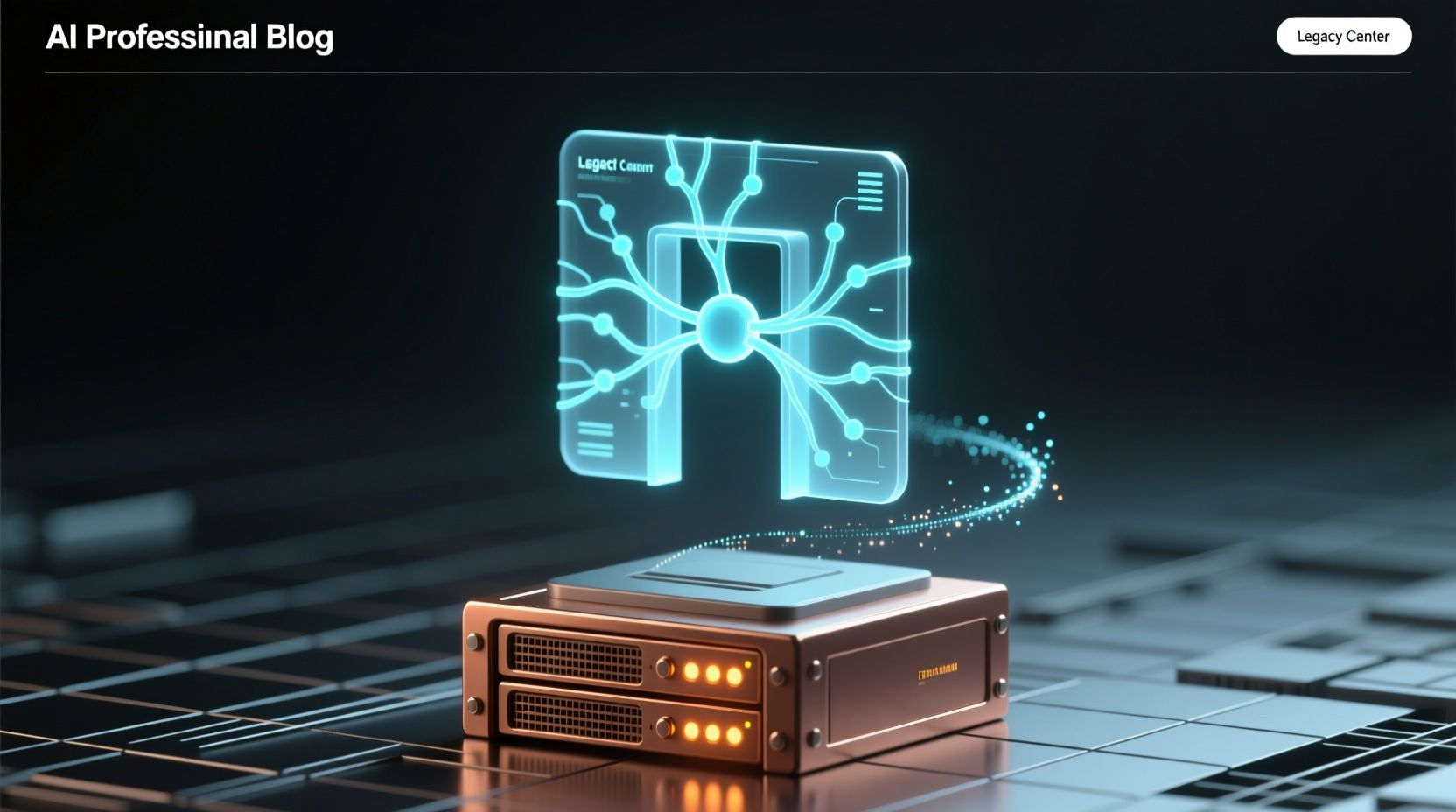
At its heart, AI Gateway acts as an intelligent middleware layer. It’s engineered to ingest media and metadata from a wide array of existing contact center systems and then route this information through real-time APIs to activate powerful AI use cases. This architectural decision is crucial, as it avoids the pitfalls of deep, custom integrations for each new AI service or legacy system.
- Broad Platform Support: AI Gateway boasts extensive compatibility, supporting connections with major frontier AI solutions from hyperscalers like Amazon, Google, and Microsoft. Furthermore, it’s designed with the flexibility to rapidly integrate with additional leading AI developers such as Anthropic, OpenAI, and Nvidia.
- Comprehensive CX and CRM Integrations: On the legacy side, the Gateway integrates with a vast ecosystem of major CX platforms, including Avaya, Cisco, Five9, Genesys, NiCE, Twilio, and Zoom, alongside various Session Border Controller (SBC) vendors. It also connects with leading CRM players like Microsoft Dynamics 365, Salesforce, ServiceNow, and Zendesk. This breadth of integration ensures that context from customer interactions and historical data is accessible to AI models.
- Real-time API-Driven Data Flow: The solution leverages real-time APIs to facilitate the dynamic exchange of information. This includes speech-to-text transcription of live calls, sentiment analysis, identification of key phrases, and routing of data for agent assistance, conversational agents, summarization, and customer insights. The emphasis on real-time processing is critical for maintaining fluid customer and agent experiences.
- Model Agnosticism and Flexibility: A key technical differentiator is the ability for clients to “leverage multiple frontier AI solutions in their environment, mix and switch models at any time.” This fosters a competitive and future-proof AI ecosystem, allowing enterprises to adapt to the rapidly evolving AI landscape without being locked into a single vendor or model architecture.
Underlying Technology and Performance Considerations:
While specific version numbers for AI Gateway itself were not provided at launch, its underlying infrastructure and capabilities are built on modern cloud technologies. For instance, TTEC Digital has a strategic partnership with Google Cloud, leveraging its Customer Engagement Suite (CES), Vertex AI, and Gemini models for various AI-powered solutions, including agent assistance and knowledge management (“Let Me Know”). This indicates a robust, scalable, and secure cloud-native foundation for the Gateway’s operations.
Performance benchmarks, while not detailed with raw latency numbers or specific throughput figures for AI Gateway directly, are evidenced by early adopter results. TTEC Digital reports that deployments across industries like healthcare, BFSI, telecommunications, and the public sector have seen “material increases in ROI, cost savings, and customer satisfaction.” More broadly, TTEC Digital’s AI-enabled digital channel deflection has yielded 388% ROI and $6M in cost savings in one year, alongside $3M in savings from a 90-second reduction in average handle time per call. These figures underscore the significant operational and financial efficiencies achievable through well-integrated AI.
From a security perspective, by acting as a controlled integration layer, AI Gateway can enforce consistent authentication, authorization, and data governance policies across disparate systems. This centralized control helps mitigate risks inherent in point-to-point integrations and ensures compliance with industry regulations, which is a critical concern when handling sensitive customer data with AI.
Practical Implications for Engineering Teams
The introduction of AI Gateway profoundly impacts both development and infrastructure teams, shifting the focus from arduous low-level integration to higher-value AI orchestration and optimization.
For Development Teams:
- API-First Development Paradigm: Developers will primarily interact with AI Gateway’s robust API layer. This necessitates expertise in API design, RESTful services, and potentially GraphQL for flexible data querying. Understanding authentication mechanisms (e.g., OAuth 2.0, API keys) and rate limiting will be crucial.
- Data Normalization and Transformation: While AI Gateway simplifies connectivity, development teams will still be responsible for understanding and potentially transforming data schemas from legacy systems into formats consumable by AI models, and vice-versa. This involves robust ETL (Extract, Transform, Load) pipelines or real-time data streaming architectures.
- Custom AI Model Integration: For organizations developing proprietary AI models, the Gateway offers a standardized way to plug them into the contact center workflow. This requires adherence to API specifications and careful consideration of model inference endpoints, payload formats, and error handling.
- MLOps and Lifecycle Management: With AI models being dynamically swapped or updated, MLOps practices become paramount. Development teams will need mature CI/CD pipelines for AI models, including version control, automated testing, continuous monitoring for model drift, and efficient retraining strategies.
For Infrastructure Teams:
- Hybrid Cloud Management: AI Gateway operates at the intersection of on-premises legacy systems and public cloud AI services. Infrastructure teams must manage network connectivity, latency, and security across this hybrid environment. This includes VPNs, direct connect services, and robust firewall rules.
- Scalability and Resilience: The Gateway itself must be highly available and scalable to handle peak contact center loads. Infrastructure teams will be responsible for deploying, monitoring, and scaling the Gateway components, likely leveraging containerization (e.g., Docker, Kubernetes) and serverless architectures in a cloud environment.
- Data Governance and Security Posture: Ensuring data security and compliance (e.g., PCI DSS, HIPAA) across the entire data flow—from legacy system, through the Gateway, to AI models, and back—is a significant responsibility. This involves stringent access controls, encryption at rest and in transit, and comprehensive audit logging.
- Monitoring and Observability: Implementing end-to-end monitoring for AI Gateway, including API performance, data flow integrity, AI model inference latency, and error rates, is essential for proactive issue resolution and performance optimization. Distributed tracing and centralized logging will be key.
Best Practices for AI-Driven CX Transformation
To maximize the value of solutions like AI Gateway, engineering leaders should champion these best practices:
- Adopt an API-First Strategy: Treat all integrations as API-driven. Standardize API contracts and documentation. This enhances interoperability and reduces technical debt.
- Prioritize Data Governance: Establish clear policies for data collection, storage, access, and usage, especially for sensitive customer information. Implement robust data anonymization and pseudonymization techniques where appropriate.
- Embrace a Modular Architecture: Continuously work towards decoupling monolithic legacy systems into smaller, independently deployable services. This aligns with the Gateway’s philosophy and enhances overall agility.
- Invest in MLOps Capabilities: Treat AI models as software components requiring rigorous lifecycle management. Automate deployment, monitoring, and retraining to ensure AI solutions remain effective and reliable.
- Foster Cross-Functional Collaboration: Break down silos between traditional IT, contact center operations, and AI/ML teams. Successful AI integration requires a shared understanding of business goals and technical constraints.
- Start Small, Scale Fast: Leverage the flexibility of AI Gateway to pilot AI use cases with a phased approach. Gather feedback, demonstrate ROI, and iterate rapidly before scaling to broader deployments.
Actionable Takeaways for Development and Infrastructure Teams
- Development Teams: Focus on mastering the AI Gateway’s API specifications and developing robust data transformation layers. Invest in skills for building and managing scalable, secure microservices that can interact with the Gateway and various AI models. Prioritize automated testing for all integration points.
- Infrastructure Teams: Evaluate current network architecture for hybrid cloud readiness, paying close attention to latency and bandwidth requirements for real-time AI inference. Implement comprehensive security controls and monitoring solutions across the entire AI data pipeline. Plan for elastic scaling of the Gateway’s components to accommodate fluctuating demand.
Related Internal Topic Links
- API Security Best Practices in Hybrid Cloud Environments
- MLOps for Enterprise-Scale AI: From Development to Production
- Data Governance Strategies for Generative AI in Regulated Industries
Forward-Looking Conclusion
The launch of TTEC Digital’s AI Gateway marks a pivotal moment in the evolution of contact center technology. By providing a sophisticated, flexible, and unified integration layer, it effectively neutralizes the impedance mismatch between cutting-edge AI and deeply ingrained legacy systems. This solution empowers enterprises to accelerate their CX transformation journeys, unlocking the true potential of AI to deliver more intelligent, personalized, and efficient customer interactions. The era of costly, disruptive contact center overhauls is giving way to an agile, API-driven approach, where innovation can flourish without compromising operational continuity. For engineers, this means a shift towards designing for interoperability, mastering AI orchestration, and continuously optimizing hybrid architectures to keep pace with the relentless innovation cycle of artificial intelligence. The future of customer experience is inextricably linked to how effectively we bridge this “AI collision,” and TTEC Digital’s AI Gateway provides a compelling blueprint for that bridge.