The landscape of software development is undergoing its most profound transformation in decades. As R&D engineers, we constantly grapple with the twin pressures of accelerating delivery cycles and maintaining impeccable code quality, all while navigating increasingly complex systems and regulatory demands. The stakes are higher than ever, and traditional methodologies, even agile ones, are straining under the weight. The urgency for innovation that fundamentally reshapes our approach to the Software Development Lifecycle (SDLC) is not just a buzzword; it’s an existential necessity for engineering organizations aiming to stay competitive and relevant.
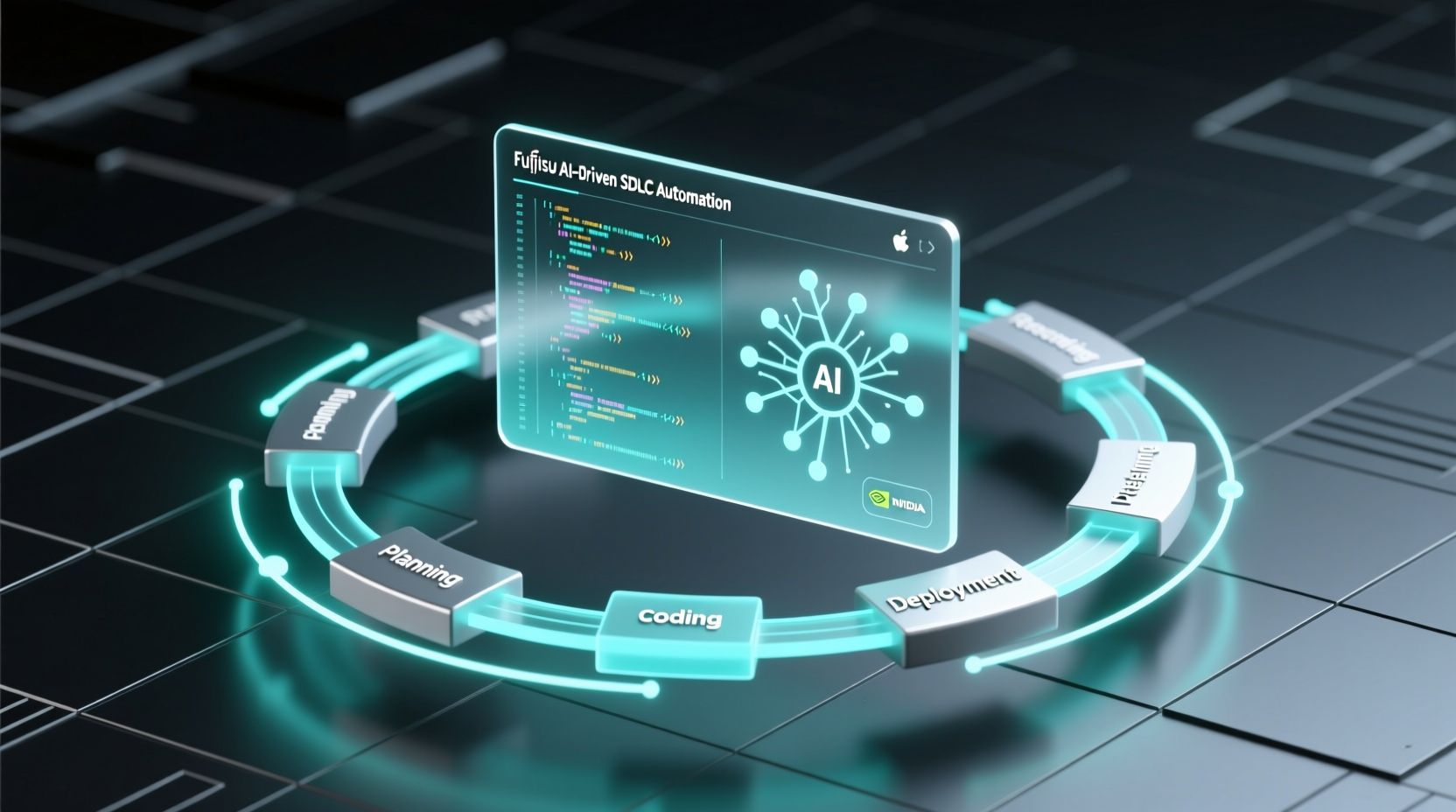
Into this crucible of challenge, Fujitsu has stepped forward with a groundbreaking announcement: the launch of its AI-Driven Software Development Platform. This isn’t merely another tool for developers; it’s a comprehensive, end-to-end automation solution designed to revolutionize the entire SDLC, from initial requirements to integration testing, powered by advanced AI. Early results are nothing short of astonishing, reporting a 100-fold increase in productivity in a real-world proof of concept. For engineering leaders and practitioners, understanding the technical underpinnings and strategic implications of this platform is paramount to navigating the impending shift in software creation.
Background Context: The Imperative for SDLC Automation
For years, the software industry has sought to streamline the SDLC. DevOps practices brought cultural shifts and automation to deployment pipelines, while low-code/no-code platforms aimed at abstracting development. Yet, the core activities of requirements analysis, design, coding, and comprehensive testing largely remained human-centric, labor-intensive, and prone to error. Legacy systems, in particular, present formidable challenges, with their intricate dependencies and often undocumented “tacit knowledge” making modifications risky and expensive.
The advent of Generative AI, especially Large Language Models (LLMs), has opened new frontiers. These models possess an unprecedented ability to understand, generate, and transform human language and code, making them ideal candidates for automating cognitive tasks previously exclusive to human engineers. Fujitsu’s new platform is a direct response to this opportunity, aiming to address the critical need for faster, more reliable, and cost-effective software evolution, particularly for organizations burdened by extensive legacy systems and frequent regulatory changes.
Deep Technical Analysis: Architecture and Capabilities
At the heart of Fujitsu’s AI-Driven Software Development Platform lies a sophisticated multi-agent AI architecture. The platform leverages the proprietary Takane LLM, developed jointly by Fujitsu and Cohere, alongside specialized agentic AI technology from Fujitsu Research.
The Takane LLM and Agentic AI Collaboration
- Takane LLM: This large language model serves as the cognitive core, enabling the platform to understand complex, evolving large-scale systems, including their business logic, existing codebases, and tacit knowledge often embedded in documentation or human expertise. Its ability to process and interpret intricate enterprise and public-sector systems is crucial for generating accurate and contextually relevant code and designs.
- Multi-Agent Architecture: Instead of a monolithic AI, the platform employs multiple specialized AI agents. Each agent is responsible for a distinct stage or aspect of the SDLC. For example, one agent might focus on requirements definition, translating natural language specifications into formal design documents, while another handles code generation, and yet another orchestrates integration testing. These agents collaborate autonomously, passing outputs and feedback between themselves, effectively simulating and automating a human development team.
End-to-End Automation Across the SDLC
The platform aims for “full automation of the entire process without human intervention” for specific modification tasks. This includes:
- Requirements Definition: AI agents analyze incoming change requests (e.g., regulatory updates, feature enhancements) and existing system documentation to automatically generate detailed requirements.
- Design Generation: Based on the requirements, the platform designs modifications to system architecture, database schemas, and API contracts.
- Implementation (Code Generation): The AI agents write and refactor code in various programming languages, ensuring adherence to established coding standards and system architecture.
- Integration Testing: Automated test cases are generated and executed, verifying the functionality and integration of the newly developed or modified components within the larger system. This extends beyond unit tests to cover system-level validation.
AI-Ready Engineering: The Crucial Preparation Phase
Fujitsu emphasizes AI-Ready Engineering as a critical precursor. This involves preparing and structuring existing system assets, documentation, and organizational knowledge to ensure the AI can accurately understand the current environment. This preparation is vital for achieving highly reliable automation, especially when dealing with complex legacy systems. Think of it as meticulously curating the training data and contextual information that allows the AI agents to perform effectively.
Performance Benchmarks
In a proof of concept (PoC) focused on updating software for the 2024 medical fee revisions in Japan, the platform achieved a remarkable outcome. A change request that would typically demand three person-months of conventional development effort was completed in just four hours. This represents an astounding 100-fold increase in productivity. While specific version numbers for the platform itself haven’t been released, its ongoing internal deployment for 67 types of medical and government software products by the end of fiscal year 2026 indicates a mature and production-ready state.
Practical Implications for R&D Engineering Teams
The implications of this level of SDLC automation are profound and multi-faceted.
Dramatic Productivity Gains and Cost Reduction
The reported 100x productivity gain is a game-changer. For organizations facing backlogs of maintenance tasks, regulatory updates, or system modernizations, this platform could unlock unprecedented speed and efficiency. It promises a significant reduction in development costs and time-to-market for critical updates.
Shifting Engineer Roles and Skill Sets
Instead of being primarily coders or manual testers, engineers will increasingly become “AI orchestrators” and “AI-Ready Engineering specialists.” Their roles will evolve towards:
- AI Supervision & Validation: Reviewing AI-generated code and designs for correctness, security, and architectural fit.
- Complex Problem Solving: Focusing on novel, high-value architectural challenges and innovative solutions that require human creativity and nuanced understanding.
- Platform Extension & Customization: Developing specialized AI agents or fine-tuning existing ones for unique organizational needs.
- Ethical AI & Governance: Ensuring the AI-driven process adheres to ethical guidelines, compliance, and responsible AI practices.
Fujitsu itself plans to strengthen its “Forward Deployed Engineer” (FDE) complement, signaling a shift towards roles that bridge the gap between AI capabilities and specific customer needs.
Security and Quality Assurance Considerations
While the platform automates integration testing, the need for robust security and quality assurance remains paramount. AI-generated code, while efficient, must still undergo rigorous scrutiny. Teams will need to implement:
- AI-Augmented Security Audits: Leveraging other AI tools for static and dynamic analysis to identify vulnerabilities in AI-generated code.
- Human-in-the-Loop Validation: Critical system changes should still involve human expert review, especially for high-impact or sensitive components.
- Reproducibility and Explainability: Ensuring that the AI’s decisions and generated outputs can be traced and understood, which is crucial for debugging and compliance.
Migration and Integration Challenges
Integrating such a comprehensive platform into existing, often heterogeneous, development environments will require careful planning. Organizations will need to assess:
- Data Readiness: The success of AI-Ready Engineering depends on the quality and accessibility of existing documentation, code, and system knowledge. Data migration and standardization will be key.
- Toolchain Compatibility: How well does the platform integrate with existing CI/CD pipelines, version control systems (e.g., Git), and project management tools?
- Vendor Lock-in: Evaluating the long-term implications of relying on a single vendor for end-to-end SDLC automation.
Best Practices for Embracing AI-Driven SDLC
For development and infrastructure teams, proactive engagement is key to harnessing the power of Fujitsu’s AI-Driven Software Development Platform, or similar future solutions:
- Invest in AI-Ready Engineering: Prioritize the meticulous documentation, standardization, and knowledge capture of your existing systems. This foundational work will directly impact the AI’s ability to understand and automate effectively.
- Cultivate a Culture of Experimentation: Start with non-critical projects or specific, well-defined tasks (e.g., routine bug fixes, minor feature enhancements) to gradually integrate AI automation. Learn and iterate.
- Upskill Your Workforce: Provide training for engineers to transition from traditional development roles to AI supervision, prompt engineering, and architectural oversight. Focus on skills like critical thinking, system design, and security analysis.
- Establish Robust Governance and Guardrails: Implement clear policies for AI-generated code review, security scanning, and human approval workflows. Define metrics for AI performance and quality.
- Embrace a Hybrid Approach: Recognize that full automation will likely be a gradual process. Initially, a hybrid model where AI handles repetitive tasks and humans focus on complex, creative, and strategic work will yield the best results.
- Focus on Value-Driven Development: Shift metrics from “person-months” to “customer value delivered,” reflecting the new efficiency paradigms.
Actionable Takeaways for Teams
- Development Teams: Begin identifying repetitive coding tasks, documentation generation, and test case creation that could be prime candidates for AI assistance. Start refining your internal knowledge bases and code comments to be more “AI-consumable.”
- Infrastructure Teams: Evaluate your current CI/CD pipelines for integration points with AI platforms. Consider how AI-generated artifacts will be stored, versioned, and deployed. Plan for increased computational demands for AI models.
- Security Teams: Develop new threat models for AI-generated code and processes. Integrate AI-powered security analysis tools into your pipeline to complement the automated development.
Related Internal Topic Links
- Generative AI in DevOps: Beyond Code Generation
- MLOps Best Practices for Enterprise-Scale AI
- Securing AI-Powered Software Supply Chains
Conclusion
Fujitsu’s AI-Driven Software Development Platform marks a pivotal moment in the evolution of software engineering. By automating the entire SDLC with its Takane LLM and agentic AI, Fujitsu is not just offering an incremental improvement but a fundamental paradigm shift that promises unprecedented productivity gains and a redefinition of engineering roles.
For R&D teams, the future is clear: AI will not replace engineers, but engineers who leverage AI will undoubtedly replace those who do not. The race is now on to understand, adapt, and integrate these powerful new capabilities to build the next generation of software with unparalleled speed, quality, and agility. The journey to fully autonomous software development has just begun, and Fujitsu has fired a significant starting gun.