The relentless pace of technological evolution, coupled with the ever-present demands for faster delivery and robust, compliant software, places immense pressure on R&D engineering teams. Legacy systems, often critical to core business operations, frequently become bottlenecks, requiring significant person-months for even minor regulatory updates or feature enhancements. This challenge is not merely about efficiency; it’s about organizational agility and the capacity to innovate in an increasingly competitive global market. In this urgent climate, a recent announcement from Fujitsu stands to fundamentally redefine software engineering paradigms, demanding immediate attention from every engineering leader and architect.
Background Context: A Paradigm Shift in Software Delivery
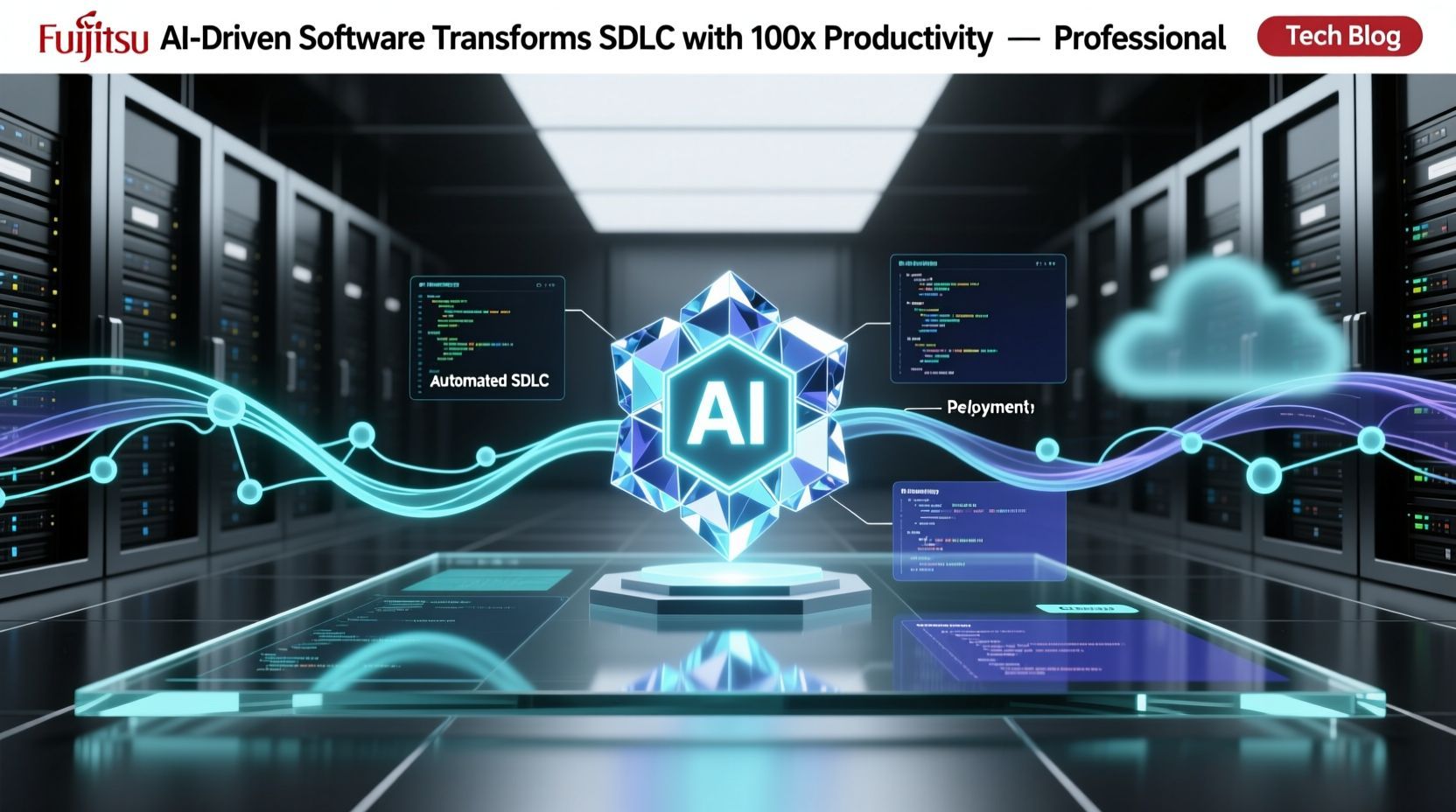
On February 17, 2026, Fujitsu Limited unveiled its groundbreaking AI-Driven Software Development Platform, marking a pivotal moment in the quest for fully automated software delivery. This innovative platform is designed to automate the entire software development lifecycle (SDLC), spanning from initial requirements definition and design through to implementation and comprehensive integration testing. The core impetus behind this development is to empower enterprises and public organizations to navigate the complexities of evolving large-scale systems and rapidly adapt to regulatory and business changes, thereby challenging the long-standing “person-month” model of software delivery.
Initially, Fujitsu is deploying this platform internally, focusing on critical updates for all 67 types of medical and government business software products provided by Fujitsu Japan Limited by the end of fiscal year 2026. These revisions are necessitated by legal and regulatory adjustments, such as the 2026 medical fee revisions in Japan, where the platform has already been utilized since January 2026. This strategic internal rollout underscores Fujitsu’s commitment to validating and refining the platform in high-stakes, compliance-driven environments before its broader commercial availability.
Deep Technical Analysis: Architecture, AI Agents, and Performance
At the heart of Fujitsu’s AI-Driven Software Development Platform lies a sophisticated interplay of proprietary artificial intelligence technologies. The platform leverages Fujitsu’s own Takane large language model (LLM), developed in collaboration with Cohere, alongside advanced agentic AI technology specifically engineered for large-scale software development.
Core AI Technologies and Architecture
- Takane LLM: This proprietary large language model forms the cognitive backbone, enabling the platform to deeply understand complex system architectures, legal documents, specifications, and design standards. It processes and interprets intricate context, including tacit knowledge often unique to human teams, which is crucial for handling legacy systems.
- Agentic AI Technology: The platform is characterized by a multi-AI agent architecture. Rather than a single monolithic AI, multiple specialized AI agents collaboratively execute each stage of the software development process. These agents work autonomously, from requirements elicitation and design generation to code implementation and integration testing, achieving full automation without human intervention in these specific tasks. This distributed, collaborative agent model is key to managing the complexity and scale of enterprise software.
AI-Ready Engineering: Bridging the Legacy Gap
A critical component of Fujitsu’s approach is what they term “AI-Ready Engineering”. This methodology focuses on preparing existing assets and knowledge – including legacy codebases, documentation, and operational know-how – to ensure that the AI system can accurately understand and process them. AI-Ready Engineering involves visualizing and formalizing tacit knowledge, making it accessible and usable for the AI agents, thereby enhancing the reliability and accuracy of automated development processes. This is a significant architectural decision, acknowledging that real-world enterprise systems are not greenfield projects but rather complex, evolving entities with decades of accumulated technical debt and implicit knowledge.
Benchmark Performance and Productivity Gains
The platform’s efficacy has been demonstrated through compelling proof-of-concept (PoC) results. In an internal PoC that updated software to align with the 2024 medical fee revisions, the Fujitsu AI-Driven Software Development Platform showcased a remarkable 100-fold increase in productivity. A change request that would typically consume three person-months using conventional software development methods was completed in a mere four hours with the AI platform. This dramatic reduction in development time highlights the potential for unprecedented acceleration in software modification and maintenance cycles, particularly for regulation-driven changes in sectors like healthcare, finance, and government.
Practical Implications for R&D and Infrastructure Teams
The introduction of Fujitsu’s AI-Driven Software Development Platform carries profound implications for development and infrastructure teams globally. This isn’t merely an incremental improvement; it signals a fundamental shift in how software will be conceived, built, and maintained.
Transforming Development Workflows and Roles
For development teams, the immediate impact will be a significant reduction in time spent on repetitive, lower-value tasks such as routine code modifications, boilerplate generation, and initial testing cycles. This automation frees engineers to concentrate on higher-value activities: complex problem-solving, architectural innovation, strategic planning, and fostering human-AI collaboration. Fujitsu explicitly plans to strengthen its Forward Deployed Engineer (FDE) complement, indicating a strategic shift towards roles that bridge the gap between AI capabilities and business needs, focusing on customer value rather than person-month efforts.
Addressing Legacy System Challenges and Skills Gaps
One of the most compelling aspects of this platform is its potential to unlock the value trapped within aging legacy systems. Many organizations struggle with the risk and expense of updating long-lived applications to meet new regulatory or operational demands. By making these systems “AI-Ready,” the Fujitsu platform offers a practical pathway to modernize and adapt them at speed, effectively mitigating the technical debt that often impedes digital transformation initiatives. Furthermore, by automating significant portions of the SDLC, the platform inherently addresses the growing tech skills gap by optimizing resource allocation and reducing the reliance on extensive manual labor for maintenance tasks.
Future Expansion and Commercial Availability
Fujitsu’s roadmap includes expanding the application of its AI-Driven Software Development Platform to a broad spectrum of sectors, including finance, manufacturing, retail, and public services, by the end of fiscal year 2026. Concurrently, the company intends to begin offering this service commercially to customers and partner companies, enabling them to rapidly develop and adapt systems to their evolving business environments. This indicates a strategic move towards establishing AI-driven development as an industry standard, transforming software development into an AI-driven model.
Best Practices for Embracing AI-Driven SDLC Adoption
To fully capitalize on the potential of AI-driven software development platforms like Fujitsu’s, organizations must proactively adapt their strategies and operational frameworks.
- Prioritize AI-Ready Engineering: Begin the process of analyzing and structuring your existing codebase, documentation, and tacit knowledge to be consumable by AI models. This foundational work is critical for the reliability and effectiveness of automated development.
- Invest in New Skillsets: Upskill your engineering teams to effectively collaborate with AI. This includes developing expertise in prompt engineering for SDLC, AI model oversight, validation of AI-generated code, and focusing on higher-level architectural and design challenges. Roles like Forward Deployed Engineers will become increasingly vital.
- Implement Robust Governance and Security: As AI takes on more autonomous roles, establishing stringent governance frameworks for AI decision-making, code generation, and data handling is paramount. Security protocols must be updated to address potential vulnerabilities introduced by AI-generated components and to protect sensitive data used in training and inference.
- Start with Strategic Pilot Projects: Instead of a wholesale overhaul, identify specific, high-volume, and well-defined tasks for initial AI automation. Regulatory compliance updates, routine refactoring, or localized feature enhancements are excellent candidates to demonstrate value and build organizational confidence.
- Foster a Culture of Human-AI Collaboration: Encourage a mindset where AI is seen as an intelligent assistant and co-worker, not a replacement. The most successful implementations will likely involve a symbiotic relationship where human creativity and critical thinking guide and refine AI’s output, leading to superior outcomes.
Actionable Takeaways for Development and Infrastructure Teams
- Assess Legacy System AI-Readiness: Conduct an audit of your critical legacy systems to identify areas where “AI-Ready Engineering” can be applied. Prioritize systems with frequent regulatory updates or high maintenance overhead.
- Strategic Workforce Planning: Begin planning for a shift in engineering roles. Identify where current skills can be augmented by AI and where new skills, such as AI prompt engineering for software development, will be required.
- Pilot AI for Compliance and Maintenance: Explore piloting AI-driven platforms for specific, recurring compliance updates or routine maintenance tasks. Quantify the productivity gains and quality improvements.
- Evaluate Cloud and Hybrid AI Deployments: Consider the infrastructure implications of hosting and operating large language models and agentic AI systems.
Related Internal Topic Links
- Generative AI Best Practices in Enterprise Software
- Strategies for Legacy System Modernization with AI
- The Future of Software Engineering: Impact of AI and Automation
Conclusion: The Dawn of Autonomous Software Engineering
Fujitsu’s AI-Driven Software Development Platform is not merely an incremental technological advancement; it represents a profound step towards autonomous software engineering. By harnessing the power of the Takane LLM and sophisticated agentic AI, Fujitsu is demonstrating that the entire SDLC can be automated, delivering unprecedented productivity gains and fundamentally altering the economics of software development. For R&D engineers, this heralds an exciting era where the drudgery of repetitive tasks is replaced by opportunities for deeper innovation and strategic impact. The challenge now lies in proactive adoption, strategic integration, and cultivating the skills necessary to thrive in this new, AI-augmented development landscape. The future of software is autonomous, and Fujitsu is clearly at the vanguard of this transformative journey.