The relentless pace of AI innovation is both a beacon of opportunity and a looming challenge for enterprise R&D engineering teams. Nowhere is this tension more palpable than within the sprawling, mission-critical ecosystem of the contact center. For decades, organizations have invested heavily in robust, albeit often monolithic, contact center infrastructure. Now, as cutting-edge AI, particularly generative AI, promises unprecedented efficiencies and customer experiences, engineers face a daunting question: how do we integrate this transformative technology without dismantling the very systems that underpin our daily operations? The urgency is clear: adaptation is no longer optional, and the traditional “rip and replace” strategy is economically and operationally untenable. This is the chasm TTEC Digital aims to bridge with its latest offering, AI Gateway, a solution poised to redefine how enterprise AI interacts with legacy contact center technology.
Background Context: The AI-Legacy Conundrum in CX
For years, contact centers have relied on a patchwork of proprietary PBX systems, ACDs, IVRs, and CRM platforms, many of which were designed long before the advent of modern cloud-native architectures or sophisticated machine learning. These systems, while stable and highly customized, often lack the open APIs, flexible data models, and scalable compute resources necessary to seamlessly integrate with today’s rapidly evolving AI landscape. The challenge intensifies with the rise of Generative AI and Large Language Models (LLMs), which demand robust data pipelines, low-latency inference, and dynamic contextual understanding to deliver meaningful customer and agent experiences.
The traditional approach to integrating new technologies has often involved extensive, multi-year migration projects, fraught with significant capital expenditure, operational disruption, and inherent risk. For contact centers, where downtime directly translates to customer dissatisfaction and revenue loss, such migrations are a non-starter for many enterprises. CTOs and engineering leaders are keenly aware that while AI promises substantial ROI—with early adopters reporting outcomes like $6M in cost savings from AI-enabled digital channel deflection or a +60 pt. improvement in NPS—the path to realizing these benefits must respect existing investments and operational continuity. This creates a critical need for an agile, non-disruptive integration layer that can unlock AI’s potential without necessitating a complete overhaul of decades-old systems. TTEC Digital, with its deep expertise in customer experience (CX) technology, has stepped into this breach, recognizing that the “collision” doesn’t have to be destructive but can instead be a catalyst for strategic evolution.
Deep Technical Analysis: TTEC Digital’s AI Gateway Architecture
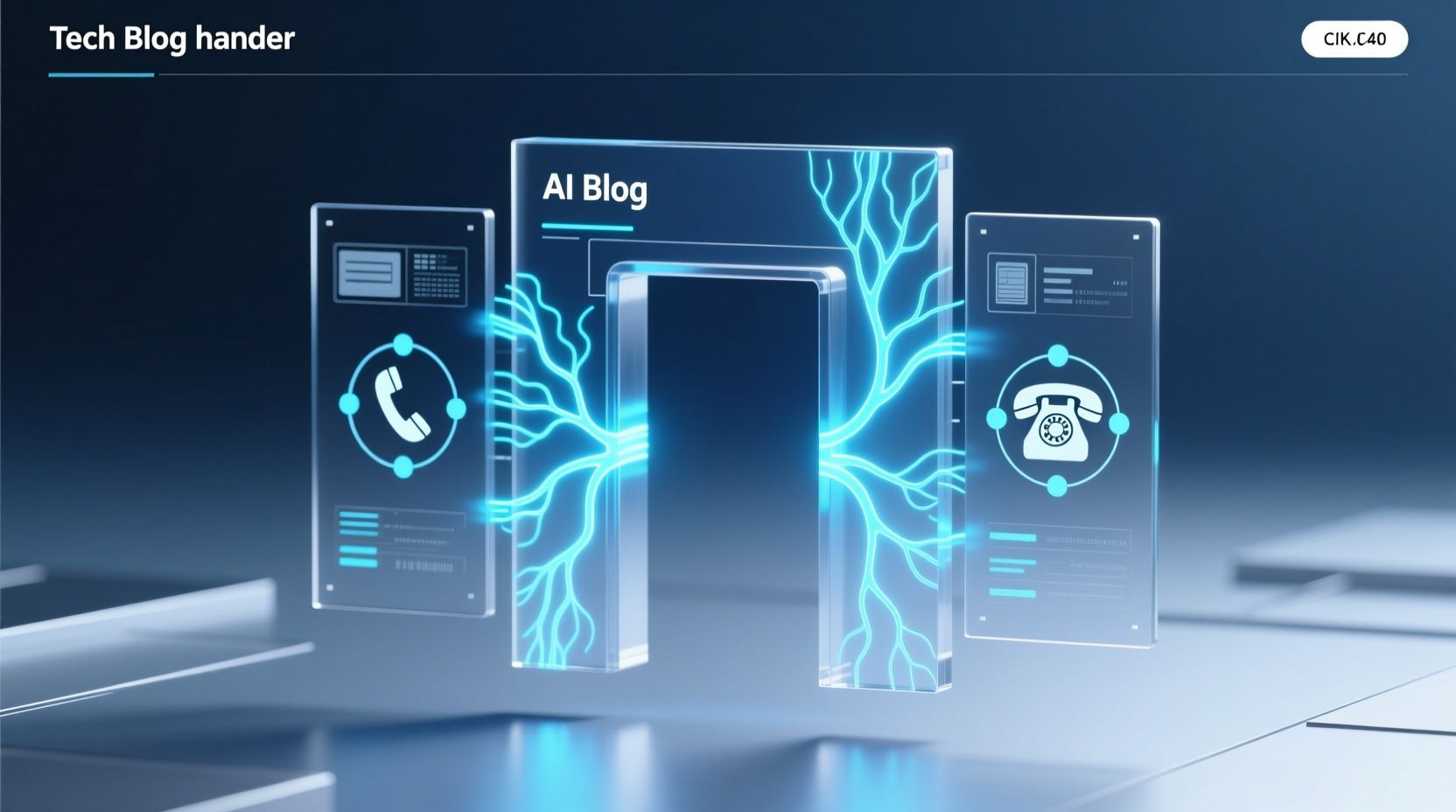
Announced on April 2, 2026, TTEC Digital’s AI Gateway is a pivotal software solution engineered to serve as a universal connector between modern AI capabilities and entrenched legacy contact center infrastructure. At its core, AI Gateway acts as an abstraction layer, providing a single integration point that normalizes communication between disparate systems. This architectural decision is crucial for several reasons:
- Universal Connectivity: The Gateway is designed to be protocol-agnostic where possible, supporting a wide array of AI platforms. Initially, it supports connections with Amazon, Google, and Microsoft AI services, with a flexible architecture ready to rapidly integrate with additional leading AI developers like Anthropic, OpenAI, and Nvidia. This future-proof design ensures enterprises are not locked into a single AI vendor as the market evolves.
- Legacy System Compatibility: Beyond AI platforms, AI Gateway natively integrates with major contact center platforms such as Avaya, Cisco, Five9, Genesys, Twilio, and Zoom, as well as leading CRM platforms like Salesforce and Dynamics 365. This extensive compatibility is achieved through a combination of standard APIs (e.g., RESTful APIs, WebSockets), custom connectors, and potentially middleware components that translate modern AI service requests and responses into formats compatible with older systems.
- Model Agnosticism & Flexibility: One of AI Gateway’s most compelling technical features is its ability to allow clients to “mix and switch models at any time.” This implies an intelligent routing and orchestration layer that can direct specific customer interaction types or data queries to the most appropriate AI model (e.g., a specialized NLU for intent recognition, a large language model for summarization, or a generative AI for agent assist responses). This flexibility fosters a competitive AI ecosystem, enabling A/B testing of different models and continuous optimization based on performance benchmarks, such as response latency and accuracy.
- Data Ingestion and Processing: The Gateway is built to “ingest data from many sources with advanced AI.” This highlights a critical data pipeline component. It likely includes capabilities for real-time data streaming (e.g., call transcripts, chat logs), data sanitization, anonymization, and contextual enrichment before feeding it to AI models. For instance, sensitive PII might be masked before being sent to an external LLM, ensuring compliance with regulations like GDPR or HIPAA, while keeping the full context within the secure confines of the legacy environment. While specific security certifications (e.g., ISO 27001, SOC 2 Type II) for AI Gateway itself are not detailed in the announcement, TTEC Digital’s emphasis on continuous optimization and oversight suggests a robust security and governance framework for data handling.
The underlying architecture likely leverages microservices for scalability and resilience, allowing individual connectors and AI integrations to be updated or scaled independently. This design minimizes the blast radius of any single component failure and facilitates rapid iteration and deployment, aligning with modern DevOps principles.
Practical Implications for Engineering Teams
For development and infrastructure teams, AI Gateway presents several significant practical implications:
- Accelerated AI Adoption: Engineers can bypass the extensive refactoring often required to expose legacy systems to modern AI. The Gateway provides a standardized interface, dramatically reducing the time-to-market for AI-powered CX initiatives. This means moving from concept to production for AI agents or assistive tools can be faster and with a lower initial investment.
- Reduced Technical Debt: Instead of building custom, point-to-point integrations for each new AI service, teams can leverage the Gateway’s generalized connectors. This prevents the accumulation of bespoke integration code, reducing long-term maintenance overhead and technical debt.
- Enhanced Experimentation & Optimization: The ability to easily swap out or combine different AI models (e.g., testing GPT-4 against Claude 3 for summarization accuracy) empowers data scientists and AI engineers to conduct rapid experimentation. This iterative approach is vital for optimizing AI performance metrics like resolution rates, agent efficiency, and customer satisfaction.
- Simplified Security & Compliance: By centralizing the data flow between legacy systems and AI, the Gateway can enforce consistent security policies, data masking rules, and access controls. This simplifies the audit trail and helps maintain compliance with stringent industry regulations, which is especially critical in sectors like BFSI and healthcare where TTEC Digital has already deployed AI Gateway.
- Skillset Evolution: While some traditional integration skills remain relevant, teams will increasingly need expertise in API management, cloud-native AI services, prompt engineering, and AI model evaluation. The focus shifts from low-level system plumbing to higher-level orchestration and AI performance tuning.
Best Practices for Implementation
To maximize the value of TTEC Digital’s AI Gateway, engineering and operations teams should consider the following best practices:
- Start with a Targeted Use Case: Identify a clear, high-impact AI use case (e.g., intelligent routing, agent assist, sentiment analysis, conversational AI for FAQs) that aligns with business objectives and can demonstrate early ROI. Avoid a “big bang” approach.
- Develop a Robust Data Strategy: Even with the Gateway, clean, well-structured, and appropriately labeled data is paramount for effective AI. Invest in data governance, quality assurance, and real-time data pipelines to feed accurate information to AI models. Implement data masking and anonymization at the Gateway layer for privacy.
- Phased Rollout and A/B Testing: Utilize the Gateway’s flexibility to deploy AI features in phases, conducting A/B tests to compare AI-driven outcomes against traditional methods. Monitor key performance indicators (KPIs) closely and iterate based on empirical results.
- Comprehensive Monitoring and Observability: Implement robust monitoring for the AI Gateway itself, the integrated AI services, and the legacy systems. Track API latency, error rates, AI model drift, and system resource utilization. Tools like Prometheus, Grafana, and distributed tracing can provide critical insights.
- Agent Enablement and Change Management: AI in the contact center is not just a technology deployment; it’s a transformation of work. Provide comprehensive training for agents on how to leverage AI tools effectively, manage AI-driven interactions, and handle edge cases. Acknowledge and address potential agent concerns about AI job displacement.
- Security by Design: Integrate security considerations from the outset. Ensure proper authentication and authorization mechanisms are in place for all interactions with AI Gateway and downstream AI services. Regularly audit configurations and data flows for vulnerabilities.
Actionable Takeaways for Development and Infrastructure Teams
- Evaluate AI Gateway’s Fit: Assess your current contact center architecture and AI roadmap. If significant legacy systems are in place and AI adoption is a priority, TTEC Digital’s AI Gateway should be on your evaluation list for its ability to reduce integration complexity and risk.
- Prioritize API Management: Strengthen your organization’s API management capabilities. The AI Gateway relies on robust API interactions, both upstream to AI models and downstream to legacy systems.
- Invest in AI Governance: Establish clear policies for AI model selection, data usage, ethical AI considerations, and continuous performance monitoring.
- Cross-Functional Collaboration: Foster tighter collaboration between CX strategy, AI/ML engineering, data science, and infrastructure teams to ensure a holistic approach to AI integration.
Related Internal Topic Links
- Generative AI in Customer Service: Architecting for Scale
- Data Governance for AI Models: Best Practices for Enterprise Readiness
- API Security Best Practices: Protecting Your Digital Integrations
Forward-Looking Conclusion
The collision of AI with legacy contact center technology is not a temporary phenomenon but the new normal. Solutions like TTEC Digital’s AI Gateway represent a crucial evolutionary step, offering a pragmatic path forward for enterprises grappling with digital transformation. By providing a flexible, unified integration layer, the Gateway empowers organizations to rapidly deploy, test, and scale advanced AI capabilities without the prohibitive costs and risks associated with overhauling deeply embedded systems. As the AI landscape continues its rapid flux, the ability to abstract away complexity and interchange AI models will be a defining characteristic of resilient and future-proof customer experience architectures. Engineers who embrace these integration strategies will be at the forefront of delivering the next generation of intelligent, efficient, and deeply personalized customer interactions, ensuring that their enterprises not only survive the AI collision but thrive in its wake.