The relentless pace of artificial intelligence innovation is reshaping every facet of enterprise operations, none more acutely than the customer experience (CX) landscape. For R&D engineers tasked with driving digital transformation in the contact center, the promise of AI often clashes with the stark reality of entrenched, mission-critical legacy technology. This collision presents not just a technical hurdle, but an existential threat to competitive advantage for organizations unable to adapt. The urgency to bridge this divide has never been higher, as customer expectations soar and the efficiency gains offered by AI become non-negotiable.
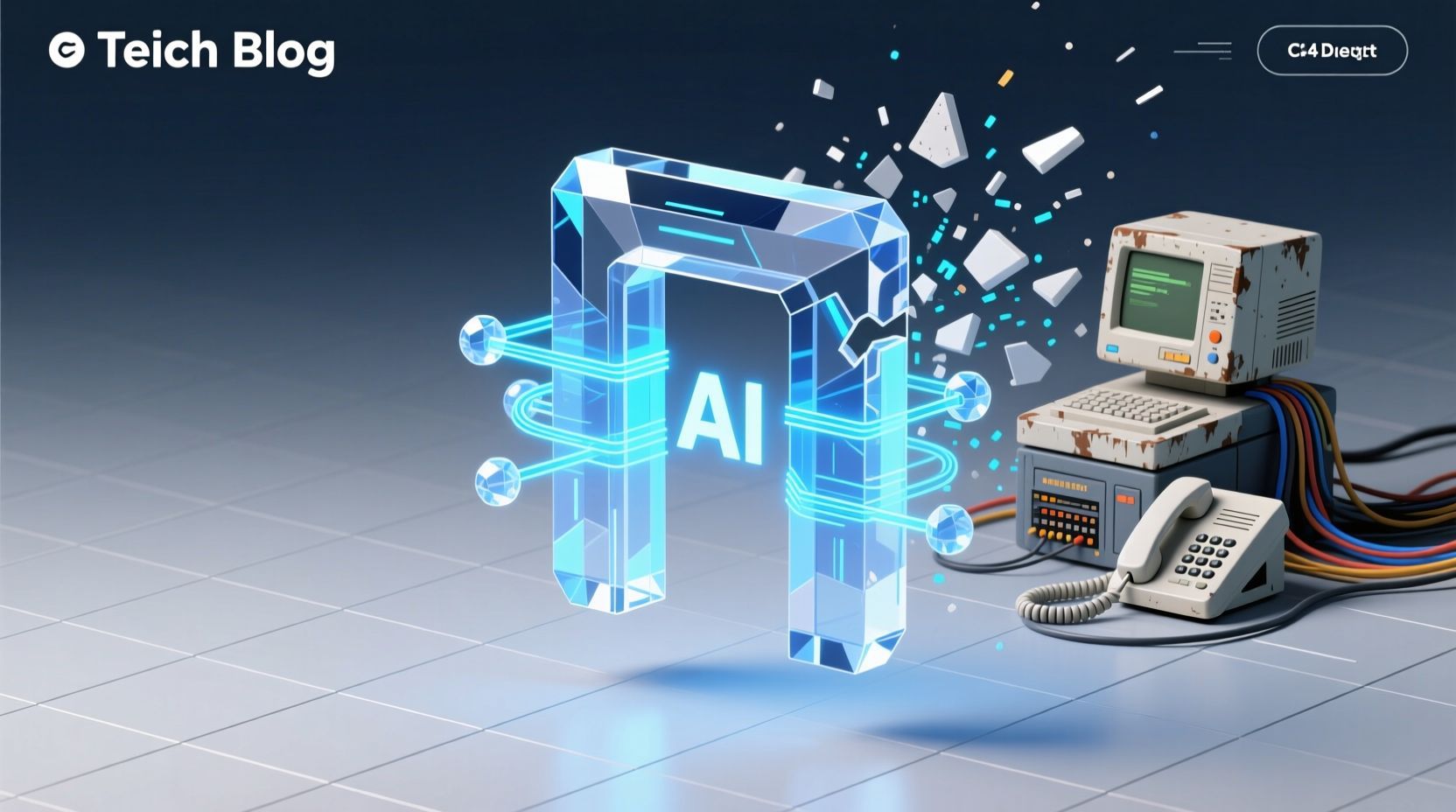
A recent announcement on April 2, 2026, from TTEC Digital offers a compelling answer to this pressing challenge. TTEC Digital, a leading global consulting, technology, and managed services company, unveiled its new software solution, AI Gateway. This release is explicitly positioned to address the friction experienced “As AI Collides with Legacy Contact Center Technology,” aiming to rewrite the enterprise AI playbook by enabling seamless integration rather than disruptive overhaul. For engineers grappling with complex modernization roadmaps, AI Gateway represents a significant architectural shift, promising to accelerate AI adoption and unlock substantial operational efficiencies without necessitating a wholesale rip-and-replace strategy.
Background: The Inevitable Collision
For decades, contact centers have been the operational backbone of customer interaction, evolving through various technological paradigms from PBX systems to on-premises ACDs and, more recently, cloud-based CCaaS platforms. Many enterprises, particularly in sectors like healthcare, BFSI, telecommunications, and the public sector, have invested heavily in highly customized, robust, yet often monolithic, legacy contact center infrastructures. These systems, while stable and integral to daily operations, were never designed with the dynamic, API-driven, and computationally intensive demands of modern AI in mind.
The advent of generative AI and advanced machine learning models has created an unprecedented opportunity to transform customer service—from intelligent self-service bots and real-time agent assist tools to sophisticated sentiment analysis and predictive routing. However, the path to leveraging these innovations is frequently obstructed by the very architecture of existing systems. Integrating new AI capabilities often requires extensive custom development, costly data migrations, and significant downtime, posing unacceptable risks to business continuity and budget constraints. TTEC Digital recognized this fundamental disconnect, identifying the need for a solution that empowers organizations to harness cutting-edge AI without destabilizing their core CX operations.
Deep Dive: TTEC Digital’s AI Gateway Architecture and Capabilities
At its core, TTEC Digital’s AI Gateway is engineered as a universal connector, designed to act as an abstraction layer between diverse legacy contact center environments and a rapidly evolving ecosystem of AI platforms. This architectural decision is pivotal, as it isolates the complexities of AI integration from the underlying proprietary protocols and data formats of older systems. The Gateway functions by ingesting media streams and metadata directly from existing contact center platforms, then intelligently routing this information through real-time APIs to various AI services.
Key Technical Specifications and Integrations:
- Universal Connector Paradigm: AI Gateway provides a standardized interface for AI services, abstracting away the idiosyncrasies of different contact center platforms. This eliminates the need for bespoke integrations for each AI model or legacy system.
- Broad AI Platform Support: The initial release supports leading AI platforms including Amazon, Google, and Microsoft, with a flexible architecture designed for rapid expansion to include emerging frontier AI solutions like Anthropic, OpenAI, and Nvidia. This future-proofing is critical in a fluid AI landscape.
- Extensive Legacy System Compatibility: The solution integrates with a wide array of established contact center technologies such as Avaya, Cisco, Five9, Genesys, Twilio, and Zoom. Furthermore, it supports integration with major CRM platforms like Salesforce and Dynamics 365, ensuring a holistic view of the customer journey. This broad compatibility significantly reduces the barrier to entry for many enterprises.
- Real-Time API-Driven Data Flow: AI Gateway leverages real-time APIs for seamless data exchange. This is crucial for applications requiring immediate responses, such as live agent assistance or conversational AI, where latency can severely degrade the user experience.
Core Use Cases and AI-Powered Functionality:
The AI Gateway enables a spectrum of advanced AI applications within the contact center, enhancing both customer and agent experiences:
- Conversational Agents & Bidirectional Virtual Agents: Facilitates intelligent self-service and automated interactions, offloading routine queries from human agents.
- Live Agent Assistance: Provides real-time guidance, knowledge base lookups, and sentiment analysis to human agents, improving resolution times and consistency.
- Real-Time Transcription & Summarization: Converts spoken interactions into text instantaneously and generates concise summaries, aiding compliance, training, and post-call analysis.
- Customer Insights & Analytics: Extracts actionable intelligence from interactions, informing business strategy and personalized CX initiatives.
- Generative AI Integration: Supports the deployment of generative AI models for tasks like dynamic script generation, personalized responses, and content creation.
Crucially, AI Gateway is designed to facilitate rapid AI adoption without requiring a costly and time-consuming full platform migration. This non-disruptive approach addresses a primary concern for enterprises with deeply embedded legacy systems, allowing them to iterate and scale AI initiatives incrementally.
Practical Implications for Engineering Teams: Bridging the Divide
For development and infrastructure teams, the introduction of AI Gateway profoundly impacts strategic planning and implementation. It shifts the focus from monolithic platform replacements to an agile, API-first integration strategy.
Migration Strategy Reimagined:
Traditionally, modernizing legacy contact centers for AI meant facing a daunting “big bang” migration. AI Gateway fundamentally alters this by providing a layer of abstraction. Engineering teams can now approach legacy systems modernization incrementally. Instead of rebuilding entire modules, they can leverage the Gateway to expose data and functionality to AI services via a standardized API, minimizing risk and maximizing existing investments. This allows for a phased rollout of AI capabilities, testing, and optimization without disrupting core services. Teams can focus on developing new AI features rather than wrestling with legacy system rewrites.
Performance Benchmarks and ROI:
Early adopters across various industries, including healthcare, BFSI, telecom, and public sector, have reported significant returns on investment (ROI), substantial cost savings, and improved customer satisfaction directly attributable to AI-enabled interactions via the Gateway. TTEC Digital highlights compelling metrics: up to $6 million in cost savings within one year from AI-enabled digital channel deflection, translating to a 388% ROI. Furthermore, a +60 point improvement in Net Promoter Score (NPS) over four years and $3 million in savings generated by reducing average handle time (AHT) by 90 seconds per call underscore the tangible benefits of this approach. These figures provide concrete benchmarks for engineering teams to build business cases and measure the success of their AI integration projects, emphasizing the Gateway’s role in driving both efficiency and CX enhancements through architectural efficiency.
Security and Compliance Posture:
Integrating AI with sensitive customer data within legacy systems introduces complex security and compliance considerations. While specific CVE IDs for AI Gateway are not detailed in the announcement, TTEC Digital emphasizes its commitment to “Security and compliance” as a core contact center capability. Engineering teams must ensure that the AI Gateway acts as a secure conduit, adhering to industry standards for data encryption (at rest and in transit), access control, and privacy regulations (e.g., GDPR, CCPA, HIPAA). This involves robust API security, secure authentication mechanisms, and vigilant monitoring for anomalous behavior. The Gateway’s role in ingesting and routing media and metadata necessitates careful consideration of data anonymization, redaction, and audit trails to maintain regulatory adherence and protect customer trust. Development teams should implement security-by-design principles, conducting regular penetration testing and vulnerability assessments on the integration points and the Gateway itself to mitigate potential attack vectors.
Best Practices for AI-Native Contact Center Evolution
To maximize the benefits of solutions like AI Gateway and ensure a successful AI-driven transformation, R&D and infrastructure teams should adopt several best practices:
- Adopt a Modular and API-First Architecture: Embrace microservices and an API-first design philosophy. This allows for greater agility, easier integration of new technologies, and compartmentalization of services, reducing the blast radius of potential failures.
- Implement Robust API Governance: Establish clear standards for API design, documentation, security, and versioning. This is crucial for managing the growing number of integrations between legacy systems, the AI Gateway, and various AI models.
- Prioritize Observability and Performance Monitoring: Deploy comprehensive monitoring tools to gain deep insights into the performance of hybrid AI-legacy systems. Track latency, error rates, and resource utilization across the AI Gateway and integrated services to proactively identify and address bottlenecks.
- Establish a Continuous Integration/Continuous Deployment (CI/CD) Pipeline for AI: Automate the deployment, testing, and retraining of AI models. This enables rapid iteration and ensures that AI capabilities remain current and performant.
- Emphasize Data Governance and Ethical AI: Implement strict data governance policies to ensure data quality, privacy, and compliance. Develop and adhere to ethical AI guidelines to prevent bias, ensure transparency, and maintain customer trust.
Related Internal Topics
- API Security: Hardening Your AI Integration Points
- DevOps for AI/ML: Streamlining Model Deployment and Management
- Cloud Contact Center Migration: Phased Approaches for Hybrid Environments
The launch of TTEC Digital’s AI Gateway signals a significant leap forward in resolving the persistent challenge of integrating AI with legacy contact center technology. By providing a sophisticated, flexible, and non-disruptive integration layer, it empowers engineering teams to rapidly deploy and scale AI initiatives, unlocking tangible business value and superior customer experiences. The future of the contact center is undeniably AI-powered, and solutions like AI Gateway are critical enablers, allowing enterprises to navigate the complexities of digital transformation with confidence. For R&D engineers, this marks a new era of innovation, where the focus shifts from overcoming architectural inertia to strategically leveraging AI for competitive differentiation and enhanced customer engagement.