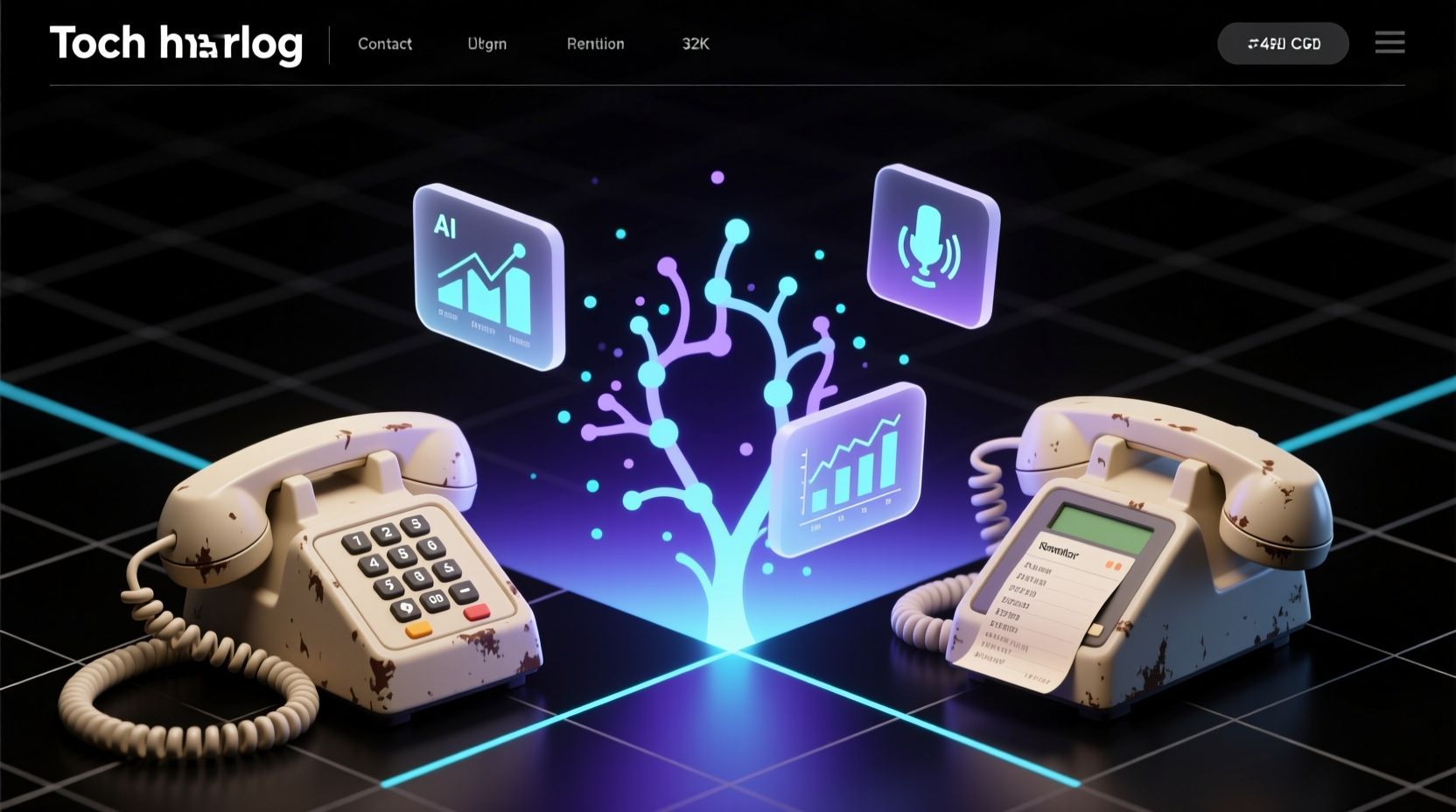
The imperative to integrate Artificial Intelligence (AI) into customer experience (CX) operations is no longer a strategic aspiration; it’s an immediate operational mandate. Yet, for many enterprises, this journey grinds to a halt at the collision point between agile, modern AI frameworks and decades of investment in legacy contact center technology. Engineers tasked with this modernization face a daunting landscape of siloed systems, proprietary protocols, and the ever-present risk of disrupting mission-critical operations. The urgency has never been greater: deliver transformative AI-driven CX or risk being left behind.
Into this critical juncture steps TTEC Digital with its recent announcement of the AI Gateway software solution, unveiled on April 2, 2026. This offering directly addresses the core technical challenge of enabling seamless AI integration within existing, often complex, contact center ecosystems. For R&D and infrastructure teams, understanding the architectural implications, integration patterns, and best practices surrounding such a solution is paramount for successful deployment and long-term strategic advantage.
Background Context: The AI-Legacy Chasm in CX
For years, contact centers have relied on a patchwork of technologies: Private Branch Exchanges (PBXs) for call routing, Interactive Voice Response (IVR) systems for automated interactions, and Customer Relationship Management (CRM) platforms for customer data. While robust in their prime, these systems were not designed for the dynamic, real-time, and data-intensive demands of modern AI. The result is a significant chasm:
- Siloed Data: Customer interaction data, often residing in disparate systems, makes a unified view for AI analysis and decision-making incredibly difficult.
- Proprietary Interfaces: Legacy platforms frequently expose limited or outdated APIs, making direct integration with cutting-edge AI models a costly, custom-coded endeavor.
- Operational Risk: The fear of destabilizing existing, revenue-generating operations often paralyzes modernization efforts, leading to analysis paralysis and delayed innovation.
- Scalability Challenges: Traditional architectures struggle to handle the fluctuating computational demands of AI, from real-time transcription to complex natural language processing (NLP) models.
This “AI Collides with Legacy Contact Center Technology” scenario is precisely what TTEC Digital aims to resolve. By providing a “universal connector,” the AI Gateway seeks to abstract away the complexities of legacy systems, allowing enterprises to inject advanced AI capabilities without embarking on disruptive and expensive rip-and-replace initiatives.
Deep Technical Analysis: Unpacking TTEC Digital’s AI Gateway
TTEC Digital’s AI Gateway is positioned as a critical middleware layer, designed to be the single integration point between diverse contact center platforms and a multitude of AI services. From a technical standpoint, this implies a sophisticated architecture focused on interoperability, data orchestration, and real-time processing.
Architectural Decisions and Integration Patterns
The core functionality of the AI Gateway involves ingesting media streams and metadata from existing contact center platforms, then routing them through chosen AI providers via real-time APIs. This suggests an architecture built around several key components:
- API Gateway/Event Bus: At its heart, the AI Gateway likely functions as a robust API gateway or an event streaming platform. It normalizes incoming data from various legacy systems (e.g., SIP/RTP streams for voice, messaging APIs for chat) into a standardized format. This abstraction layer is crucial for legacy system interoperability.
- Protocol Adapters: To connect with a wide array of legacy CX platforms, including Avaya, Cisco, Five9, Genesys, NiCE, Twilio, and Zoom, the Gateway must incorporate various protocol adapters. These adapters handle the translation between proprietary contact center protocols and the standardized internal format.
- Real-time Data Pipelines: For use cases like agent assist and transcription, low-latency processing is paramount. This necessitates high-throughput, real-time data pipelines, likely leveraging technologies such as Apache Kafka or similar message queuing systems for efficient data ingestion and distribution to AI services.
- AI Service Orchestration: The Gateway acts as an orchestrator, dynamically routing requests to various AI providers. It supports connections with major cloud AI platforms like Amazon, Google, and Microsoft, and is built for rapid expansion to include leading AI developers such as Anthropic, OpenAI, and Nvidia. This dynamic routing allows clients to “mix and switch models at any time,” providing crucial flexibility and preventing vendor lock-in.
- Data Transformation and Ingestion: Beyond real-time streams, the Gateway can ingest data from many sources with advanced AI, implying robust ETL (Extract, Transform, Load) capabilities for batch processing and feeding historical data into AI models for training and analytics. Integrations with CRM players like Microsoft Dynamics 365, Salesforce, ServiceNow, and Zendesk are key for this.
Key Features and Technical Value Proposition
While specific version numbers for the AI Gateway were not provided in the announcement (it’s a new solution), its design principles inherently address several critical technical considerations:
- Accelerated AI Adoption: By offering prebuilt connectors, the Gateway aims to shrink use case deployment timelines from months to weeks, significantly reducing the time-to-value for AI initiatives.
- Cost Reduction: TTEC Digital highlights savings of “six figures” by reducing build time, resource needs, and maintenance compared to custom integration builds. This is achieved by centralizing common integration logic and providing a managed service layer.
- Future-Proofing: The architecture’s flexibility to connect with various AI providers ensures that enterprises can adapt to the rapidly evolving AI landscape without re-architecting their core contact center infrastructure.
- Enhanced Use Cases: The Gateway enables powerful AI applications such as real-time agent assist, intelligent virtual agents, advanced analytics, and automated transcription and summarization of interactions. Early adopters have reported material increases in ROI, cost savings, and customer satisfaction.
Performance and Security Considerations
For an integration layer handling real-time CX data, performance benchmarks are critical. While not explicitly stated, a solution like AI Gateway would typically target sub-100ms latency for real-time AI interactions (e.g., agent assist suggestions) to ensure a seamless agent and customer experience. Throughput benchmarks would vary depending on the volume of calls/chats, but the architecture must be inherently scalable to handle peak loads, potentially leveraging cloud-native autoscaling capabilities.
Security is paramount. The Gateway must implement robust authentication and authorization mechanisms (e.g., OAuth 2.0, mTLS) for all API calls, both to legacy systems and AI providers. Data in transit should be encrypted (TLS 1.2+), and data at rest (e.g., for analytics or training) should adhere to industry-standard encryption protocols. Compliance with regulations like GDPR, CCPA, PCI DSS, and HIPAA (given TTEC Digital’s presence in healthcare and BFSI sectors) would necessitate stringent data governance, anonymization, and access controls built into the Gateway’s design.
Practical Implications for Engineering Teams
The introduction of the AI Gateway has several practical implications for both development and infrastructure teams:
For Development Teams:
- API-First Mindset: Developers will need to deeply understand the AI Gateway’s API contracts and data models. An API-first development approach will be crucial for building new AI-powered features and integrating them efficiently.
- Data Mapping and Transformation: While the Gateway simplifies integration, teams will still be responsible for mapping data accurately between their legacy systems’ schemas and the formats expected by the Gateway and underlying AI models.
- Observability Integration: Building robust logging, tracing, and monitoring into AI-powered applications that leverage the Gateway is essential for debugging, performance optimization, and ensuring AI model efficacy.
- Iterative Development: The Gateway facilitates rapid deployment and testing of AI use cases. Development teams should embrace agile methodologies to iterate quickly on AI features, gather feedback, and continuously improve models.
For Infrastructure Teams:
- Scalability and Resilience: Infrastructure teams must ensure the underlying infrastructure hosting the AI Gateway (whether managed by TTEC Digital or deployed on-premises/hybrid cloud) is highly available, scalable, and resilient to handle fluctuating workloads and potential failures.
- Network Latency Optimization: Minimizing latency between legacy systems, the AI Gateway, and external AI providers is critical for real-time applications. This may involve network optimization, edge computing strategies, or careful selection of cloud regions.
- Security and Compliance: Collaboration with security teams to ensure the Gateway’s deployment adheres to enterprise security policies, conducts regular vulnerability assessments, and maintains compliance with relevant data privacy regulations.
- Monitoring and Alerting: Implementing comprehensive monitoring and alerting for the AI Gateway’s performance, health, and security events is vital for proactive issue resolution and maintaining service levels.
Best Practices for AI-Legacy Integration with AI Gateway
To maximize the value of solutions like TTEC Digital’s AI Gateway, engineering leaders should adopt several best practices:
- Strategic Phased Rollout: Instead of a “big bang” approach, prioritize high-impact, low-risk AI use cases for initial deployment via the Gateway. This allows teams to gain experience, demonstrate value, and refine their processes before tackling more complex integrations.
- Robust Data Governance: Establish clear policies for data collection, storage, usage, and retention. Ensure that data flowing through the AI Gateway adheres to all regulatory requirements and internal privacy standards.
- Continuous Performance Monitoring: Implement comprehensive monitoring of AI Gateway performance, including latency, throughput, error rates, and resource utilization. Regularly analyze these metrics to identify bottlenecks and optimize configurations.
- API Security First: Treat the AI Gateway’s APIs as critical attack surfaces. Implement strong authentication, authorization, rate limiting, and input validation. Regularly audit API access and activity.
- Embrace Observability: Beyond basic monitoring, implement full observability across the entire AI-enabled CX stack – from legacy contact center systems through the AI Gateway to the AI models themselves. This provides deep insights into system behavior and facilitates rapid troubleshooting.
- Cultivate Cross-Functional Collaboration: Foster close collaboration between CX, development, infrastructure, and data science teams. Successful AI integration is a joint effort that requires shared understanding and goals.
- Vendor Flexibility and Evaluation: Leverage the AI Gateway’s ability to “mix and switch models”. Continuously evaluate new AI models and providers to ensure your organization is leveraging the best-of-breed solutions for specific use cases.
Actionable Takeaways for Development and Infrastructure Teams
- Development Teams: Focus on mastering the AI Gateway’s API documentation and SDKs. Prioritize developing idempotent API consumers and producers to ensure data consistency. Invest in automated testing for AI integrations, including performance and resilience testing.
- Infrastructure Teams: Evaluate current contact center network topology for potential latency bottlenecks. Plan for scalable cloud resources if deploying the Gateway in a hybrid or public cloud environment. Implement robust backup and recovery strategies for all data processed by the Gateway.
- Security Teams: Conduct thorough security reviews of the AI Gateway’s configuration and integration points. Implement a zero-trust policy for access to and from the Gateway.
Related Internal Topics
- Conversational AI Integration Strategies for Enterprise
- API Management Best Practices for Legacy System Modernization
- Ensuring Data Governance in AI Pipelines and CX
Forward-Looking Conclusion
The launch of TTEC Digital’s AI Gateway marks a significant stride in addressing one of the most persistent challenges in enterprise digital transformation: the seamless integration of advanced AI with entrenched legacy infrastructure. As AI continues its rapid evolution, solutions that act as intelligent intermediaries will become indispensable. The ability to abstract complex integrations, orchestrate diverse AI models, and maintain operational continuity will define the success of future CX initiatives. For engineers, this isn’t just about deploying a new tool; it’s about adopting a strategic approach to contact center modernization that empowers innovation, reduces risk, and ultimately delivers superior customer and agent experiences in an increasingly AI-driven world.