The imperative to integrate Artificial Intelligence (AI) into customer experience (CX) operations has never been more urgent. Yet, for many R&D and infrastructure teams, this ambition crashes head-on with the immovable reality of deeply embedded legacy contact center technology. This collision isn’t just an operational hurdle; it’s a strategic bottleneck threatening competitive advantage, escalating technical debt, and stifling innovation. Engineers are on the front lines, grappling with monolithic architectures, disparate data silos, and a labyrinth of proprietary interfaces. The challenge is clear: how do we harness the transformative power of AI without embarking on a prohibitively expensive and risky rip-and-replace of mission-critical systems?
Background Context: The AI-Legacy Chasm
The modern enterprise contact center is often a patchwork of systems built over decades. From Private Branch Exchanges (PBXs) and Automatic Call Distributors (ACDs) to Workforce Management (WFM) and Customer Relationship Management (CRM) platforms, these systems, while robust, were never designed for the dynamic, real-time demands of generative AI. Integrating sophisticated AI models—for natural language understanding (NLU), sentiment analysis, intelligent routing, or agent assist—into this environment typically involves complex point-to-point integrations, data duplication, and significant latency challenges. This architectural friction often leads to stalled AI initiatives, proof-of-concept graveyard, and a widening gap between CX aspirations and operational reality.
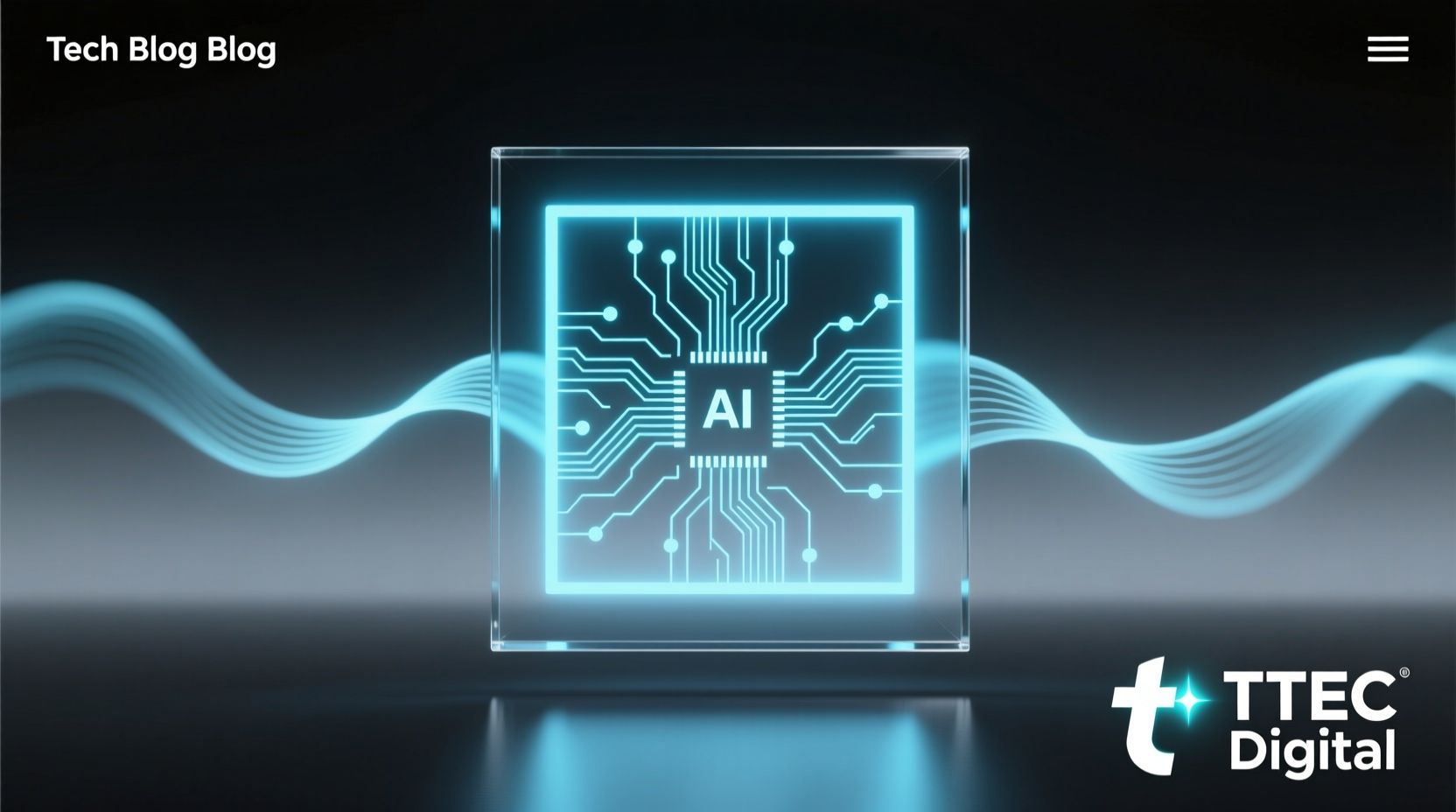
Recognizing this acute pain point, TTEC Digital, a prominent player in CX transformation, recently announced a significant development designed to bridge this chasm: the AI Gateway. Announced on April 2, 2026, this new software solution aims to connect modern AI capabilities with legacy contact center infrastructure through a single, unified integration. This initiative directly addresses the critical need for contact center AI modernization, enabling enterprises to deploy, test, and scale AI within their existing ecosystems without costly and extensive migrations.
Deep Technical Analysis: Deconstructing AI Gateway
At its core, AI Gateway functions as an intelligent orchestration layer, abstracting the complexities of legacy contact center APIs and data formats from the rapidly evolving AI landscape. While specific version numbers for AI Gateway itself were not disclosed in the initial announcement, its design philosophy centers on interoperability and extensibility, crucial for navigating the inherent heterogenity of enterprise IT. The solution acts as a universal connector, allowing clients to leverage multiple frontier AI solutions and switch models as needed.
Architectural Decisions and Integration Patterns
The architectural premise of AI Gateway likely involves several key technical components and patterns:
- API Abstraction Layer: This layer would normalize communication between diverse legacy contact center platforms (e.g., Genesys, Cisco, Avaya) and various AI services (e.g., Amazon Bedrock, Google Vertex AI, Microsoft Azure OpenAI Service). This involves developing adapters for each legacy system’s proprietary APIs (SOAP, REST, custom SDKs) and translating requests/responses into a standardized format consumable by AI models.
- Event-Driven Architecture: To ensure real-time responsiveness, AI Gateway would likely employ an event-driven architecture. Events such as “call initiated,” “customer utterance detected,” or “agent requires assistance” would trigger AI workflows via message queues (e.g., Kafka, RabbitMQ) or serverless functions, minimizing latency for critical interactions.
- Data Normalization and Transformation: Legacy systems often store customer interaction data in fragmented and inconsistent schemas. AI Gateway must include robust data pipelines for real-time data ingestion, transformation, and enrichment, ensuring that AI models receive clean, contextualized input. This could involve leveraging technologies like Apache Flink or Spark Streaming for in-flight data processing.
- AI Model Orchestration: The platform supports integration with a wide array of AI models from different providers (Amazon, Google, Microsoft, Anthropic, OpenAI, Nvidia). This implies a sophisticated model management layer that can dynamically select, invoke, and manage the lifecycle of various AI services, potentially using containerization (e.g., Docker, Kubernetes) for flexible deployment and scaling of inference endpoints.
- Security and Compliance: Integrating AI with sensitive customer data in legacy systems presents significant security challenges. AI Gateway must incorporate robust security measures, including:
- Data Masking and Anonymization: To protect Personally Identifiable Information (PII) during AI processing.
- Access Control (RBAC): Granular permissions to AI services and data sources.
- Threat Detection: Monitoring for anomalous activity, especially given the rise of deepfake attacks and AI-driven fraud in contact centers. While no specific CVEs for AI Gateway were announced, the integration with legacy systems inherently exposes potential vulnerabilities. R&D teams must conduct thorough penetration testing and code audits, particularly for custom connectors, to mitigate risks like CWE-287 (Improper Authentication) or CWE-79 (Improper Neutralization of Input During Web Page Generation), common in complex web integrations.
- Compliance Logging: Detailed audit trails for regulatory adherence (e.g., GDPR, HIPAA, PCI DSS).
Early deployments of TTEC Digital’s AI Gateway have reportedly demonstrated significant ROI, cost savings, and improved customer satisfaction. While specific benchmark numbers for AI Gateway itself are emerging, TTEC Digital’s related initiatives have shown outcomes such as a 6-8% reduction in Average Handle Time (AHT) and a 10% lift in sales conversion rates.
Practical Implications for Engineers
The introduction of solutions like AI Gateway has profound implications for development and infrastructure teams:
- Reduced Integration Overhead: Engineers can shift focus from building bespoke integrations for each AI service to configuring and extending a standardized gateway. This accelerates time-to-market for new AI-powered CX features.
- Simplified AI Adoption: The abstraction layer allows for easier experimentation with different AI models and providers, fostering a more agile approach to AI strategy without vendor lock-in.
- Performance Optimization: A well-designed gateway can optimize data flow, manage API rate limits, and implement caching strategies to improve the performance and responsiveness of AI-augmented interactions.
- Enhanced Observability: Centralized logging and monitoring within the gateway provide a single pane of glass for tracking AI service performance, latency, and error rates across the entire contact center ecosystem.
Best Practices for Modernization
To maximize the benefits of platforms like AI Gateway and ensure successful contact center AI modernization, R&D teams should adopt the following best practices:
- API-First Integration Strategy: Even with a gateway, understanding and documenting existing legacy APIs is crucial. Prioritize exposing critical legacy functionalities via well-defined, RESTful APIs where possible, reducing the gateway’s burden of complex protocol translation.
- Incremental Modernization: Avoid a “big bang” approach. Start with high-impact, low-risk AI use cases (e.g., agent assist for FAQ retrieval) and gradually expand. AI Gateway facilitates this by allowing phased deployment and A/B testing of AI models.
- Robust Data Governance: Establish clear policies for data collection, storage, usage, and retention, especially when feeding sensitive customer data to external AI models. Implement data quality checks and validation at the ingestion points.
- Continuous Performance Monitoring: Implement comprehensive monitoring tools to track key metrics such as AI response time, accuracy, system uptime, and resource utilization. Set up alerts for deviations from baseline performance.
- Security by Design: Integrate security considerations throughout the development and deployment lifecycle. Regularly audit the gateway’s configurations, conduct vulnerability assessments, and ensure all AI integrations adhere to enterprise security policies.
- Automated Testing and CI/CD: Develop automated tests for all AI integrations, covering functional, performance, and security aspects. Implement Continuous Integration/Continuous Delivery (CI/CD) pipelines to ensure rapid, reliable deployment of updates and new AI capabilities.
Actionable Takeaways for Development and Infrastructure Teams
- Conduct a Legacy System API Audit: Document all existing contact center APIs, their capabilities, authentication mechanisms, and data formats. Identify gaps and prioritize APIs for standardization or wrapper development.
- Evaluate AI Gateway’s Fit: Assess how TTEC Digital’s AI Gateway (or similar orchestration platforms) aligns with your existing technology stack and AI strategy. Pay close attention to its supported integrations and extensibility options.
- Pilot with a Focused Use Case: Select a specific, measurable AI application (e.g., automated call summarization, intent recognition for routing) to pilot AI Gateway. Gather benchmark data on latency, accuracy, and agent feedback.
- Invest in Data Engineering: Build or enhance capabilities for real-time data ingestion, transformation, and cleansing. High-quality data is the lifeblood of effective AI.
- Upskill on Cloud-Native AI: As AI Gateway connects to major cloud AI services, ensure your teams are proficient in cloud-native AI platforms, MLOps practices, and API security for external services.
Related Topics
- AI-Driven CX Strategy: Beyond Automation to Intelligent Engagement
- Microservices for Contact Center Evolution: Breaking Monoliths
- Securing AI in the Enterprise: Mitigating New Attack Vectors
Conclusion
The collision of AI with legacy contact center technology is an undeniable reality, presenting both formidable challenges and unparalleled opportunities. TTEC Digital’s AI Gateway represents a significant stride towards resolving this tension, offering a pragmatic solution for enterprises eager to leverage AI without the burden of complete infrastructural overhaul. For R&D and infrastructure engineers, this means a shift from reactive firefighting to proactive, strategic integration. The future of customer experience is undeniably AI-powered, but its successful realization hinges on intelligent architectural decisions, robust integration strategies, and a steadfast commitment to security and operational excellence. As AI capabilities continue to evolve at breakneck speed, the ability to flexibly integrate and orchestrate these innovations within existing enterprise frameworks will be the defining characteristic of leading CX organizations.