The digital landscape is in perpetual motion, and for engineers building on the world’s most dominant content management system, complacency is a luxury we cannot afford. Today, WordPress 7.0 officially launches, marking a pivotal moment that will fundamentally reshape development workflows, site performance, and user experience for millions. This isn’t merely another incremental update; it’s a foundational shift, introducing native AI capabilities, real-time collaboration, and a groundbreaking approach to block development that demands immediate, in-depth analysis from every R&D team. Ignoring this release is not an option; preparing for it is paramount to maintaining competitive edge and technical resilience.
Background Context: The Evolution to WordPress 7.0
WordPress continues its reign, powering an astonishing 43.5% of all websites on the internet as of March 2026, a figure that has more than doubled since 2014. This sustained growth is a testament to its adaptability and the continuous innovation driven by its vibrant community. The path to WordPress 7.0 has been paved by significant advancements in previous versions, particularly through the ongoing Gutenberg project, which aims to transform the entire editing and site-building experience. Versions like WordPress 6.6 (July 2024) and 6.7 (November 2024) introduced substantial improvements in design tools, performance, and the block editor, laying the groundwork for the collaborative and AI-driven features now arriving.
Concurrently, the security landscape for WordPress remains dynamic. While WordPress core itself is remarkably secure, the vast ecosystem of plugins and themes introduces a continuous stream of vulnerabilities. March 2026, for instance, saw critical security patches for popular plugins like Elementor, Yoast SEO, WPForms, and Really Simple Security, affecting millions of installations. Some of these, particularly in WPForms and Really Simple Security, were unauthenticated vulnerabilities, underscoring the constant need for vigilance. Furthermore, WordPress 6.9.2, 6.9.3, and 6.9.4 were released in early March 2026 to address ten core vulnerabilities, including SSRF, XSS, and a PoP-chain weakness in the HTML API. This context highlights that while innovation surges forward, robust security practices remain non-negotiable for any WordPress deployment.
Deep Technical Analysis: Unpacking the Game-Changers
WordPress 7.0, officially released today, April 9, 2026, ushers in a new era for the platform. The headline features are not just new functionalities but represent architectural shifts designed to elevate WordPress to a more modern, collaborative, and intelligent content platform.
Native WP AI Client: The Intelligence Layer
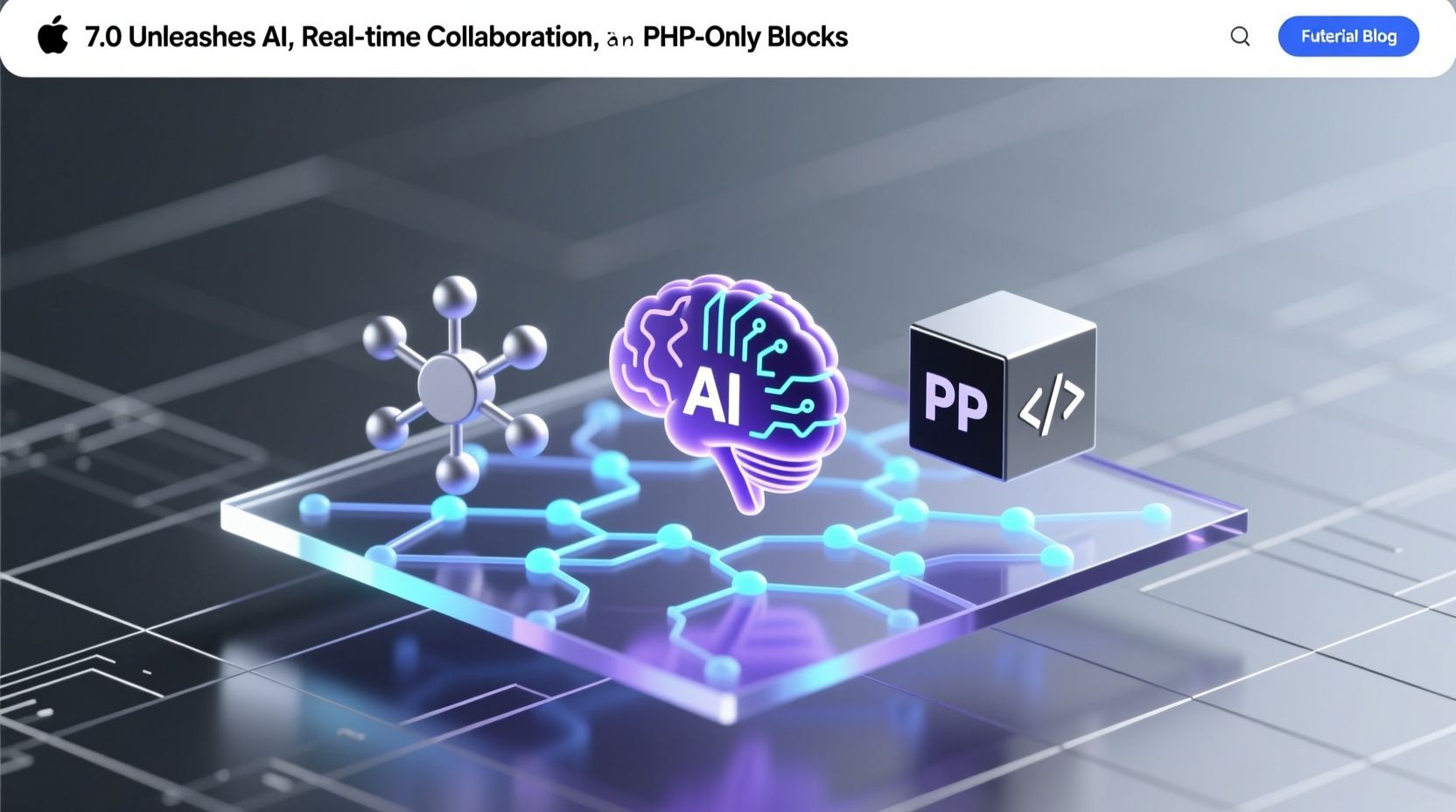
Perhaps the most revolutionary addition is the introduction of the native WP AI Client. This is not an optional plugin or a third-party integration; it’s a core AI infrastructure layer built directly into WordPress. This standardized AI connector allows developers to seamlessly integrate API keys from leading AI providers such as OpenAI, Anthropic, and Google from a central Connectors UI in the admin dashboard. The underlying architecture leverages a shared PHP library (php-ai-client) for standard AI service communication. This means plugins and themes can now tap into any AI model through a unified interface, abstracting away provider-specific complexities. For engineers, this implies a paradigm shift in content generation, personalization, and site management, moving from disparate AI tools to a cohesive, platform-level intelligence layer. The ability to write features once against this shared interface, making provider switching a simple configuration change, significantly reduces development overhead and increases flexibility.
Real-time Collaborative Editing: Google Docs for WordPress
A long-awaited feature, real-time collaboration, arrives as part of Gutenberg Phase 3. This functionality mirrors the experience of collaborative document editors like Google Docs, allowing multiple users to edit the same page or post simultaneously without locking each other out. Changes made by team members synchronize in real-time, drastically improving content production workflows for distributed teams. From a technical standpoint, this requires robust WebSocket implementations and sophisticated state management within the block editor, likely leveraging client-side technologies to minimize server load and ensure a fluid user experience. Engineers will need to understand how this impacts data consistency, revision control, and potential conflicts, especially in custom block implementations or complex content structures.
PHP-Only Block Registration: Streamlined Development
For developers, the ability to register and render simple, server-side blocks entirely via PHP is a significant win. This feature eliminates the need for JavaScript, React overhead, and complex build pipelines for many common block types. It simplifies the development process for backend-focused engineers, potentially reducing the barrier to entry for custom block creation and accelerating development cycles. This architectural decision acknowledges the strengths of PHP for server-side rendering while still allowing for rich client-side interactivity when needed. It promotes a more performant and less resource-intensive approach for static or less interactive blocks, directly impacting site performance and developer efficiency.
Admin UI, Performance, and PHP 7.4 Baseline
WordPress 7.0 also brings a much-needed UI refresh to the admin dashboard, featuring smoother navigation, updated typography, and new interface components, including a redesigned DataViews system for managing content. Performance enhancements are also core to this release, with client-side media processing reducing server load by offloading image manipulation to the user’s browser. Under the hood, engineers can expect improved server response times (TTFB) thanks to database query optimizations and enhanced lazy loading mechanisms.
Crucially, WordPress 7.0 raises the minimum PHP requirement to 7.4. This deprecates support for older, less performant, and potentially insecure PHP versions. While PHP 7.4 offers significant performance gains and access to modern language features, it necessitates a mandatory upgrade for any system still running older PHP versions. This is a critical migration implication that development and infrastructure teams must address immediately.
Practical Implications for Engineering Teams
- Performance Boosts: The combination of client-side media processing, database query optimizations, and the PHP 7.4 requirement translates directly into faster page loads and reduced server strain. This is particularly beneficial for high-traffic sites and those with extensive media libraries.
- Developer Workflow Streamlining: PHP-only block registration significantly simplifies custom block development, allowing for quicker iteration and deployment. The native AI Client provides a unified API for integrating intelligence, reducing the fragmentation of AI toolsets.
- Enhanced Collaboration: Real-time editing will transform how content teams work, enabling faster content creation and reducing bottlenecks. Engineers need to ensure their custom plugins and themes are compatible with this new collaborative environment.
- Security and Stability: The forced upgrade to PHP 7.4 removes a significant attack surface present in older PHP versions. However, the new AI integration and real-time features introduce new vectors that will require careful auditing and security best practices during implementation.
- Scalability: By offloading tasks to the client-side and optimizing backend processes, WordPress 7.0 provides a more scalable foundation for growing websites and applications.
Best Practices for Adoption
- Prioritize PHP Upgrade: Immediately assess your current PHP version. If you are running anything below 7.4, plan and execute an upgrade strategy before attempting to update to WordPress 7.0. Test thoroughly in a staging environment.
- Comprehensive Staging and Testing: Before deploying to production, thoroughly test all themes, plugins, and custom code with WordPress 7.0 in a dedicated staging environment. Pay close attention to block editor compatibility, especially with real-time collaboration, and how your custom blocks interact with the new PHP-only registration.
- Security Audit of AI Integrations: If leveraging the new WP AI Client, conduct a security audit of your AI prompts, data handling, and API key management. Ensure sensitive information is not inadvertently exposed or processed by AI models without proper safeguards.
- Review Custom Block Implementations: Evaluate existing custom blocks for potential refactoring using the new PHP-only registration where appropriate. This can lead to performance gains and simplified maintenance.
- Implement Robust Backup and Recovery: As with any major platform upgrade, ensure you have a comprehensive backup and recovery plan in place before initiating the update process.
- Stay Informed on Security Patches: Beyond the core update, maintain vigilance for security patches in plugins and themes, as evidenced by the recent March 2026 advisories. Utilize tools like Wordfence or Patchstack for proactive vulnerability monitoring.
Actionable Takeaways for Teams
- Development Teams: Begin exploring the WP AI Client API and experiment with PHP-only block registration. Update your development environments to PHP 7.4+. Focus on ensuring compatibility with the new real-time collaboration features in custom editor components.
- Infrastructure Teams: Schedule and execute PHP upgrades to 7.4 or higher across all WordPress environments. Monitor server resource utilization closely after the upgrade to validate performance improvements from client-side media processing and database optimizations.
- Security Teams: Conduct a threat model review for new AI and collaboration features. Implement WAF rules to protect REST API endpoints, especially if integrating third-party AI services. Ensure robust authentication and authorization mechanisms are in place for all administrative functions.
Related Internal Topic Links
- PHP 8 Migration Strategy for WordPress Engineers
- Gutenberg Phase 3: A Deep Dive into Collaborative Editing
- Securing Your WordPress REST API Endpoints
Conclusion
WordPress 7.0 is more than just a version bump; it’s a strategic leap forward for the platform, cementing its position at the forefront of web development. The integration of native AI, coupled with real-time collaboration and streamlined PHP-only block development, offers unprecedented opportunities for innovation, efficiency, and scalability. While these advancements bring immense power, they also introduce new responsibilities for engineering teams. Proactive planning, rigorous testing, and an unwavering commitment to security best practices will be essential to fully harness the potential of this transformative release. The future of WordPress is intelligent, collaborative, and more developer-friendly than ever before – are your systems ready?